
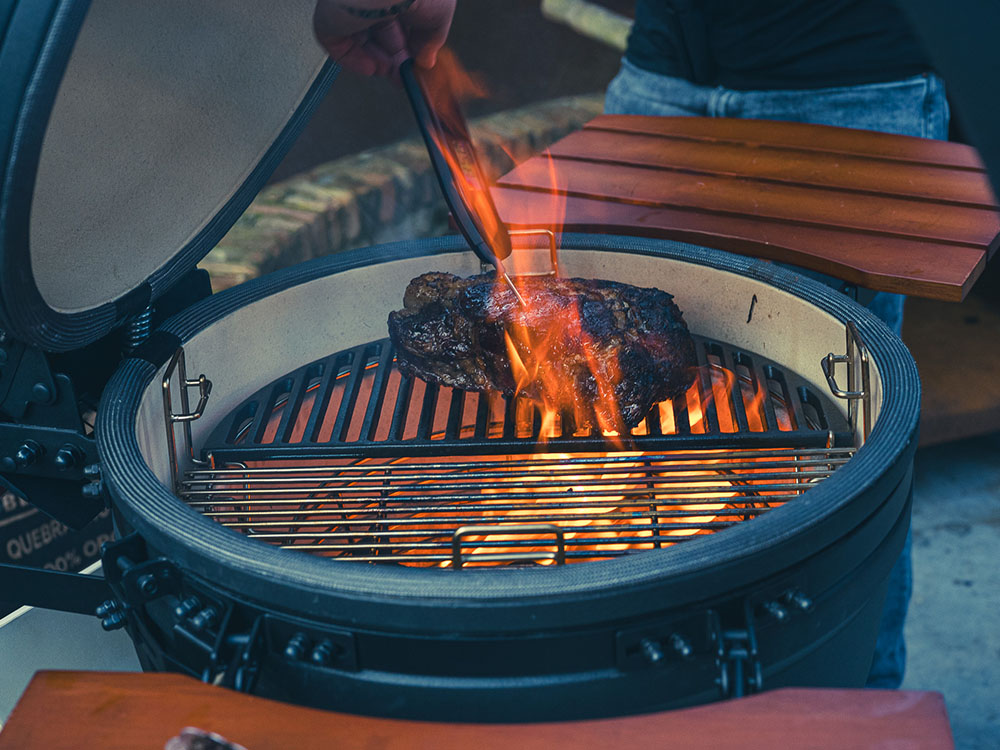
A kamado might look like a mysterious ceramic dome puffing smoke the first time you see one, but once you understand how it works you’ll never go back. It’s stable, efficient, versatile, and honestly just way more fun than any standard barbecue you’ve ever fired up.
This guide walks you through everything step by step. No complicated jargon, just clear, practical tips that actually matter. Whether you just bought your first Grill Bill or you simply want to learn how this type of BBQ works, you’re in the right place.
Contents
What exactly is a kamado
A kamado is a ceramic barbecue based on centuries-old cooking techniques. The thick ceramic walls retain heat extremely well, letting you slow-cook for hours with almost no effort.
But it can also do the complete opposite, going blazing hot for pizzas and steaks. Think of it as your outdoor all-rounder.
What can you cook on a kamado
- Low and slow classics like pulled pork, brisket, or ribs
- Direct grilling: burgers, sausages, steaks
- Indirect grilling: whole chickens, roulades, vegetable trays
- Baking pizza
- High-heat wok cooking
- Bread, casseroles, even desserts
Your kamado can do more than most indoor ovens, and everything tastes better too.
How to light a kamado
Let’s start at the beginning, fire.
1. Always use good quality charcoal
Use 100 percent hardwood charcoal, preferably large pieces. No briquettes and definitely no lighter fluid. Larger chunks burn longer, cleaner, and produce better heat.
2. Build a solid base at the bottom
Place a few large pieces of charcoal at the bottom of your charcoal basket. Add medium pieces on top, then smaller ones for an easy, quick light-up.
3. Use natural fire starters
Place one or more natural fire starters between the top layer of charcoal and light them. Leave the dome open, vents fully open. Let your kamado breathe for 10 to 15 minutes.
4. Don’t close it too quickly
Kamados heat up easily but cool down slowly. Approach your target temperature gradually and start adjusting the vents earlier than you think. Slow and steady beats fighting the heat afterward.
Temperature control, your most important skill
This is where you truly level up. A kamado is built to stay steady, but you’re the one keeping it in check.
Adjust with airflow, not the lid
- Bottom vent: for major temperature changes
- Top vent: for fine adjustments
- Lid: stays closed as much as possible
You want a consistent airflow. More air means more heat. Less air means a cooler, slower burn.
Tip: don’t chase the temperature. Use small adjustments and let it stabilise.
Direct versus indirect grilling
A kamado works in two ways: direct and indirect.
Direct grilling, right above the coals
Perfect for fast, hot cooking such as:
- Steaks
- Burgers
- Sausages
- Veggie skewers
Here you cook with direct radiant heat and high temperatures.
Indirect grilling with heat deflectors
For indirect grilling, place ceramic heat deflectors between the coals and the cooking grate. You’re basically turning your kamado into an outdoor oven.
Ideal for:
- Whole chicken or roulades
- Pulled pork and other low and slow dishes
- Salmon sides and larger fish
- Bread, lasagna, and oven dishes
That mix of direct and indirect cooking is what makes a kamado so versatile.
Low and slow cooking on a kamado
Low and slow is where a kamado truly shines. Thanks to the insulation and airflow control, you can hold 90 to 130 degrees for hours without doing anything.
Here’s how to do it
- Use large charcoal chunks
- Fill the charcoal basket fully for long cooks
- Keep both vents slightly open
- Let the kamado stabilise before you start cooking
- Use a meat thermometer
A kamado is at its best when you barely have to touch it. Let it run, keep an eye on the temperature, and enjoy the calm.
Baking pizza on a kamado
Lots of people buy a kamado specifically for pizza, and rightly so. You get a crisp base, a beautiful crust, and that unmistakable charcoal-fired flavour.
Basic setup
- Use heat deflectors and a pizza stone
- Work between 300 and 350 degrees
- Preheat the stone for at least 15 minutes
- Use a thin dough base
Extra tip: dust your pizza peel with flour or semolina for a crisp bottom and smoother sliding.
Maintenance and cleaning
A kamado doesn’t need much maintenance, but a clean BBQ performs better and prevents unwanted flavours.
- Remove ash from the ash drawer regularly
- Clear out small leftover charcoal pieces
- Brush grates while they’re warm
- Check the gasket felt occasionally
- Use a cover to protect it from the weather
Common beginner mistakes
Everyone messes up at the start. These are the classic mistakes you can easily avoid:
- Heating up too fast
- Placing heat deflectors too early and choking airflow
- Closing all vents when there’s too much smoke instead of removing smoke wood
- Using too much smoke wood
- Opening the lid constantly
You don’t have to be perfect, just consistent. Every cook teaches you something new.
Short summary
- Use good, preferably large charcoal chunks
- Build temperature slowly
- Direct heat for fast grilling, indirect for even cooking
- Low and slow takes patience but gives huge flavour
- Keep your kamado clean
- And most importantly, enjoy every moment behind the grill
A kamado is more than a barbecue, it’s a way of cooking. The more you use it, the more you and your Grill Bill become a team.
If you want to dive deeper into techniques, recipes, and tips, check out our Grill Bill Academy for extra knowledge and inspiration.

