


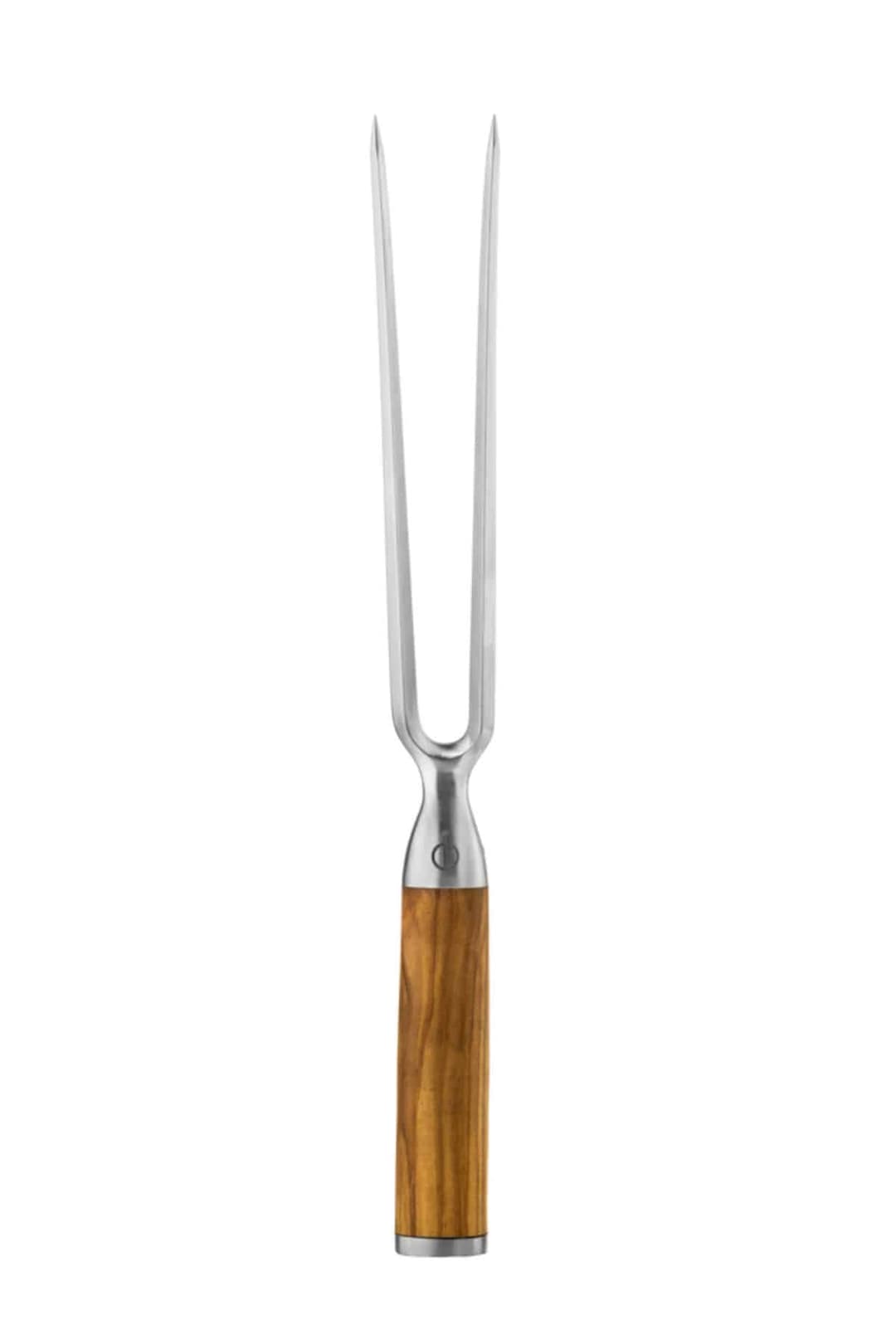
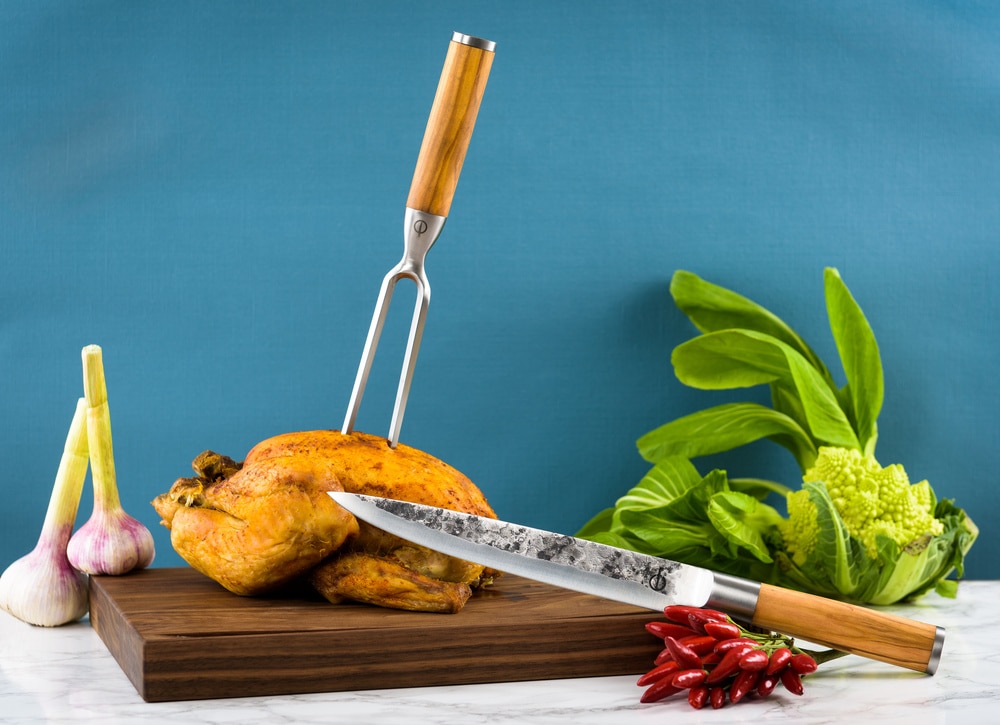
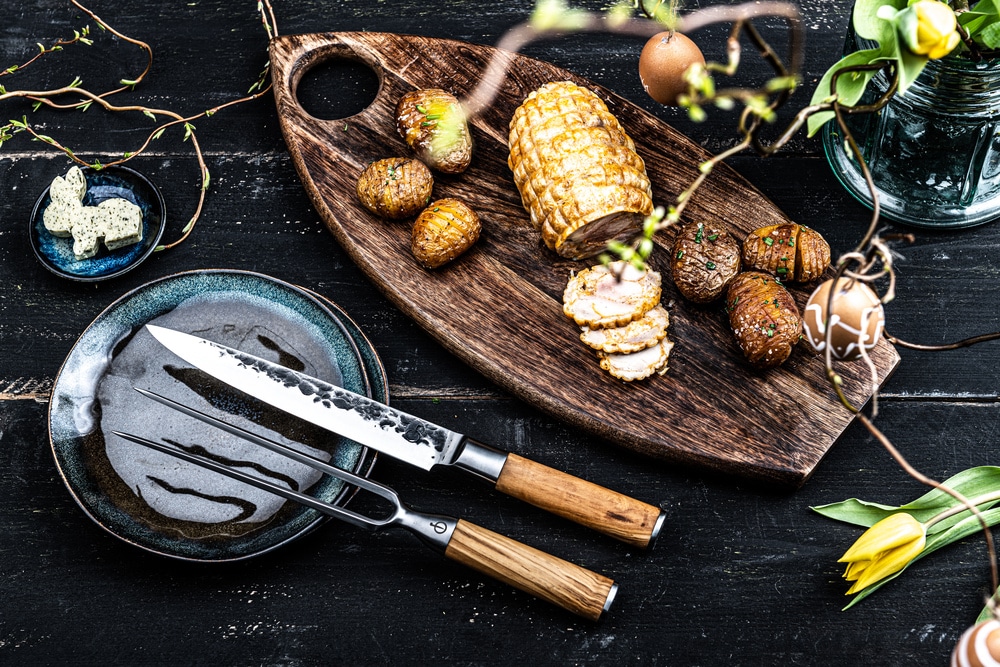
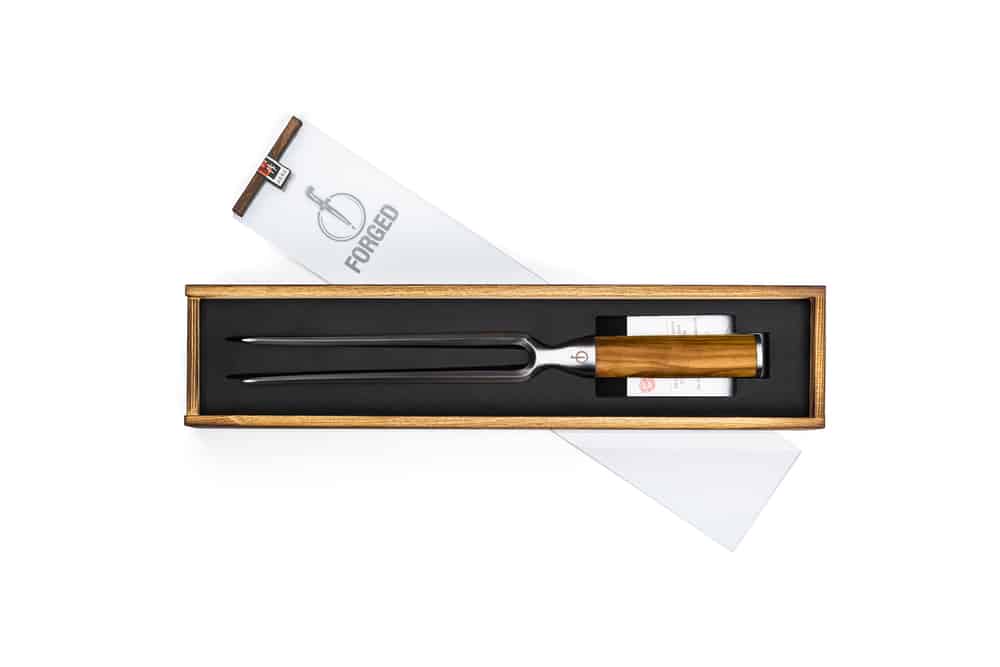
This carving fork with an olive wood handle from the Olive Forged range does exactly one thing, and does it well: it holds a large piece of meat still while you carve. With an ordinary fork you pierce it and the meat tears; with two long, forged tines you pin the piece down without having to correct halfway through. The olive wood handle sits fully in the hand, even when it is greasy.
Why a carving fork with an olive wood handle belongs next to your knife
With a brisket, picanha or whole chicken you work with two hands: one that cuts and one that holds. Do that with a kitchen fork or your hand, and the meat shifts, leaving uneven slices. A real carving fork gives you grip without digging into the meat, and also keeps your hand away from the knife.
- Holds large cuts of meat steady, even a whole picanha or brisket
- Two long tines spread the pressure, fewer tears
- Forged steel, not thin stamped tin that bends
- Olive wood handle with grip, even with greasy hands
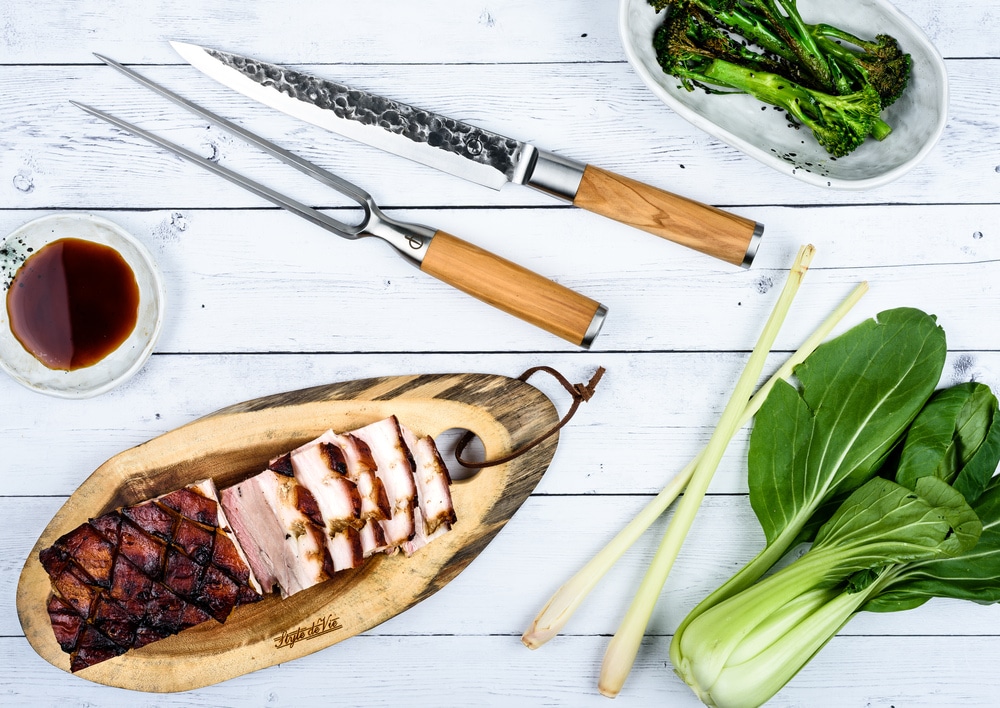
- Matches the Olive Forged knives in style and finish
How to use it
Set the fork on the meat and press it in just enough to pin the piece, no deeper. The fewer holes, the less juice runs out. Cut across the grain and move the fork along once you have a few slices. To lift a heavy piece, take it from below, using the knife for support on the other side.
Care
Wash by hand in warm soapy water and dry immediately. Not in the dishwasher and not left soaking: the olive wood can warp. If the wood feels dry, rub in a thin layer of neutral oil.
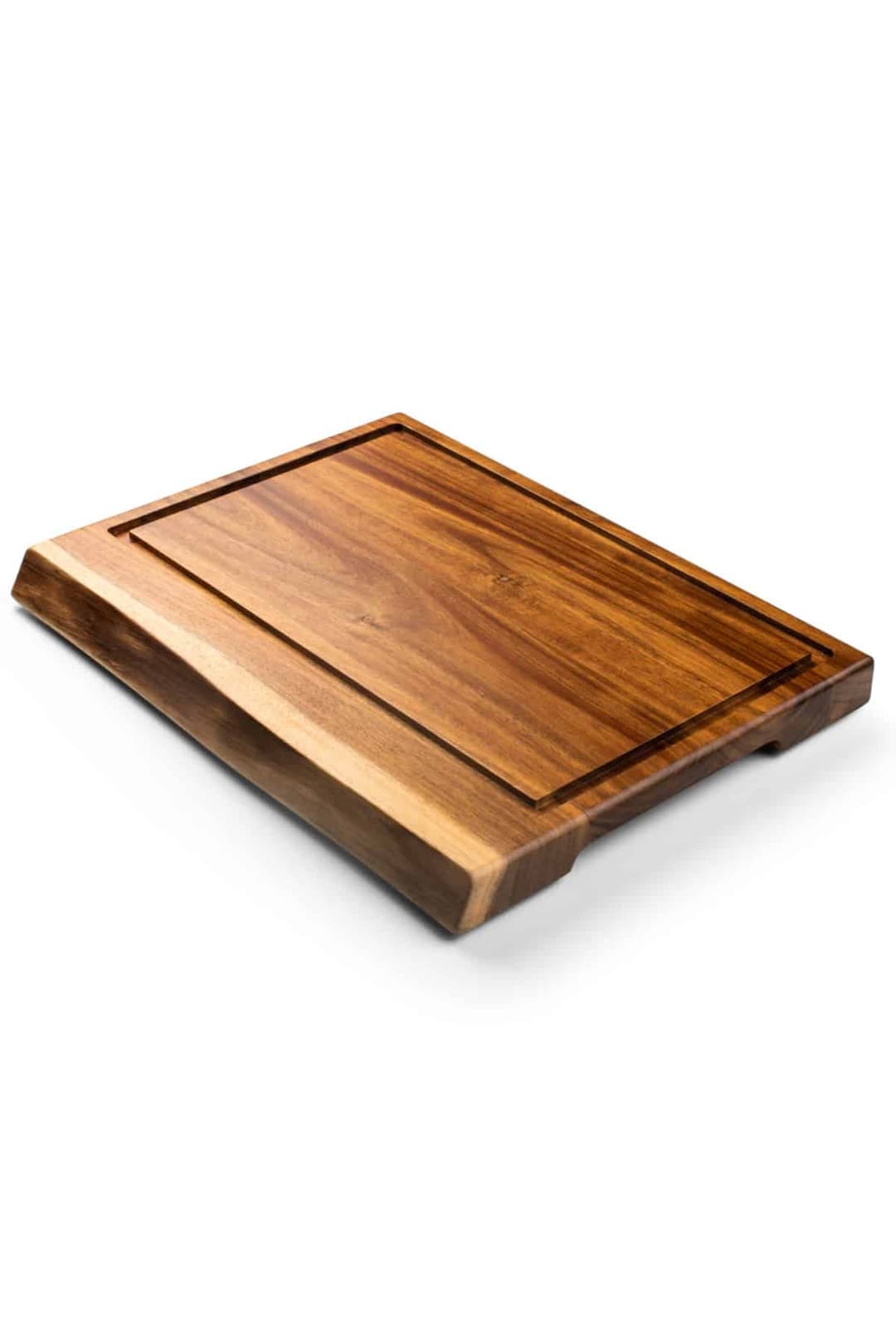
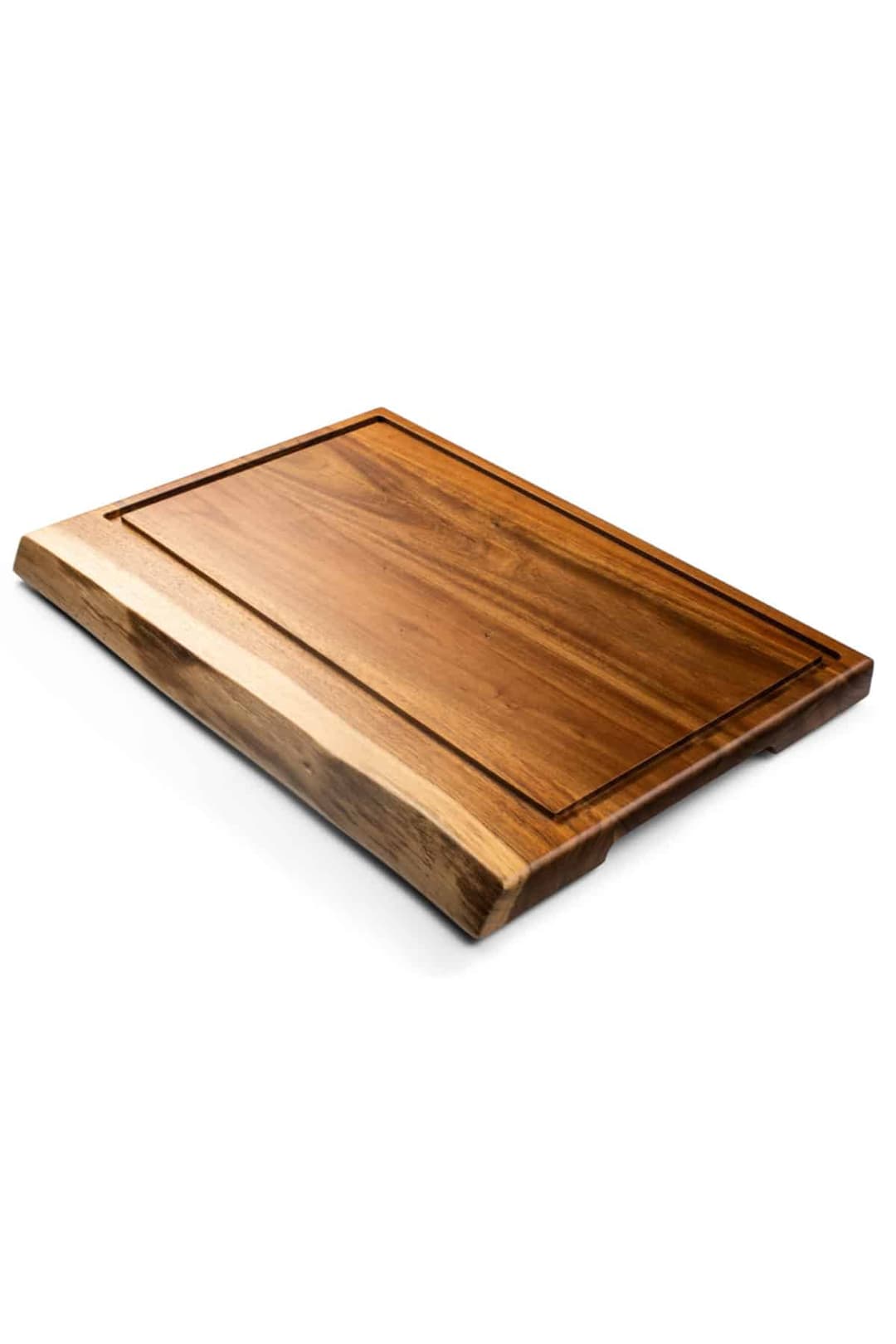
The matching long knife for carving is the Olive Forged carving knife. More tools for around the barbecue are at bbq tools, and boards to carve on are at knives and cutting boards.