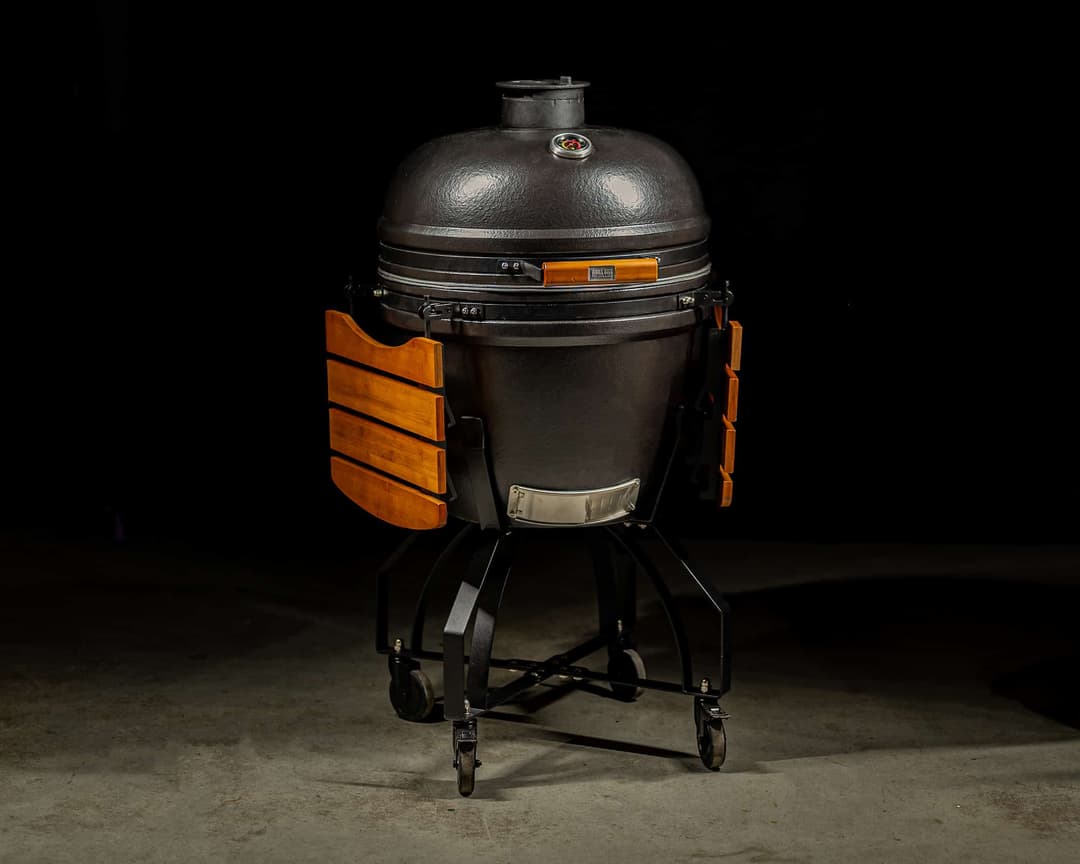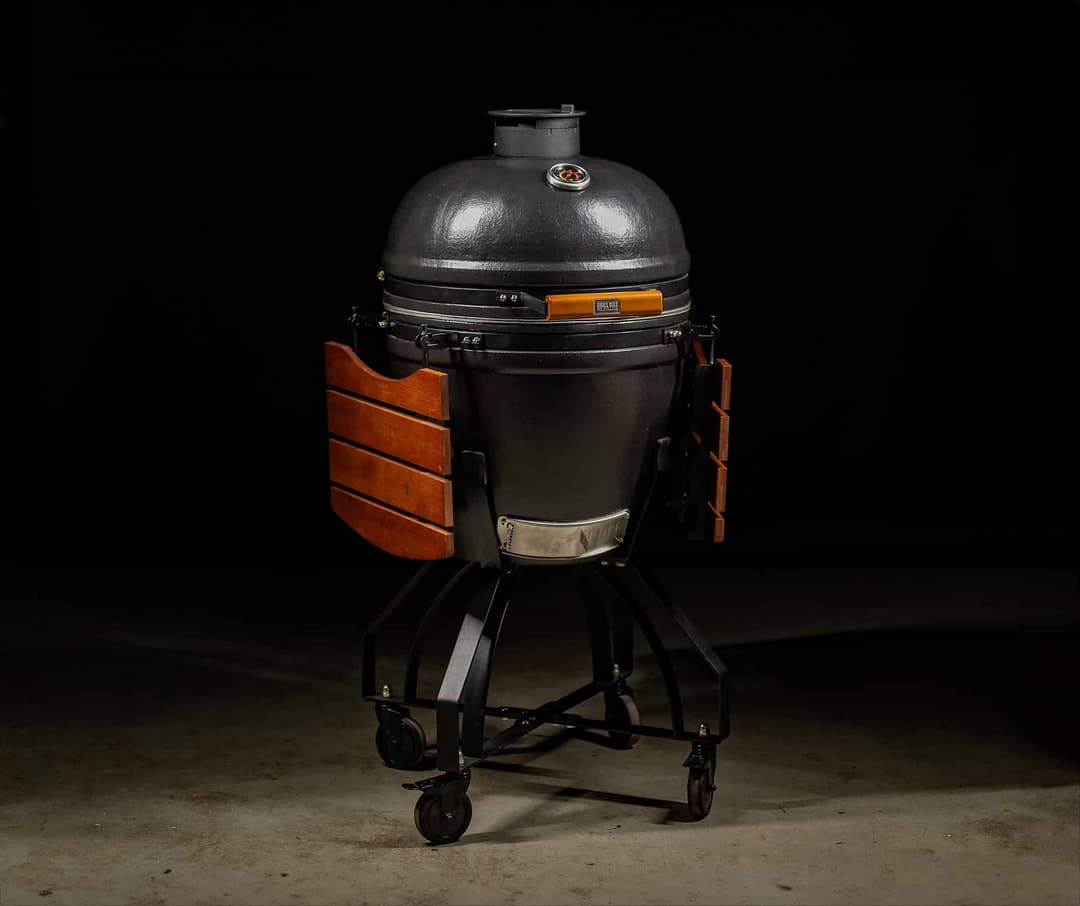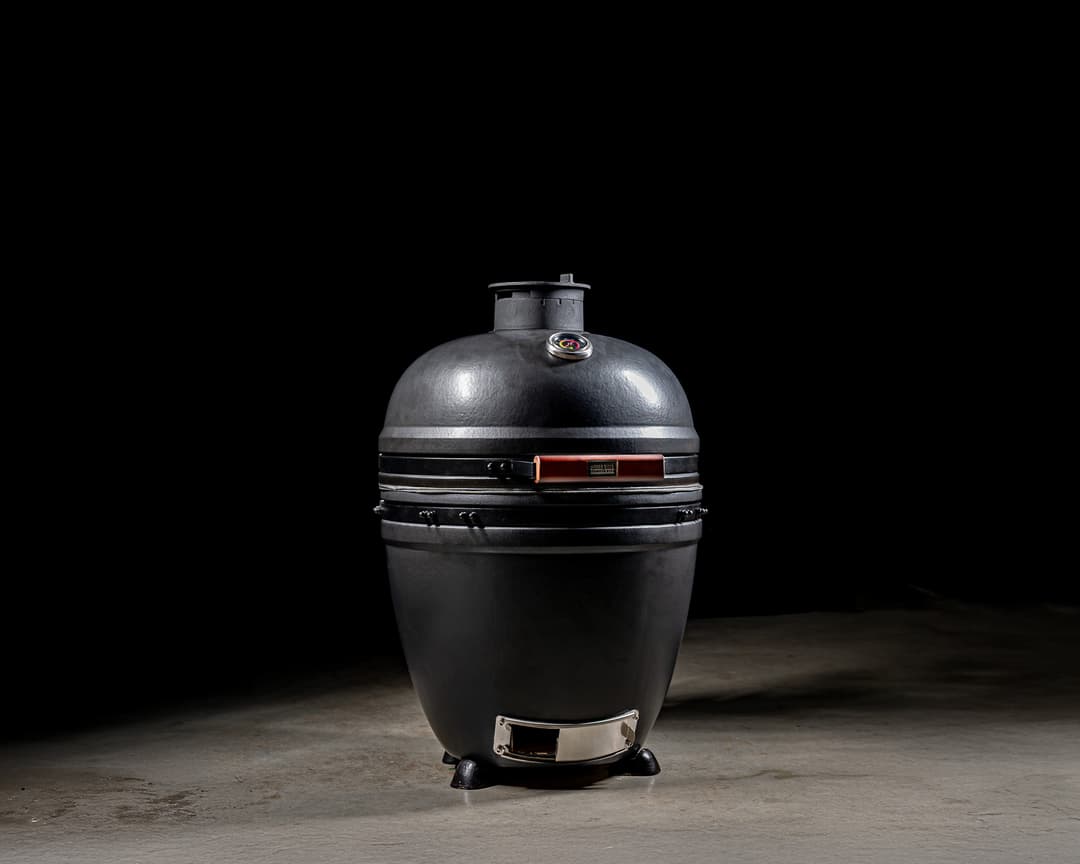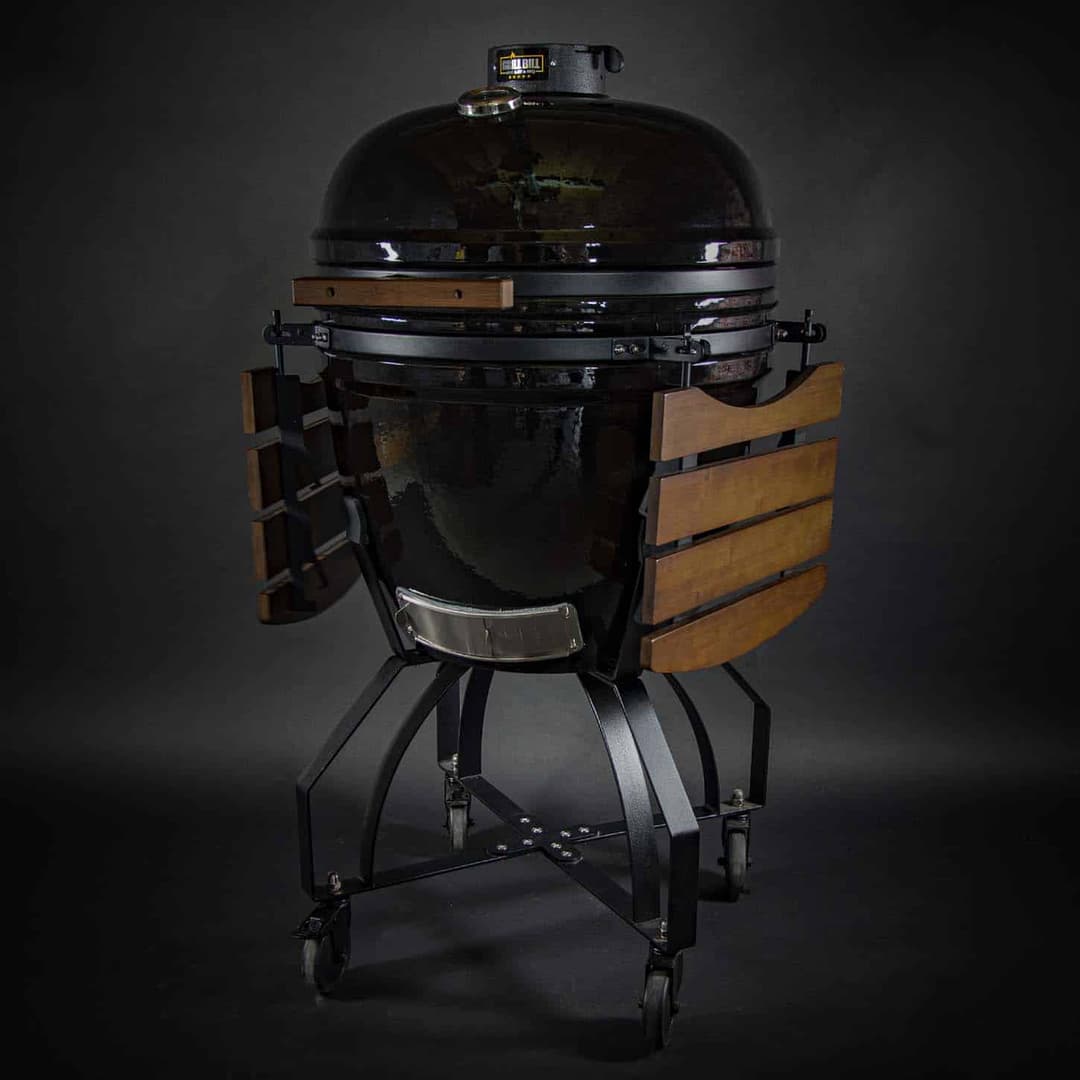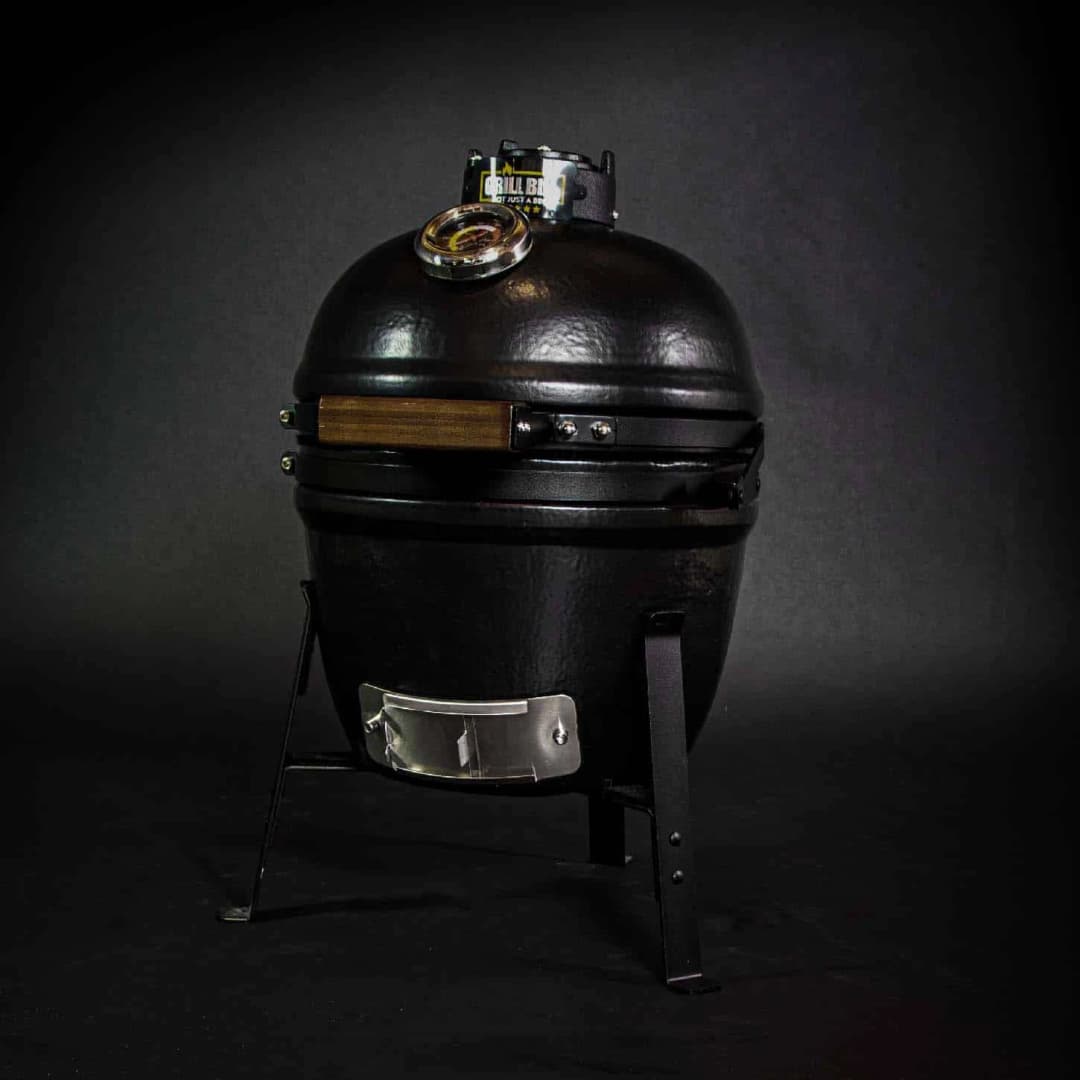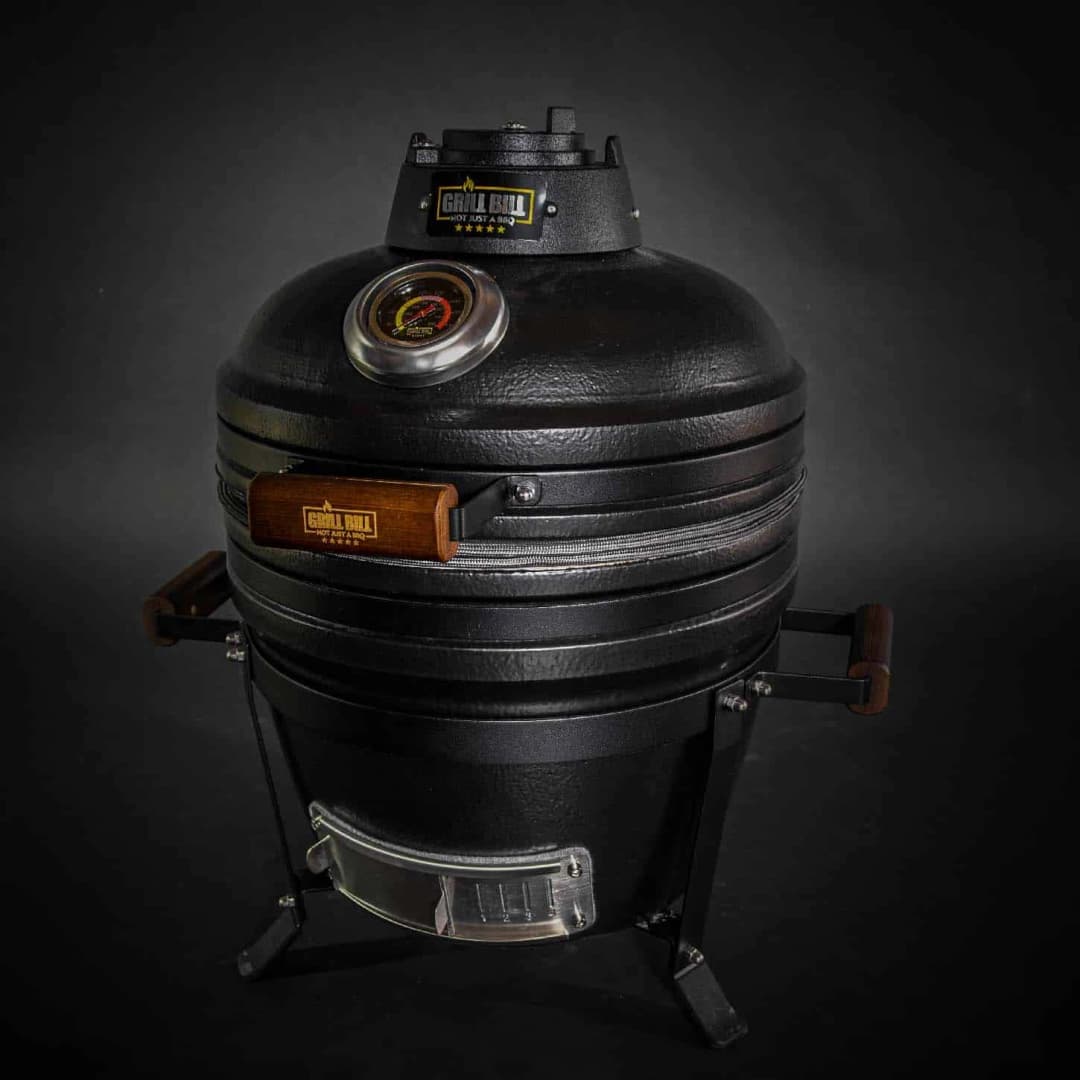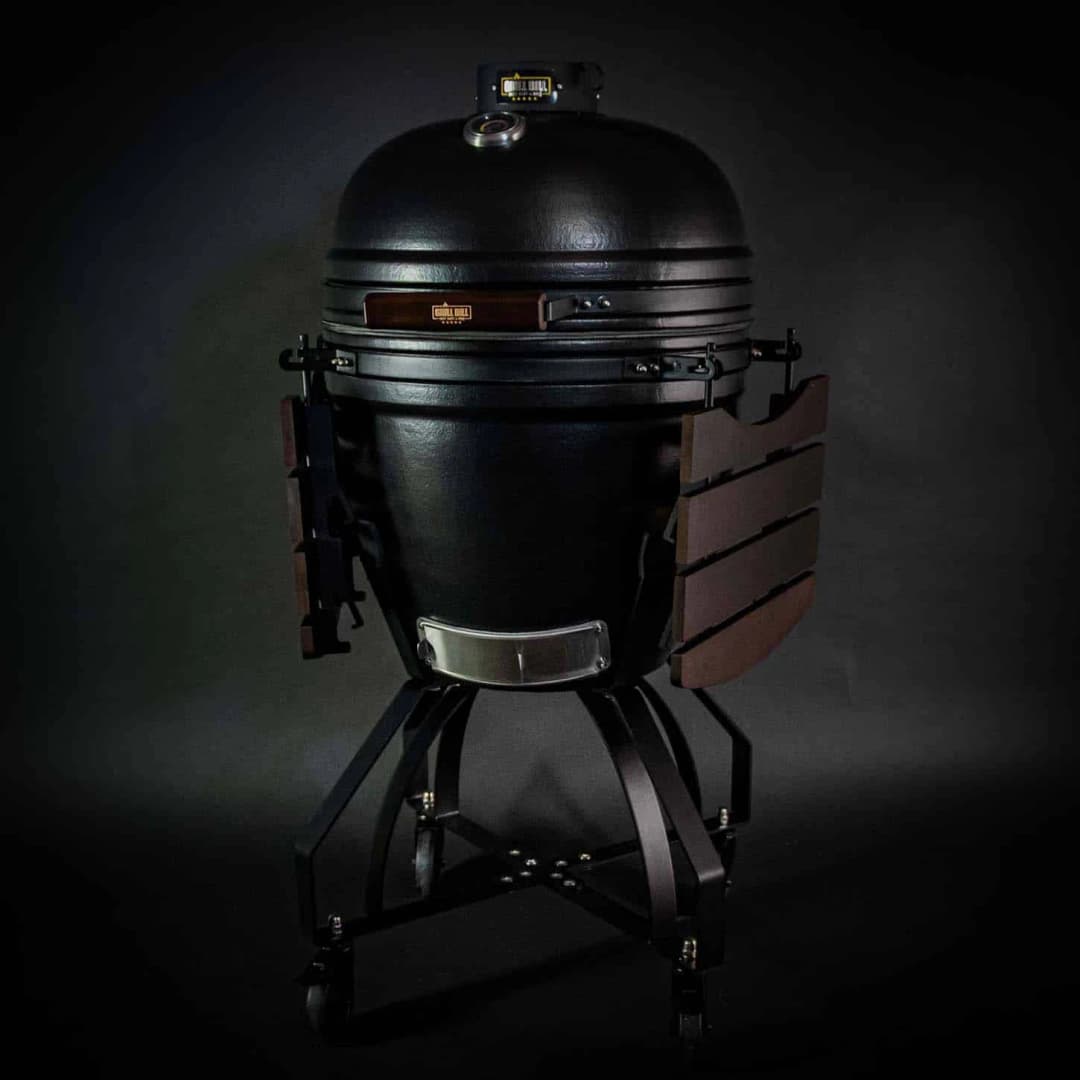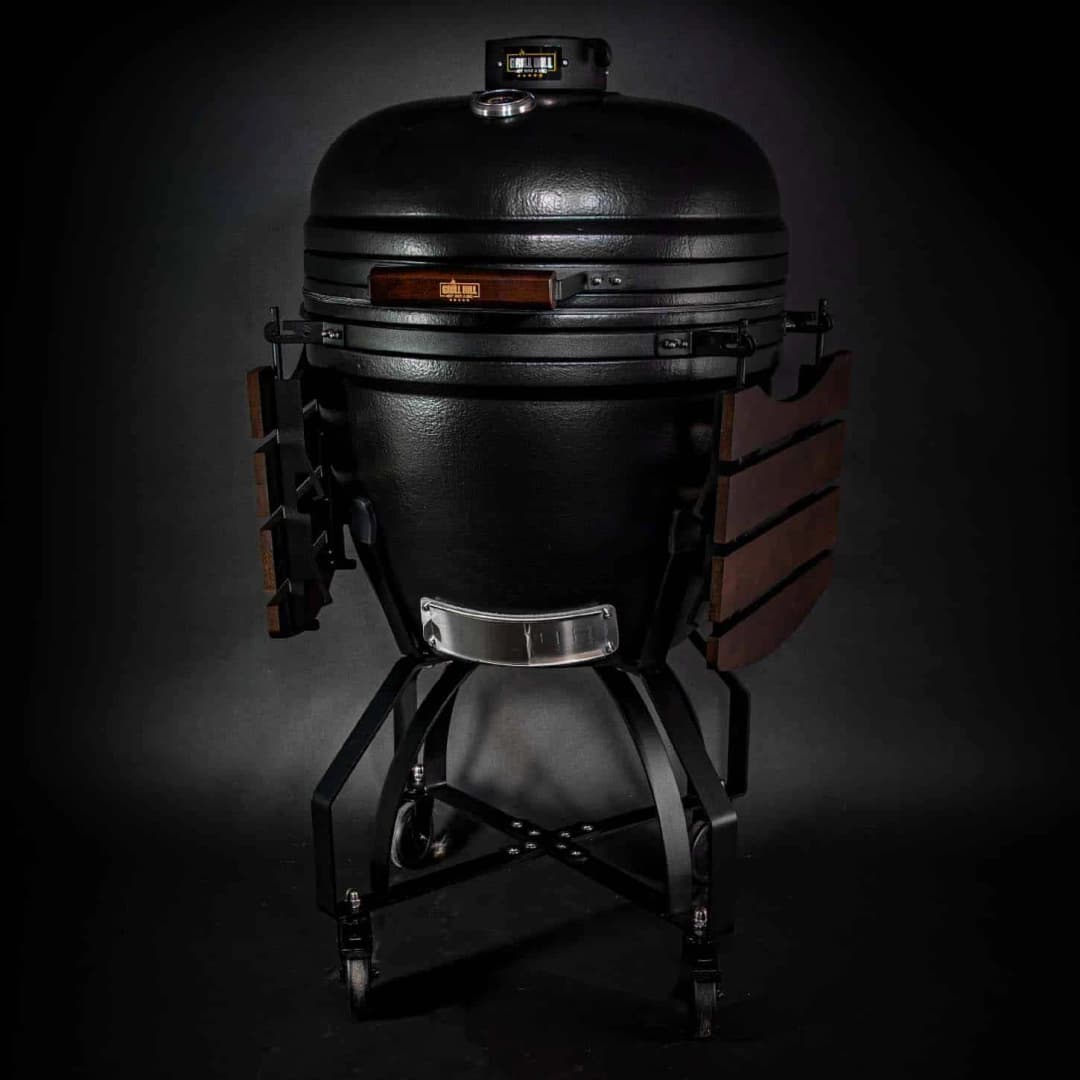
A kamado works on a simple but powerful principle: thick ceramic that retains heat, and airflow that steers the temperature. That lets you control the temperature surprisingly precisely, within a few degrees and for hours on end. Not yet familiar with the basics? Read What is a kamado BBQ? first.
How does a kamado BBQ work?

By Bobby
How does a kamado BBQ work?
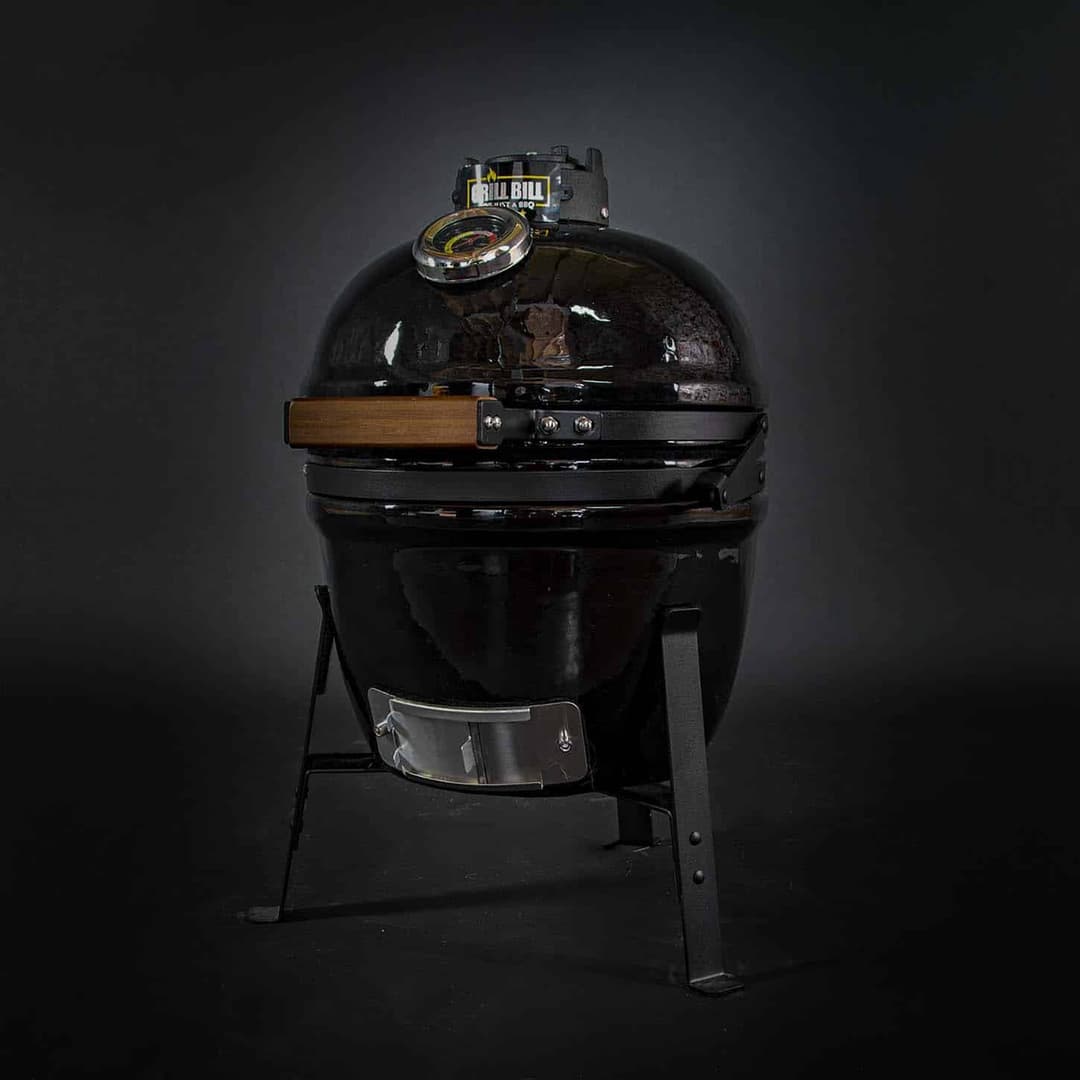
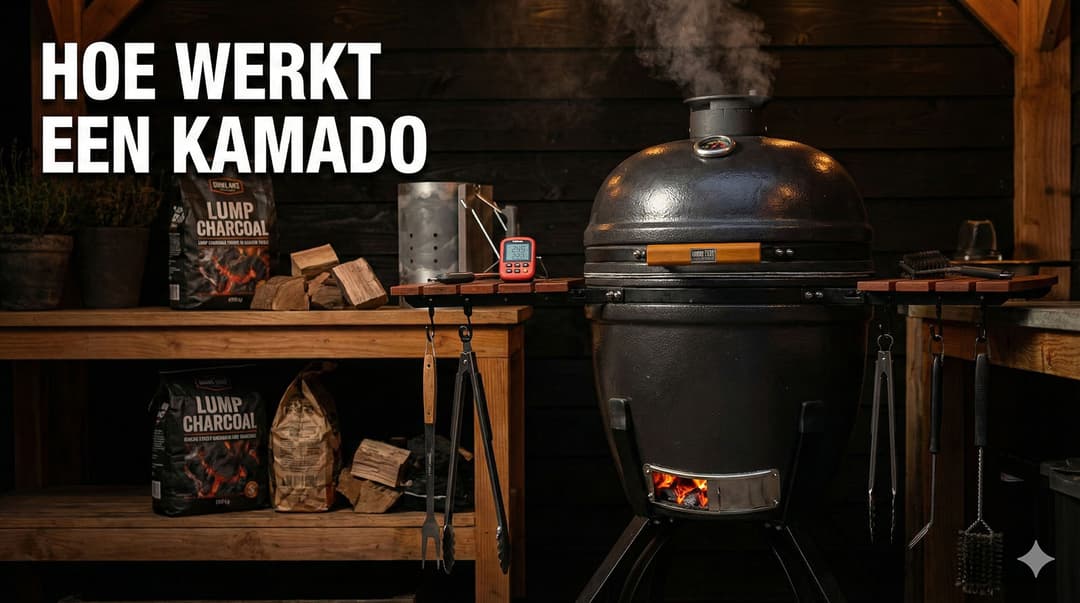
A kamado runs on airflow: oxygen enters at the bottom, warm air escapes through the top vent. Those two sliders are how you steer the temperature, the intake for coarse adjustment and the top vent for fine tuning. The thick ceramic stores the heat and damps out swings, which is why a temperature you set stays put for hours.
- Bottom slider is the coarse control, the top vent the fine one
- Ceramic acts as a heat buffer and damps out swings
- Low & slow: intake barely open, top vent nearly closed
- Grilling and searing: both sliders wide open
- Give every adjustment 5 to 10 minutes to take effect
The role of airflow
The air intake at the bottom and the top vent above determine how much oxygen enters and leaves the barbecue. More air means a hotter fire, less air smothers it. In practice small adjustments have a big effect: a centimetre of slider quickly makes a difference of dozens of degrees.
The bottom slider is your accelerator: it decides how much oxygen feeds the fire. The top vent is your fine tuning: it decides how fast warm air escapes and how strongly the system draws. Always work from coarse to fine: set the intake roughly right, then steer only with the top vent. Want to master this? See the practical guide in Kamado use or dive into Airflow in a kamado explained.
How the heat reaches your food
That ceramic stores heat is half the story. The other half is that a kamado cooks your food along three routes at once, and that explains why it bakes so differently from an open barbecue.
- Radiation from the glowing coals straight up. This is the fiercest form and the reason you get a crust on a steak in four minutes.
- Conduction through the hot grate, good for the grill marks and not much more.
- Convection: hot air that rises past the fire, meets the dome and is guided back down.
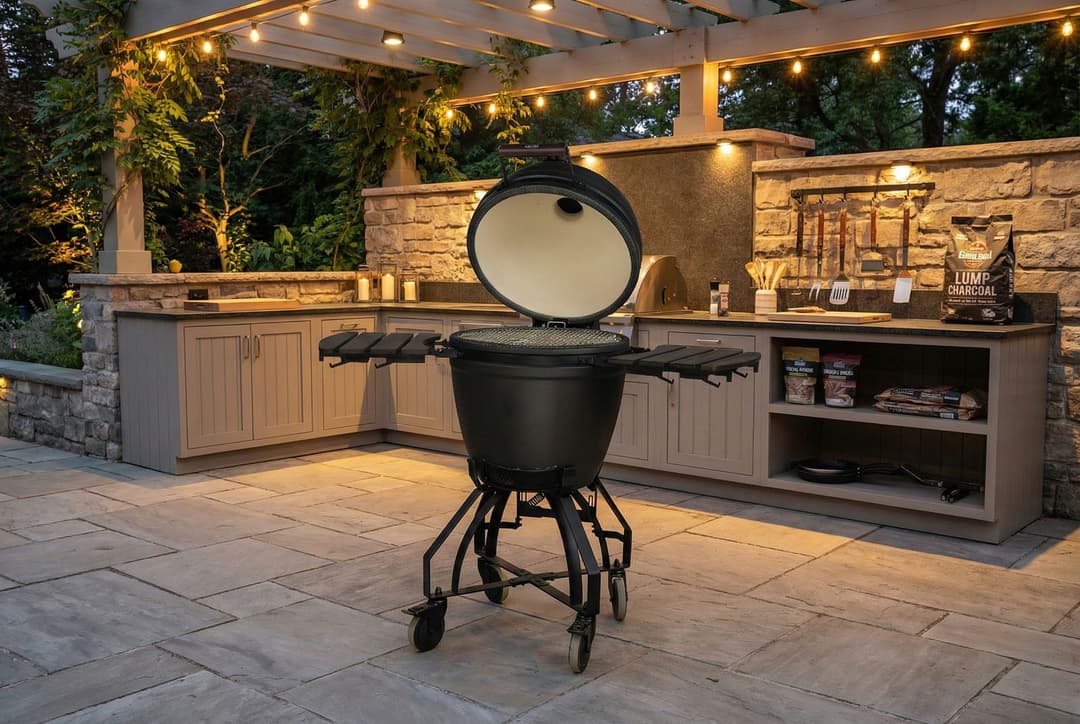
That third one is what the shape of the appliance is all about. A kamado is not round because it looks good, but because a curved dome bends the rising air back towards the centre instead of letting it run flat against a lid. A circulation forms that washes over the food from every side. Put a heat deflector underneath and the radiation drops away, leaving pure convection: at that moment the kamado is no longer a barbecue but a stone oven.
On top of that, the walls radiate along. The ceramic is not only insulation, after half an hour it is also a heat source: it gives back on all sides what it took in. That is why meat cooks evenly instead of only from below. More depth in What makes ceramic cooking different? and What is convection heat in a kamado?.
Key parts of a kamado
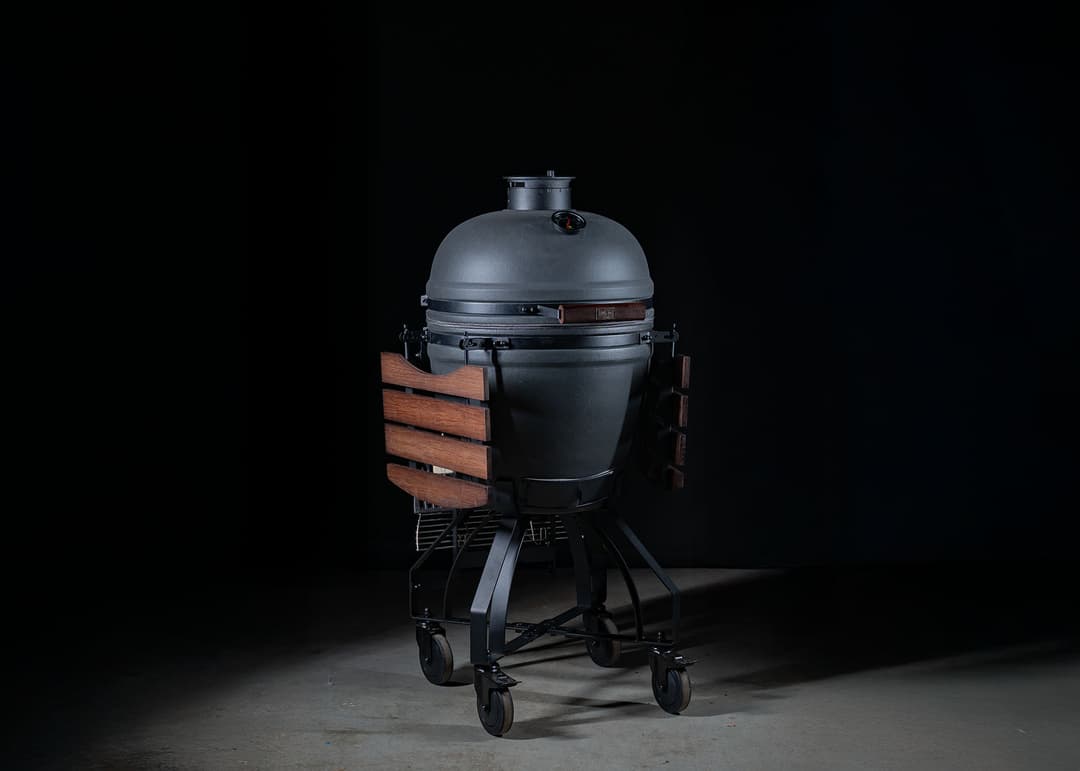
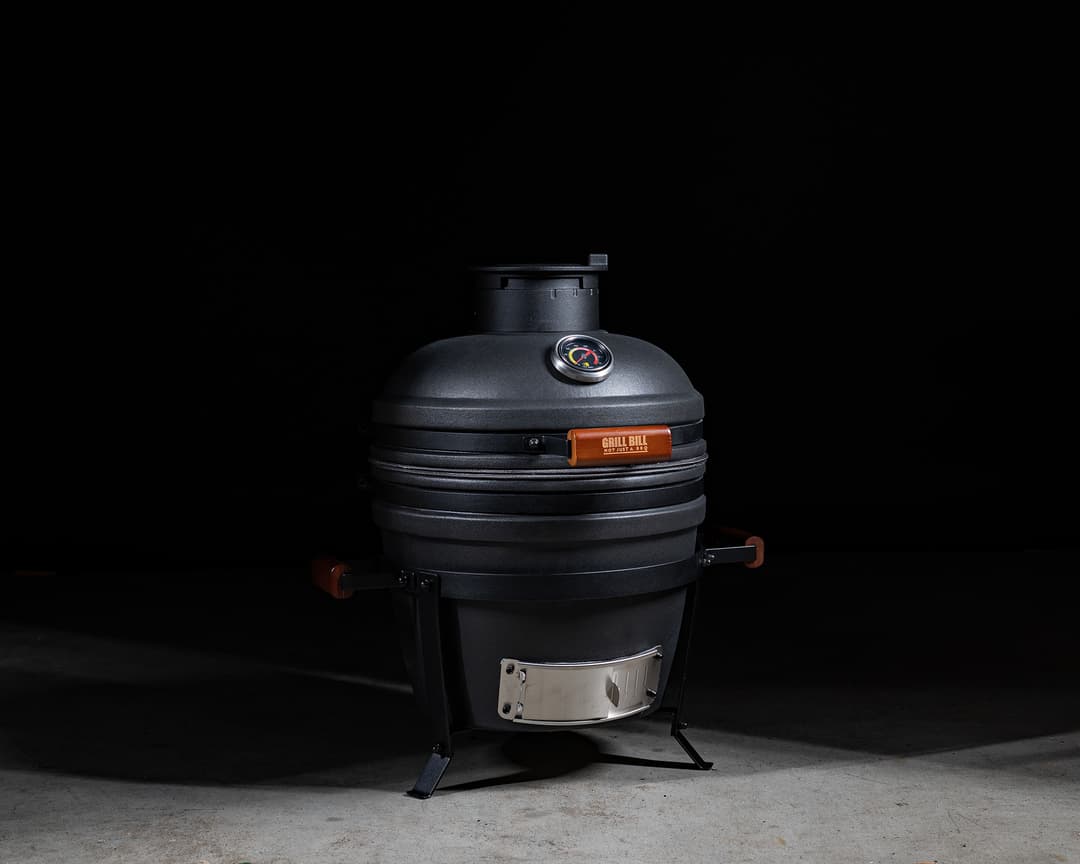
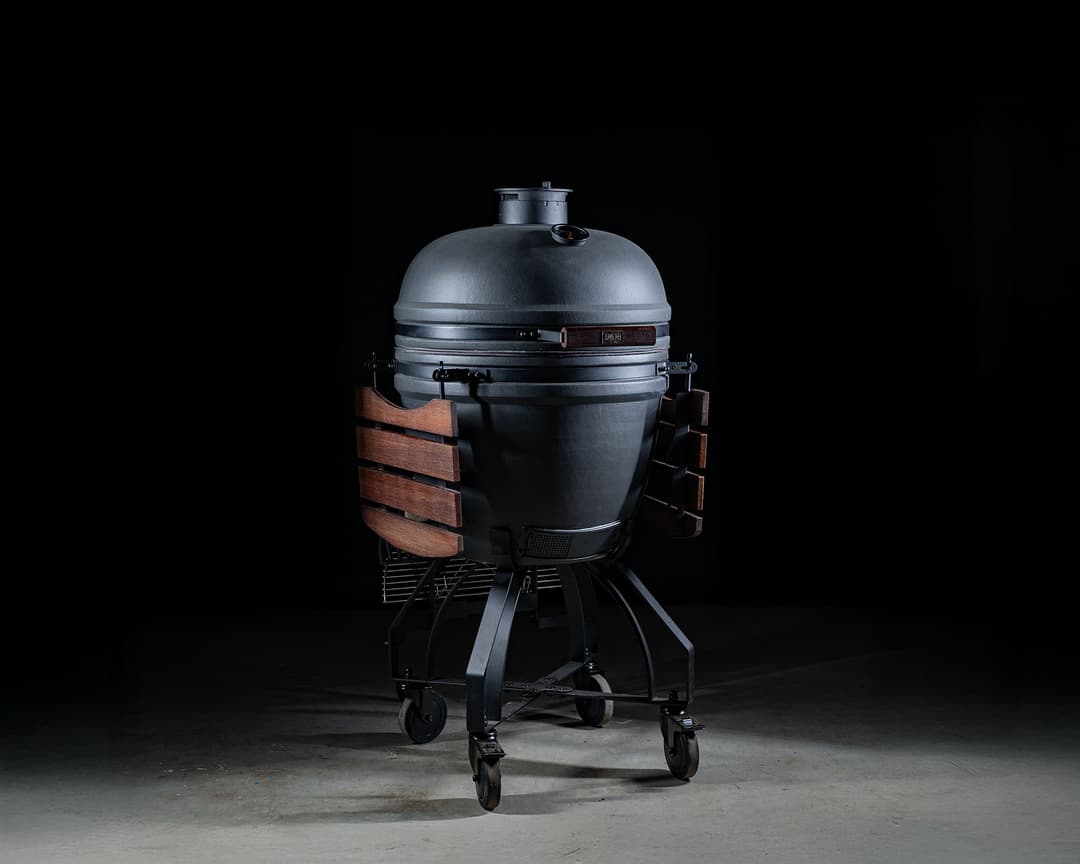
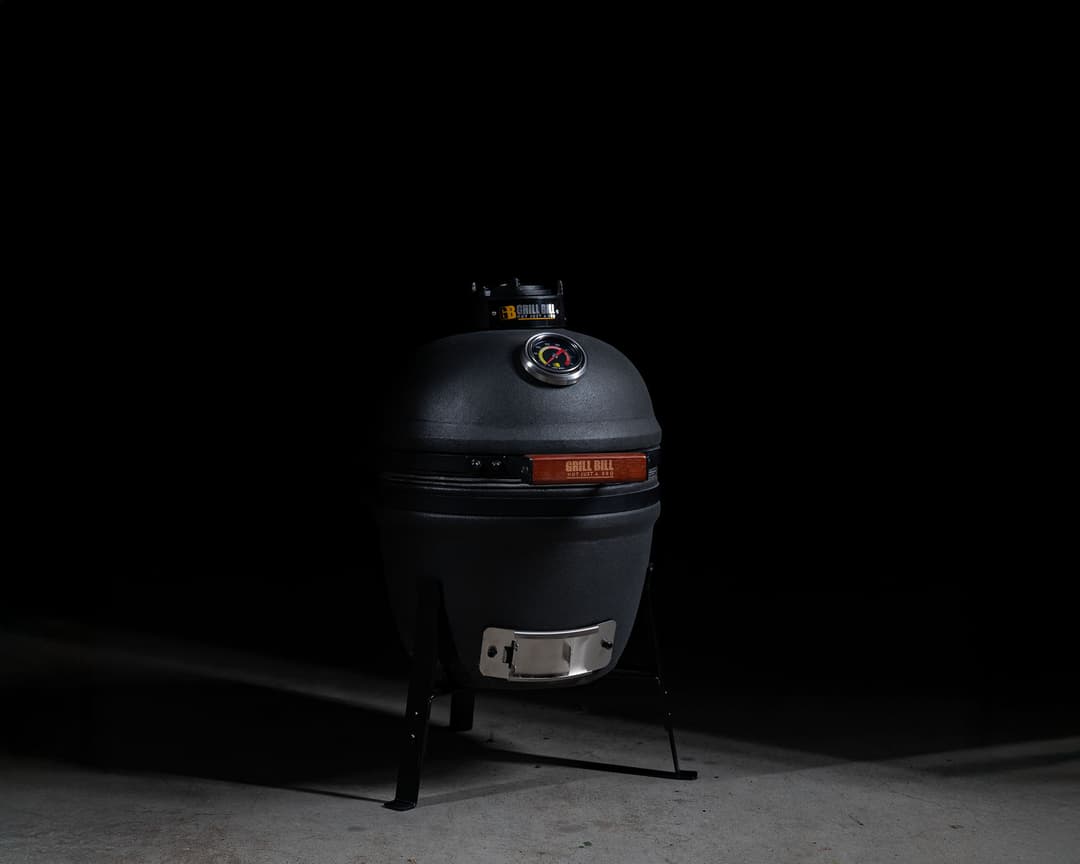
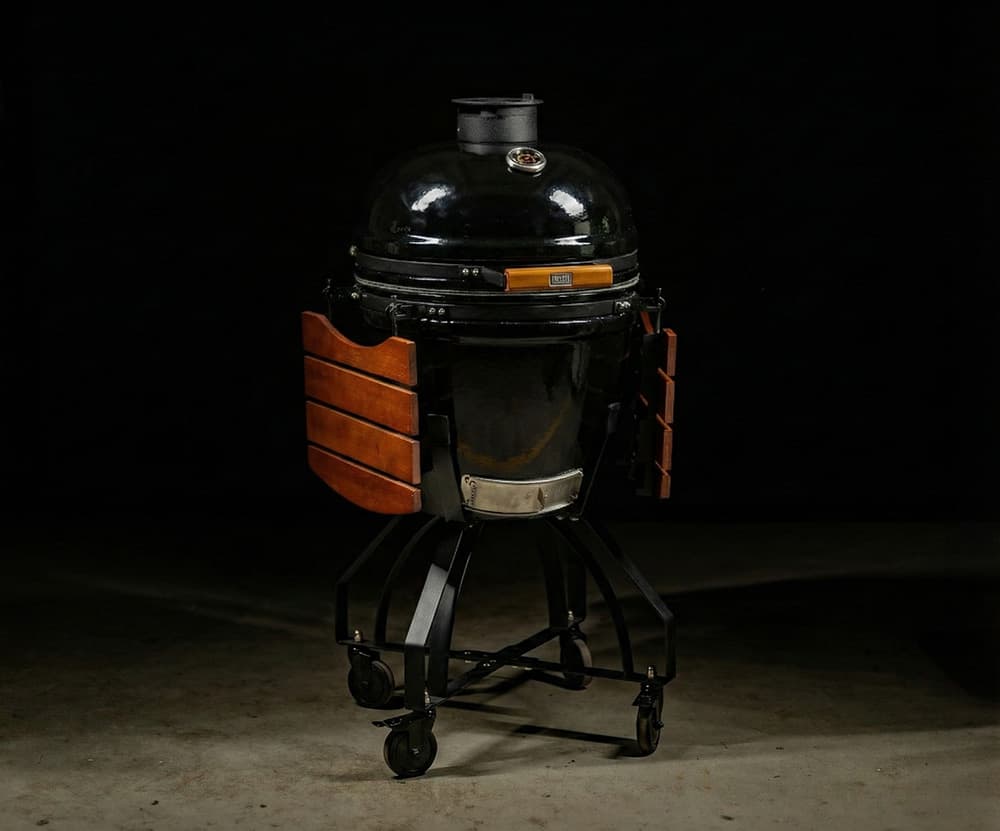
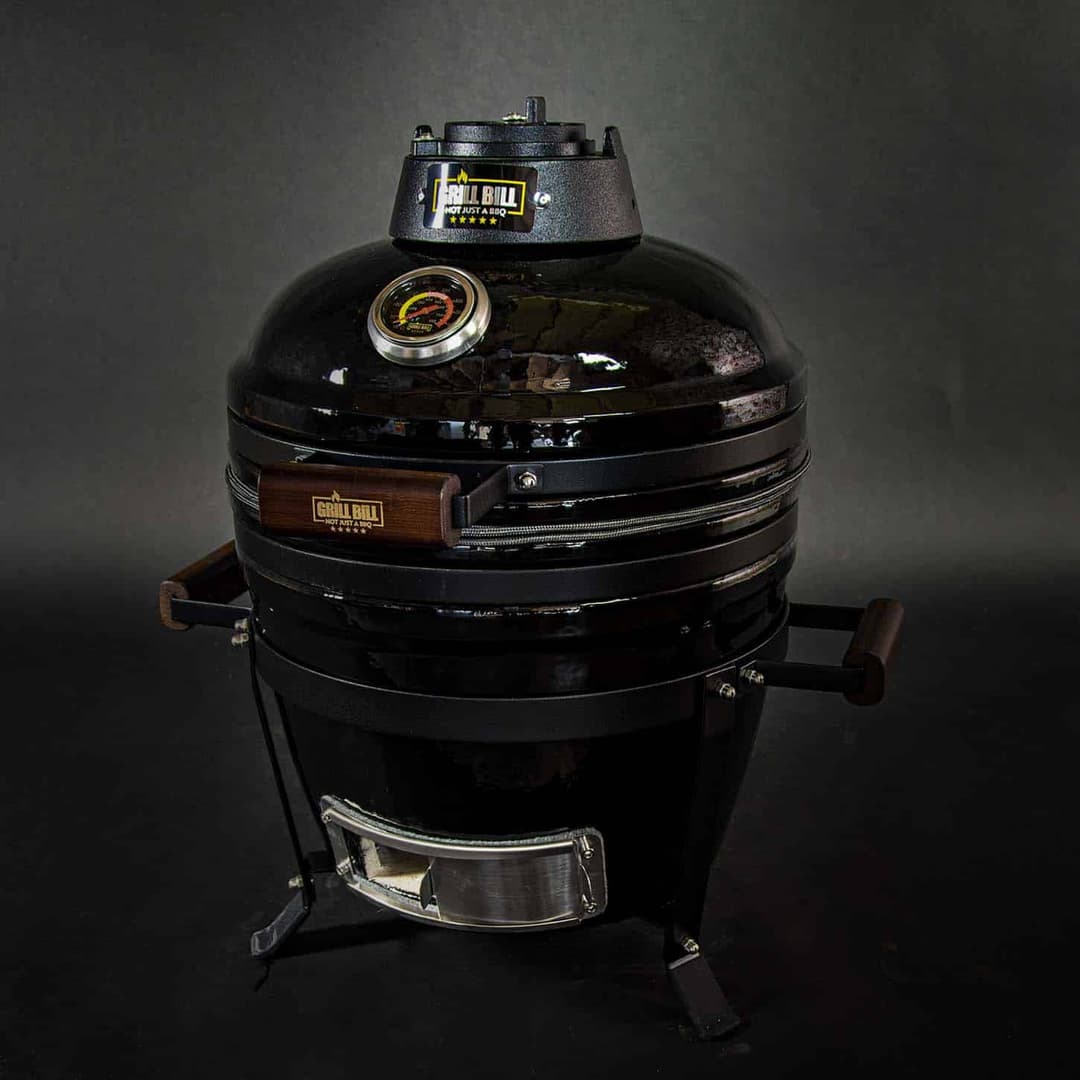
Every part has one job in the system. Understand what each part does and you understand why the temperature behaves the way it does:
- Ceramic dome and base: the heat buffer and the oven effect.
- Air intake: the oxygen supply at the bottom, your coarse control.
- Top vent: the exhaust on top, your fine control for temperature.
- Firebox and fire ring: hold the charcoal and guide the air past the fire.
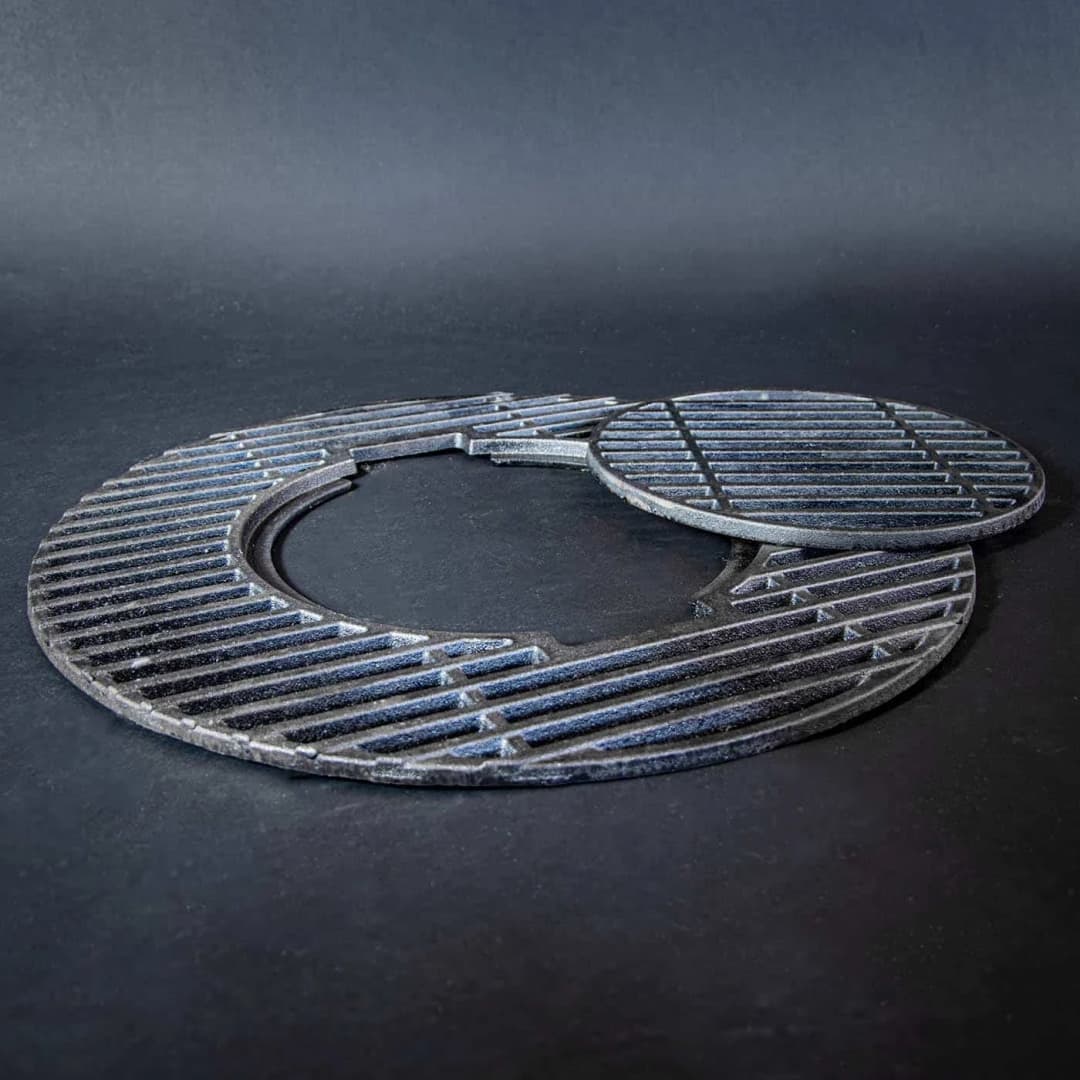
- Stainless steel or cast iron grates: the cooking surface, expandable per size.
- Heat deflector: the ceramic plate that blocks direct heat for indirect cooking.
Setting the temperature in practice
The theory is air and ceramic, the practice is a fixed routine. Light the kamado with the intake and top vent open. How long it takes to come up depends on your charcoal: soft charcoal sits at grilling temperature in ten to fifteen minutes, hard, dense charcoal needs twenty-five to thirty. With either one, allow another ten minutes before the ceramic itself is heated through, because that is what keeps the temperature stable later on.
The most important rule: start closing the sliders about 25 degrees before your target. The ceramic always coasts on a little, and anyone who waits until the gauge is on target will overshoot as a matter of course. Then wait five to ten minutes before adjusting again: the system responds slowly, and whoever intervenes faster chases the temperature past its target.
- Low & slow (110 to 130 °C): intake barely open, top vent almost closed.
- Baking and roasting (160 to 200 °C): intake a quarter open, top vent half open.
- Grilling and searing (230 °C and above): both wide open, and take care when opening the lid.
The full routine, including opening safely at high temperatures, is in How do you control the temperature in a kamado?. Lighting it is covered step by step in How do you light a kamado BBQ?.
Why a kamado responds so slowly
Almost every frustration with temperature comes from one misconception: people expect a kamado to respond like a gas dial, and it does not. It responds like a bath filling up.
When you move the sliders, you are not changing the temperature but the amount of oxygen. The fire adjusts to that, and only then does the ceramic begin to charge or discharge. That third step is the slow one: a wall of several centimetres takes minutes. What you see on the thermometer is therefore always the result of something you did five to ten minutes ago.
Two practical consequences. Steering up goes faster than steering down, because adding oxygen works immediately while a charged ceramic wall only sheds its heat slowly. And a correction you repeat too soon compounds: you have not seen the first one yet while the second is already on its way. Hence the rule of thumb to wait after every adjustment and do nothing.
That same slowness is exactly why the system is so stable. An appliance that responds slowly to your slider responds just as slowly to a gust of wind, a cold night, or a lid that was open for a moment.
Common temperature-control mistakes
Almost every temperature frustration traces back to one of these four habits, and all of them come down to doing too much rather than too little:
- Adjusting too quickly: the ceramic responds slowly, so sliding every two minutes leaves you endlessly oscillating around your target.
- Opening the dome too often: every opening adds oxygen and lets heat escape.
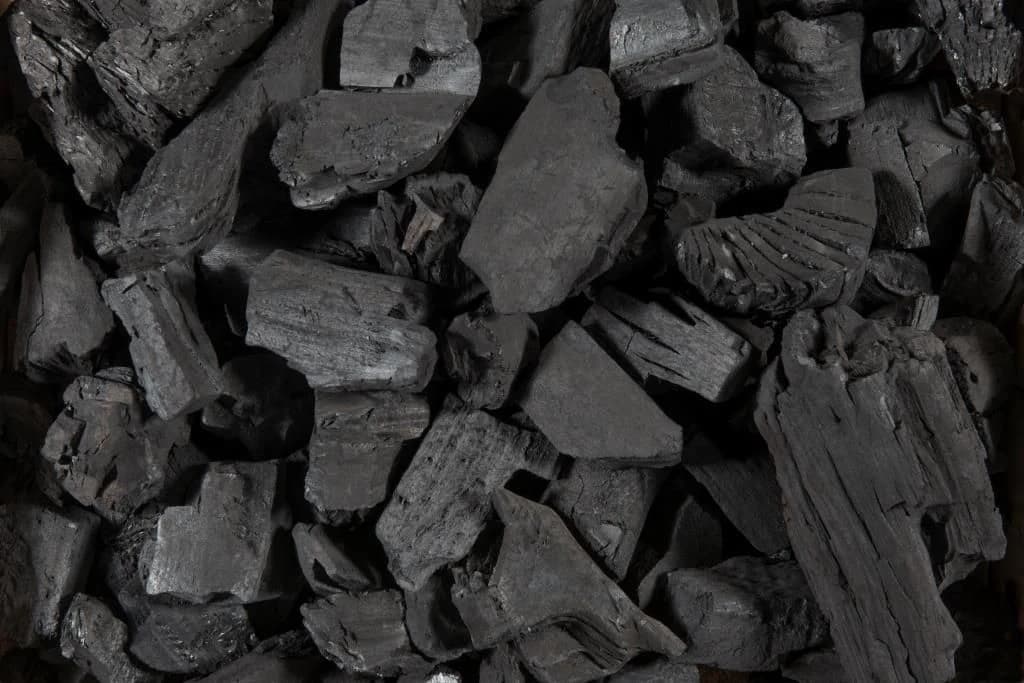
- Using the wrong charcoal: small pieces smother the airflow, coarse chunks keep the channel open. See which charcoal fits best.
- Opening the top vent fully: the system then draws like a chimney and the temperature shoots up.
Where to read on
If you want to go from understanding to doing, How do you control the temperature in a kamado? is the next step: it has the slider settings per dish and the safe way to open the lid at high temperature. If you are starting from scratch, How do you light a kamado? logically comes first. And if you are still facing the purchase, size mostly determines what you can do comfortably later on: that is in Which kamado size suits me?, with the broader trade-off in Buying a kamado: what to look for?.
Frequently asked questions about how a kamado works
Why does a kamado heat up slowly?
Because the ceramic has to take up heat itself first. How long that takes depends on your charcoal: soft charcoal sits at grilling temperature in ten to fifteen minutes, hard charcoal needs twenty-five to thirty. Give the kamado another ten minutes after that to heat the ceramic through.
How do you control the airflow?
Via the air intake at the bottom (coarse control) and the top vent above (fine control). Work from coarse to fine and give the system five to ten minutes to respond to each adjustment.
Is a kamado suitable for baking?
Yes. With the heat deflector in place the direct radiation drops away and you are left with pure convection, so the kamado behaves like a stone oven: from bread to pizza at high temperature.
Why does the temperature sometimes shoot up?
Usually because the top vent and intake are open too far, or the lid has been open too long. Close the sliders further and wait calmly, the ceramic pulls the system back by itself.
How do you bring the temperature back down?
By smothering the air supply: intake and top vent almost closed. Do not expect an immediate drop, because heated ceramic releases its warmth slowly. Steering down therefore always takes longer than steering up.
Why does my kamado not respond to the sliders straight away?
Because the sliders do not control temperature but oxygen. The fire adjusts, and only then does the ceramic charge or discharge. What you see on the thermometer is the result of an adjustment from five to ten minutes ago, so wait that long before intervening again.
Written by

Grill Bill specialises in ceramic kamado barbecues and shares knowledge about low & slow cooking, smoking, grilling and baking on the kamado.
Read onThree more
Three more
from the archive.
29 September 2026
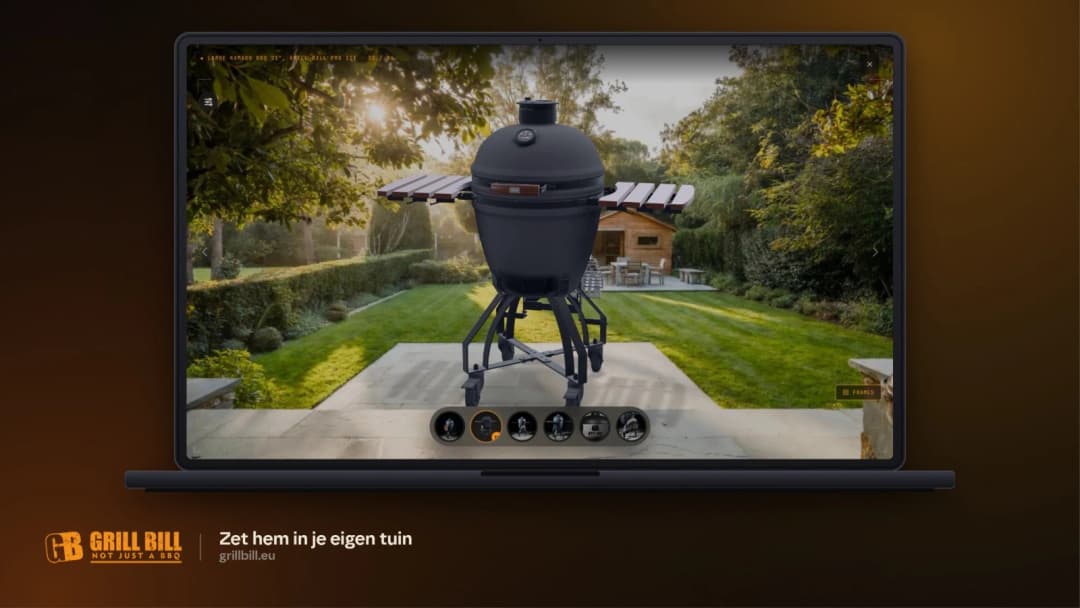
De nieuwe grillbill.eu: bekijk je kamado in 3D en zet hem in je eigen tuin
De nieuwe grillbill.eu is live. Draai de Pro III in 3D, zet hem in je eigen tuin, vergelijk alle modellen naast elkaar en leer koken in de GB Academy.
8 September 2026
Kamado inbouwen: in een tafel, buitenkeuken of als Solo
Uitsparingsmaten per Grill Bill-maat, ventilatie onderin, hout afschermen en de keuze tussen kopen, laten bouwen of zelf maken. Plus de Large en XL Solo zonder trolley.
5 August 2026
Grill Bill Classic, of toch een Pro Kamado BBQ?
Grill Bill Classic of Pro? Het keramiek is in alle drie hetzelfde en de garantie ook. Je betaalt voor afdichting, glazuur en uitrusting. Per maat op een rij, met complete specificatietabellen.
Stook inOnce a month,
Once a month,
a echte letter.
Recipes, drops and long essays about smoke. No noise, never resold.