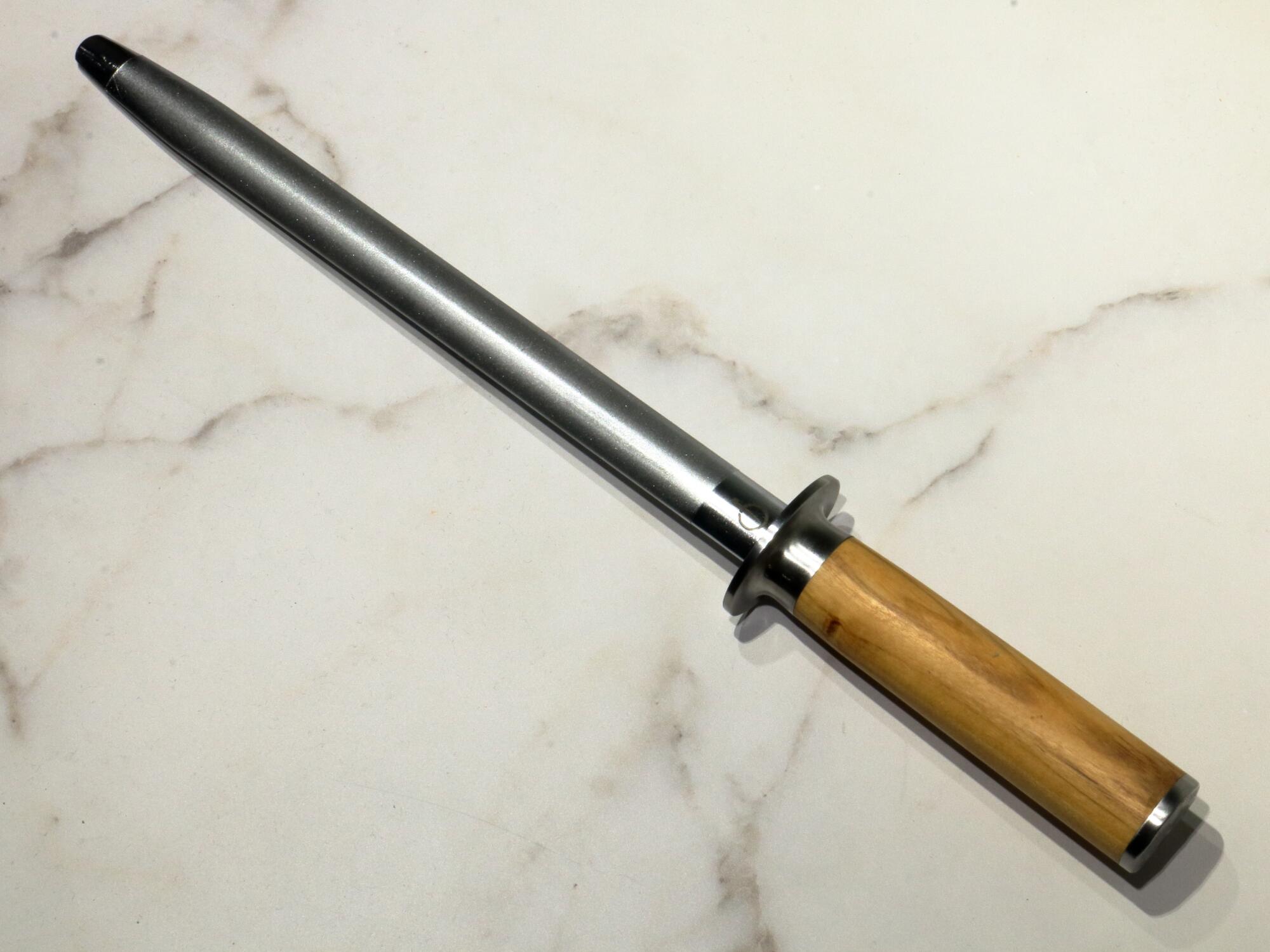




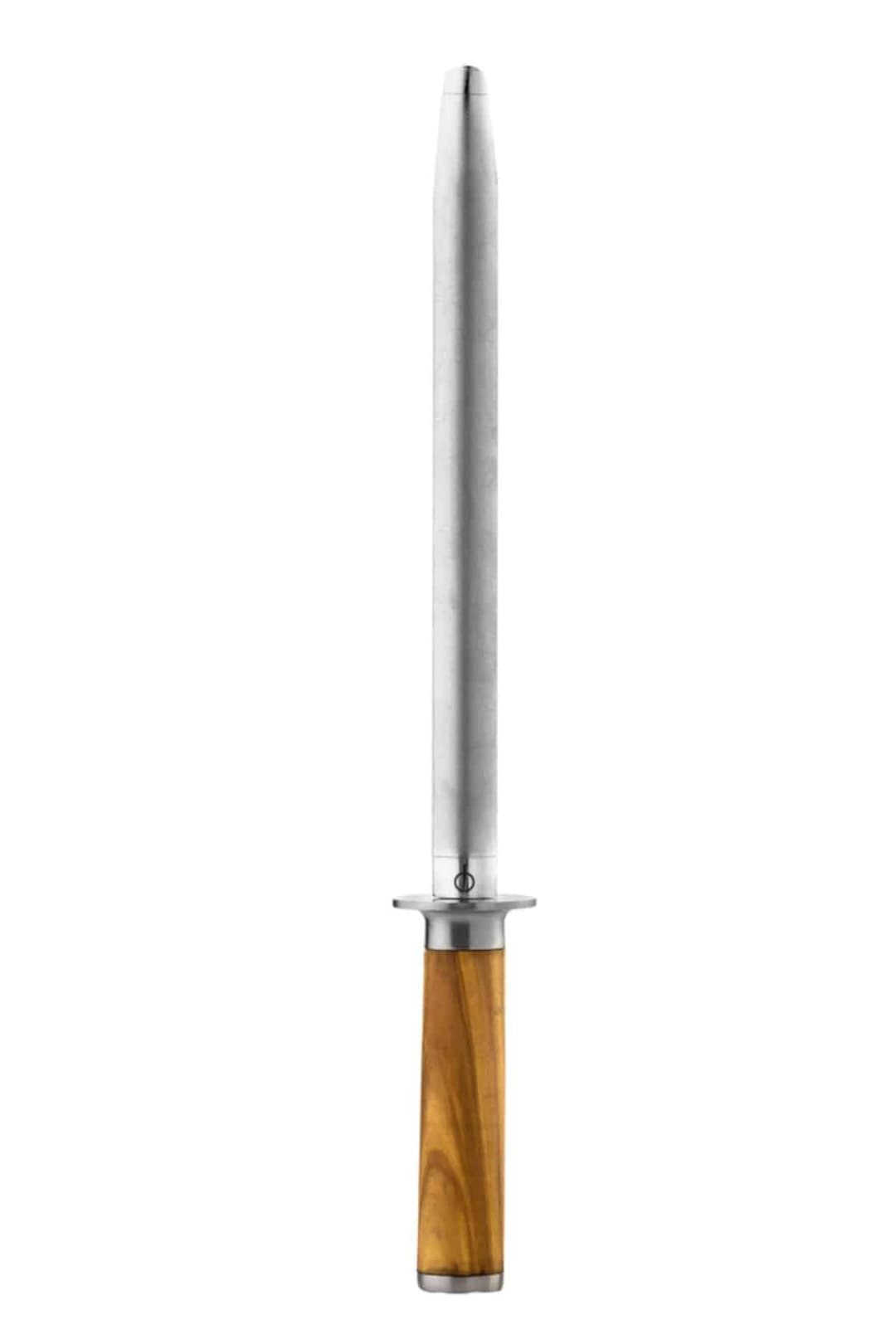
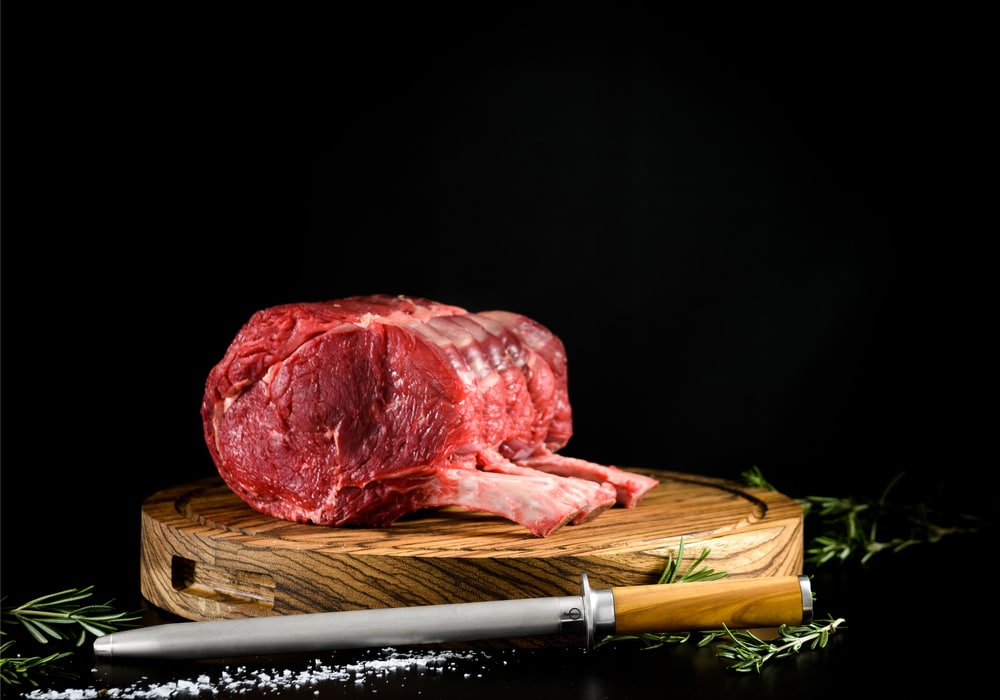
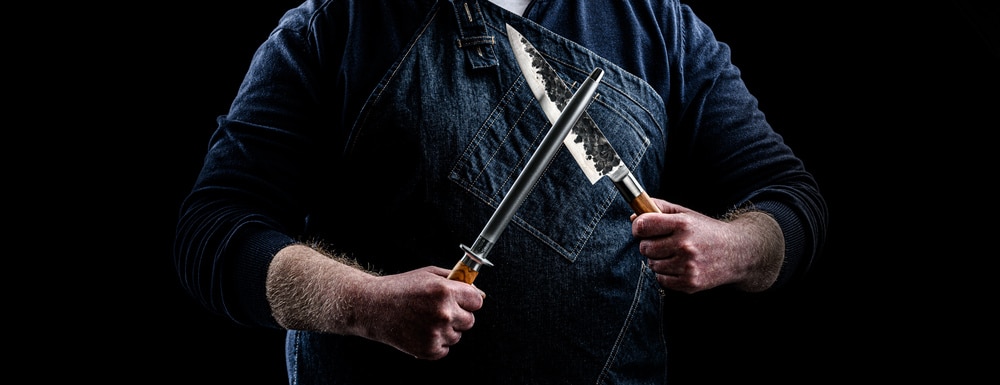
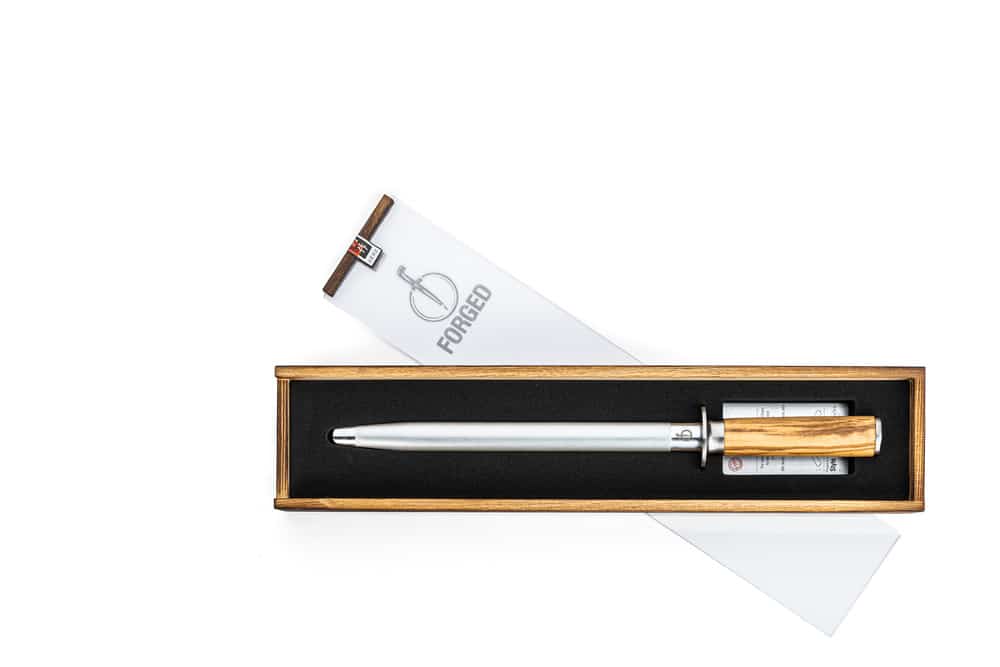
This honing steel with an olive wood handle belongs with the Olive Forged knives and does something different from a sharpener: it does not remove any steel, it straightens the wafer-thin edge that gets pushed sideways during cutting. That is the difference between a knife that feels blunt after two weeks and one that stays sharp for months.
When to use a honing steel with an olive wood handle
Honing is something you do briefly and often: before you start on a piece of meat, or halfway through a long cutting session. If you notice the knife sliding over a tomato's skin instead of sinking in, honing is usually enough. If the knife still feels sluggish afterwards, material has actually been lost and it needs sharpening instead.
- Keeps the edge straight without removing any steel
- Takes a few seconds, so you do it more often
- Works on steel chef's, carving, santoku and boning knives
- Olive wood handle sits fully in the hand, even greasy
- Delays the moment you actually need to sharpen
How to hone
Hold the steel with the tip angled downward on a cutting board or firmly in front of you. Place the heel of the knife at the top against the steel at an angle of roughly fifteen to twenty degrees and draw the knife toward you calmly, so the whole edge, right to the tip, runs along the steel. Five to ten strokes per side is enough. Speed does not help, a constant angle does.
Care
Wipe the steel with a dry cloth after use and store it dry. Not in the dishwasher: the wood of the handle cannot handle that. If you see a thin grey line on the cloth, that is normal.
For real sharpening, take a look at the Horl knife sharpeners, which work at a fixed angle. The matching knife from the same range is the Olive Forged chef's knife, and the whole range is at knives.