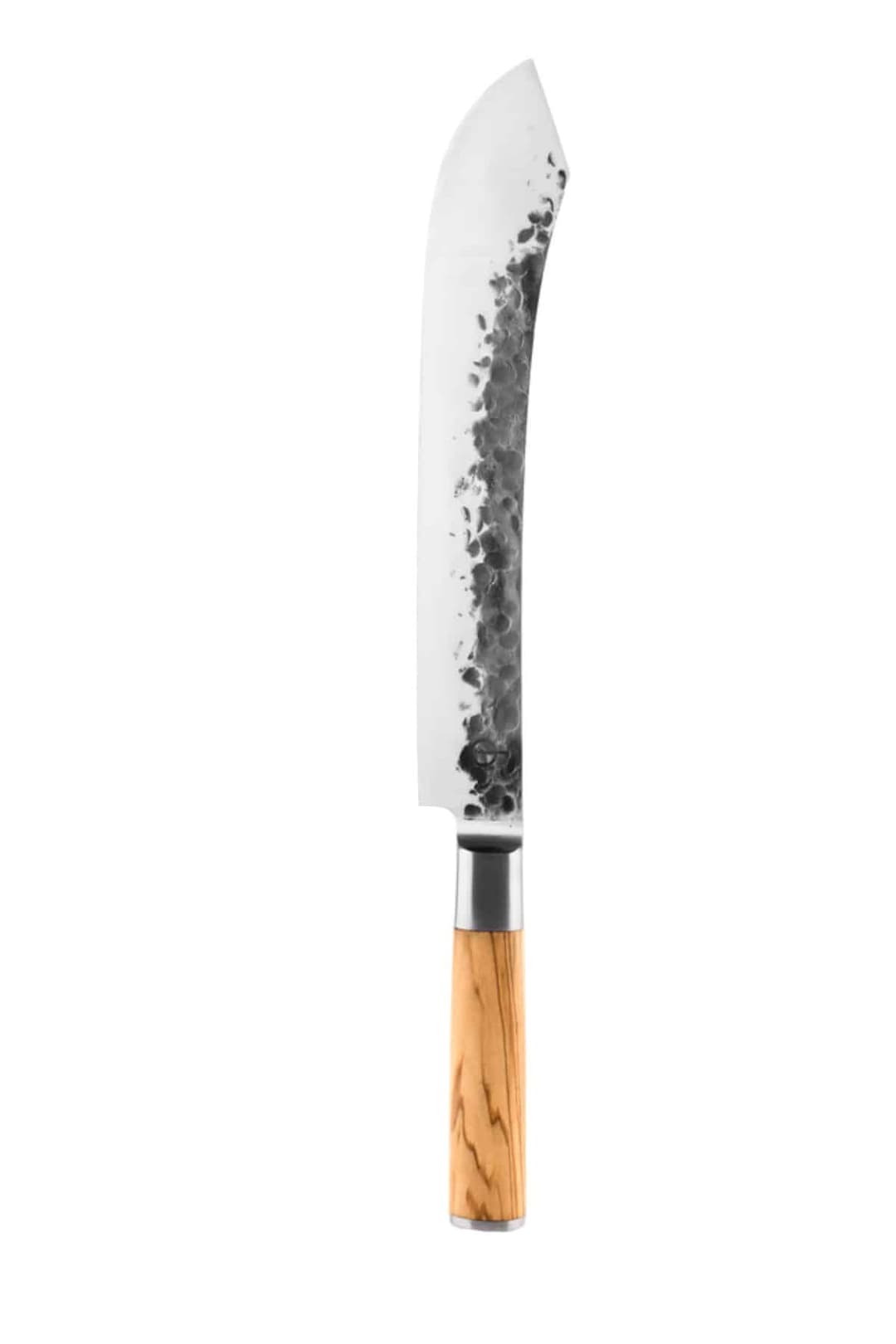
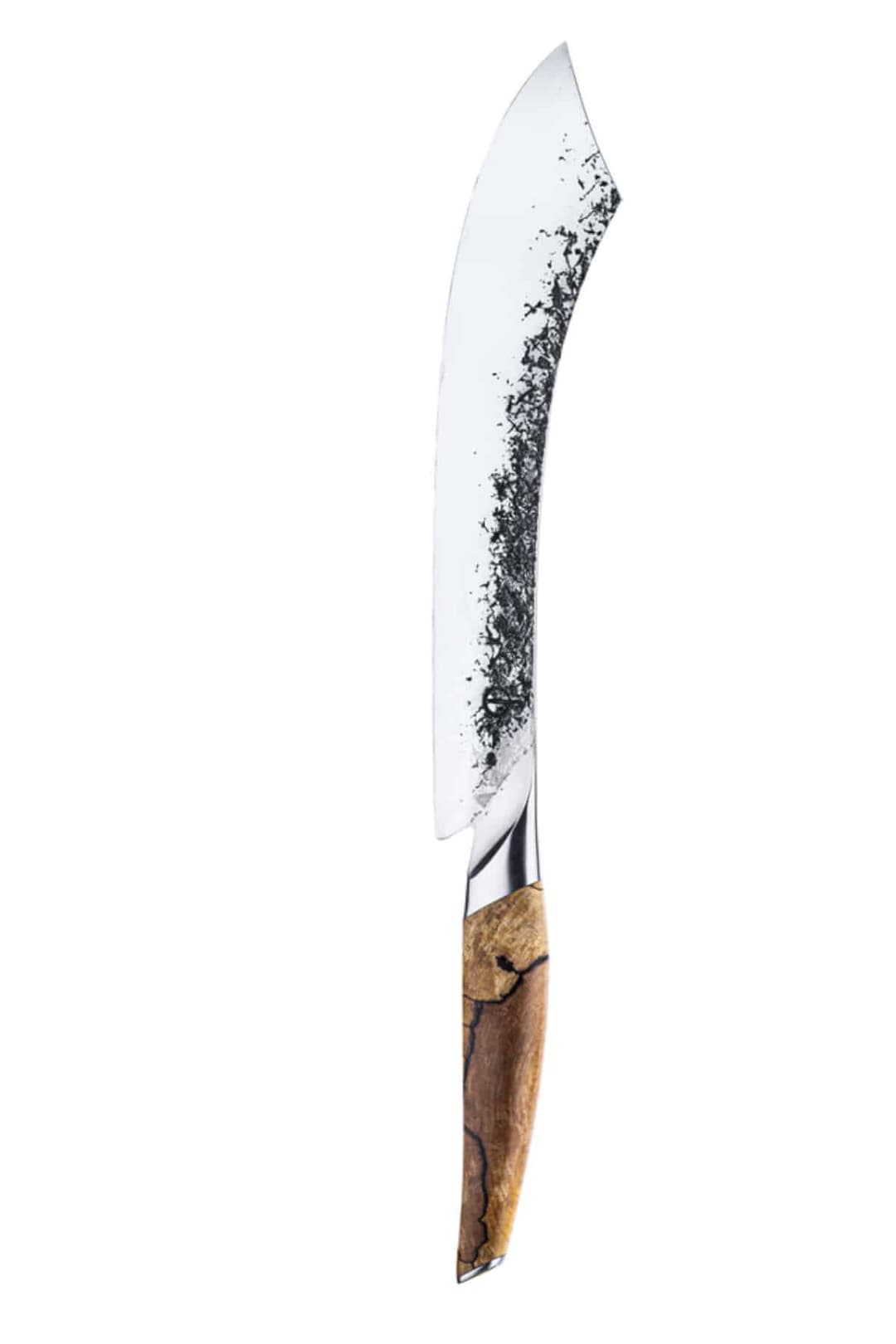
The forged katai butcher's knife is made for the work an ordinary kitchen knife is too light for. Think of dividing a whole pork shoulder into pieces, skinning a pork neck or removing a rib from the rack. The weight of the forged blade does part of the work for you, so you don't have to push and the cut stays clean.
The wide blade also gives you control: you lay it flat along a bone and follow its shape instead of sawing. That reduces meat loss and gives you neater portions.
- Forged blade with noticeable heft
- Wide blade for long, continuous strokes
- Handle that keeps its grip with greasy hands
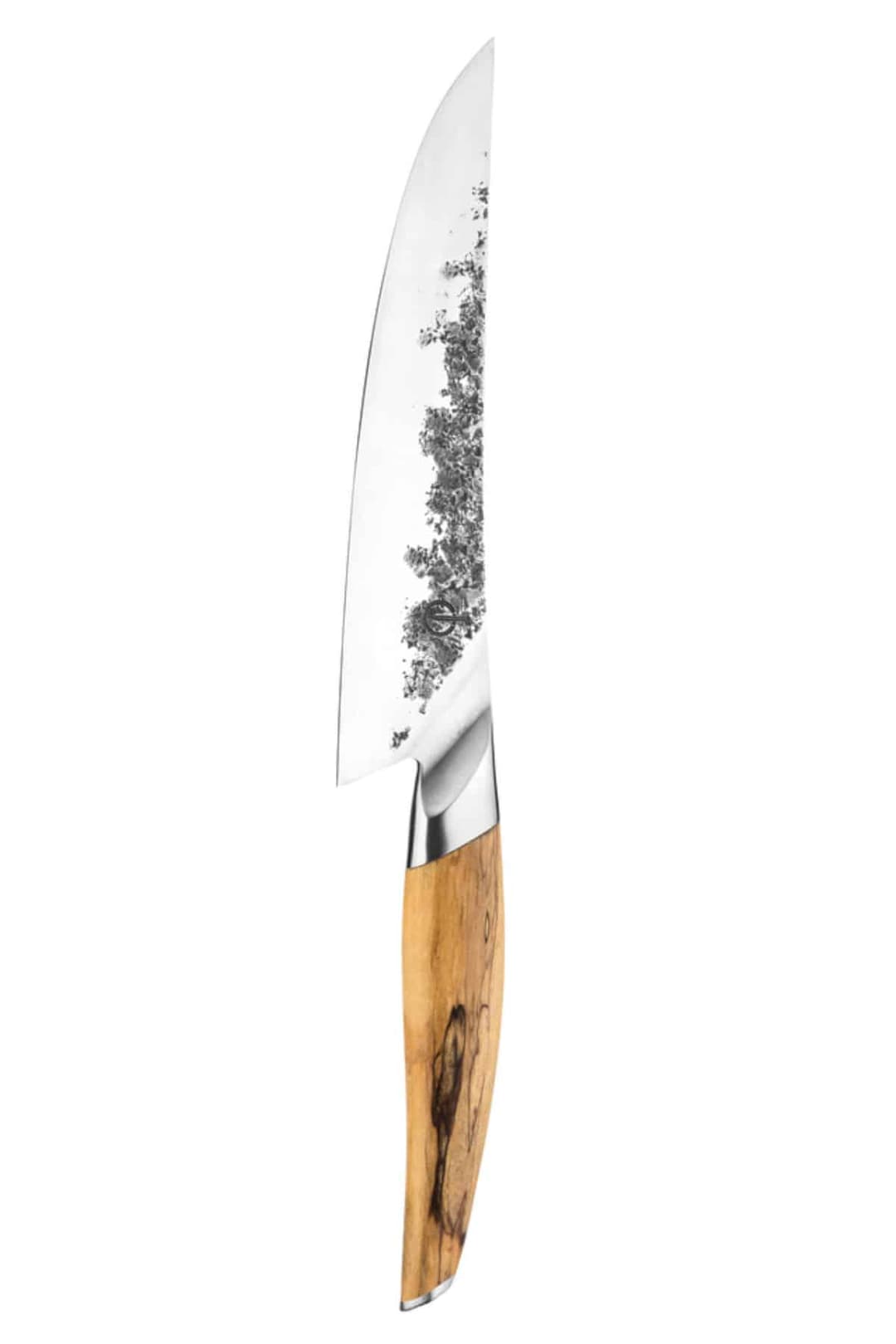
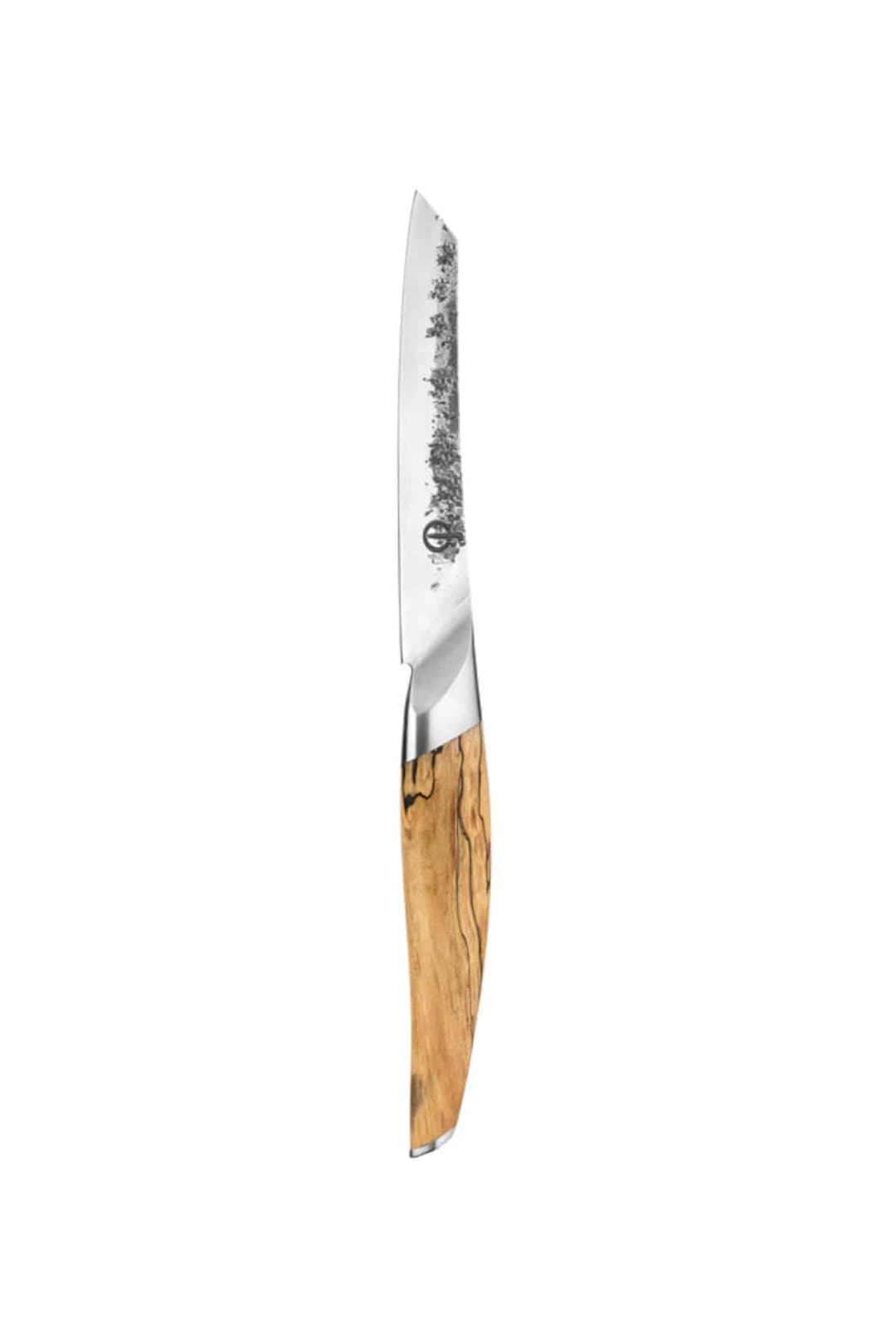
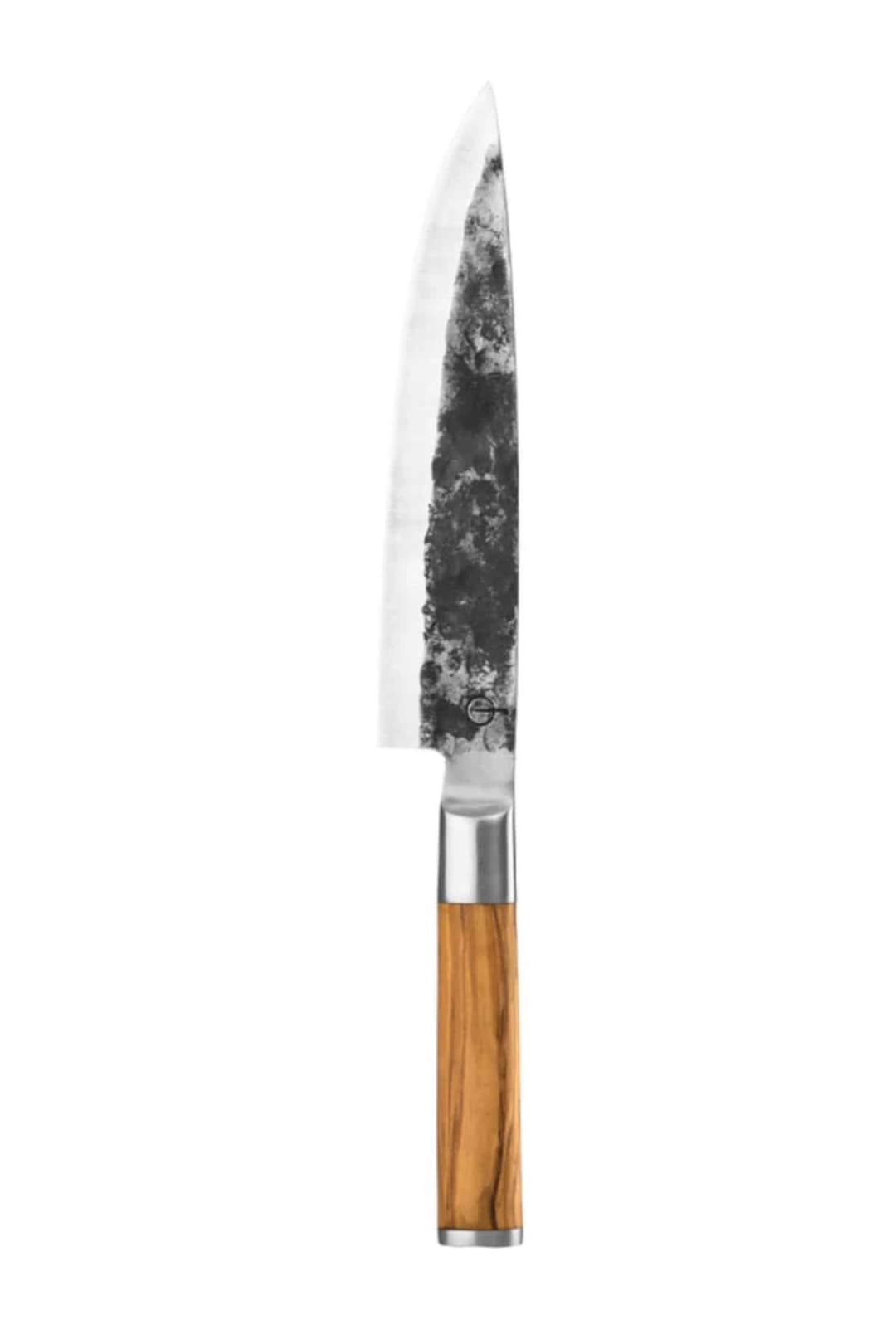
- Fits the Katai range alongside the chef's knife and boning knife
Working with the forged katai butcher's knife
Let the knife do the work: set the heel of the blade at the start of the cut and draw it towards you in one motion. Short pushes and sawing back and forth make the meat ragged. Work on a roomy wooden or plastic board so you can use the full length of the blade.
What the knife is not meant for
This is a cutting knife, not a chopping knife. Hacking through bone damages the edge and can damage the blade. For bone, reach for a cleaver or a bone saw; for fine boning along small joints a narrower boning knife works more comfortably.
Care
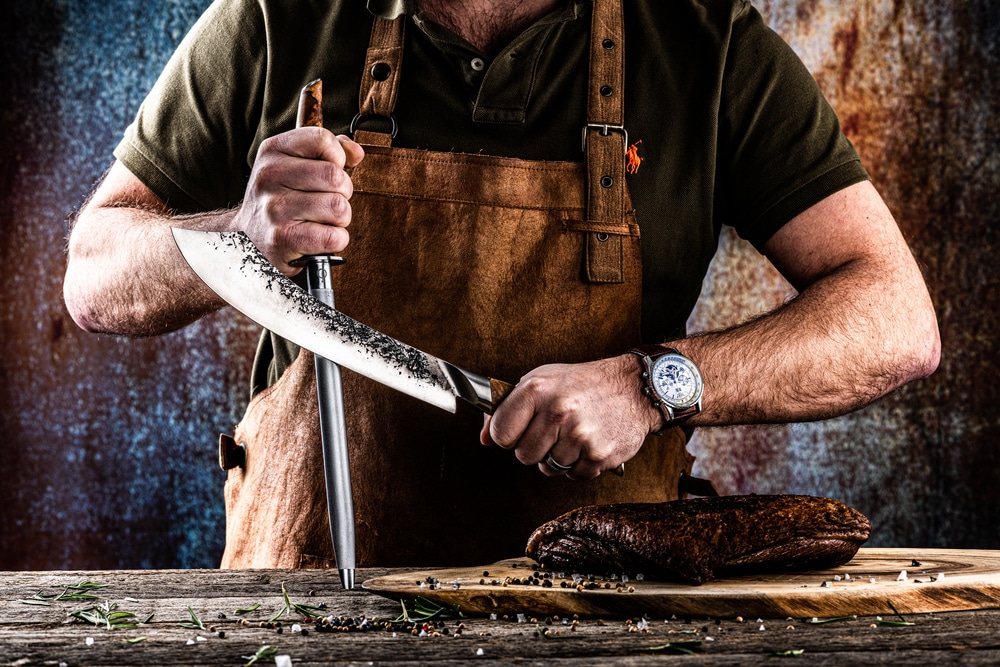
Wash by hand, dry immediately and do not put it in the dishwasher. Hone the knife on a honing steel before every butchering job; that keeps the edge straight and saves sharpening sessions. If you still notice a dull edge, sharpen it on a stone or with a sharpening system.
Feel free to compare with the rest of our range in the knife collection or browse the wider overview of knives and cutting boards. If you often work with large cuts, cutting is most comfortable on a large acacia cutting board. To keep it sharp you'll find everything at the Horl knife sharpeners.