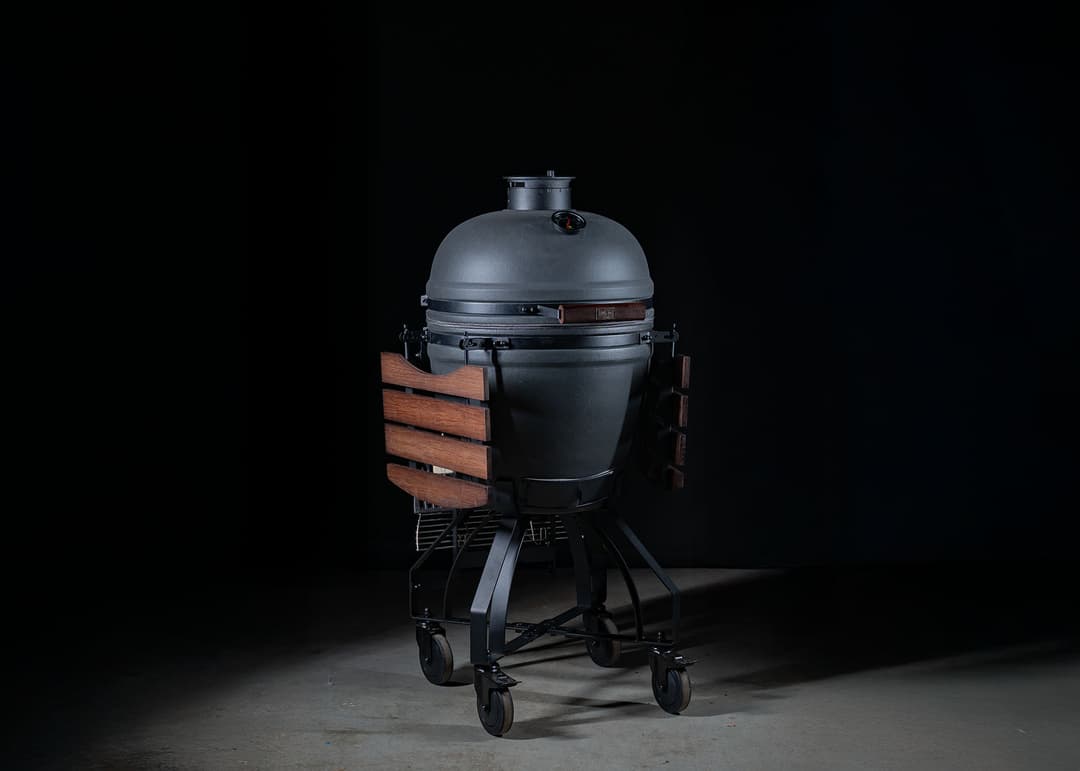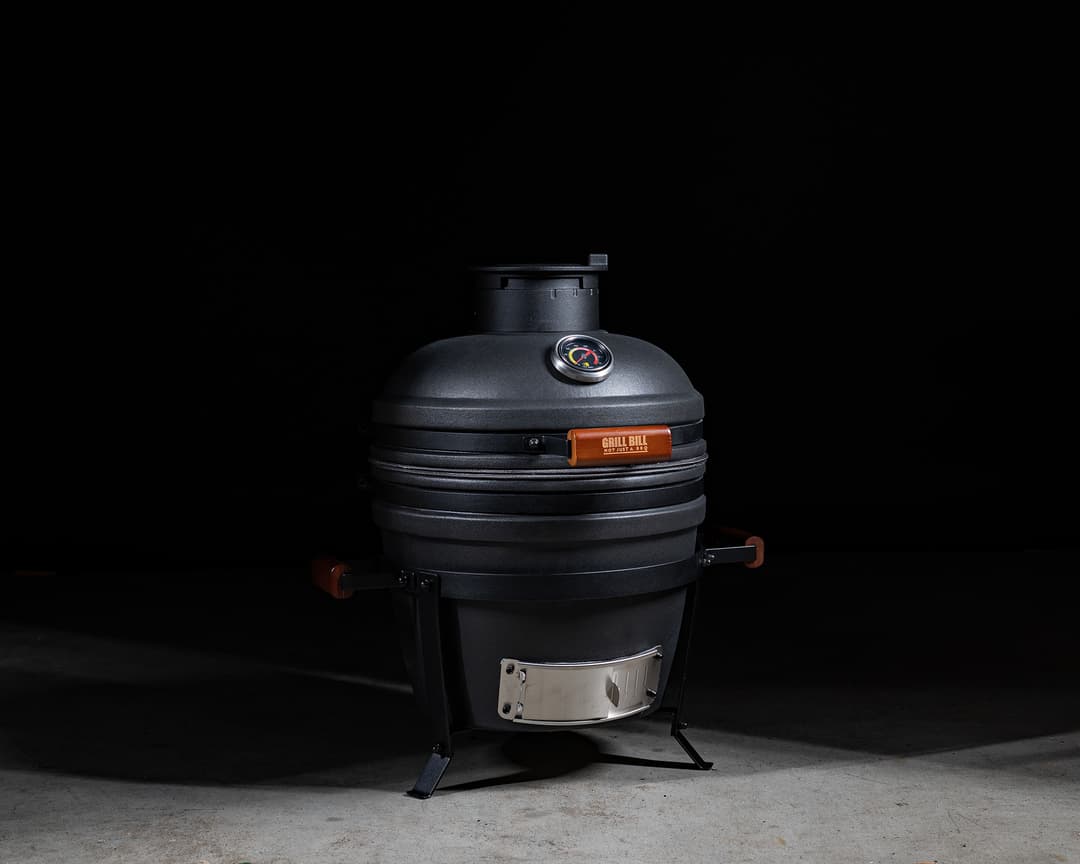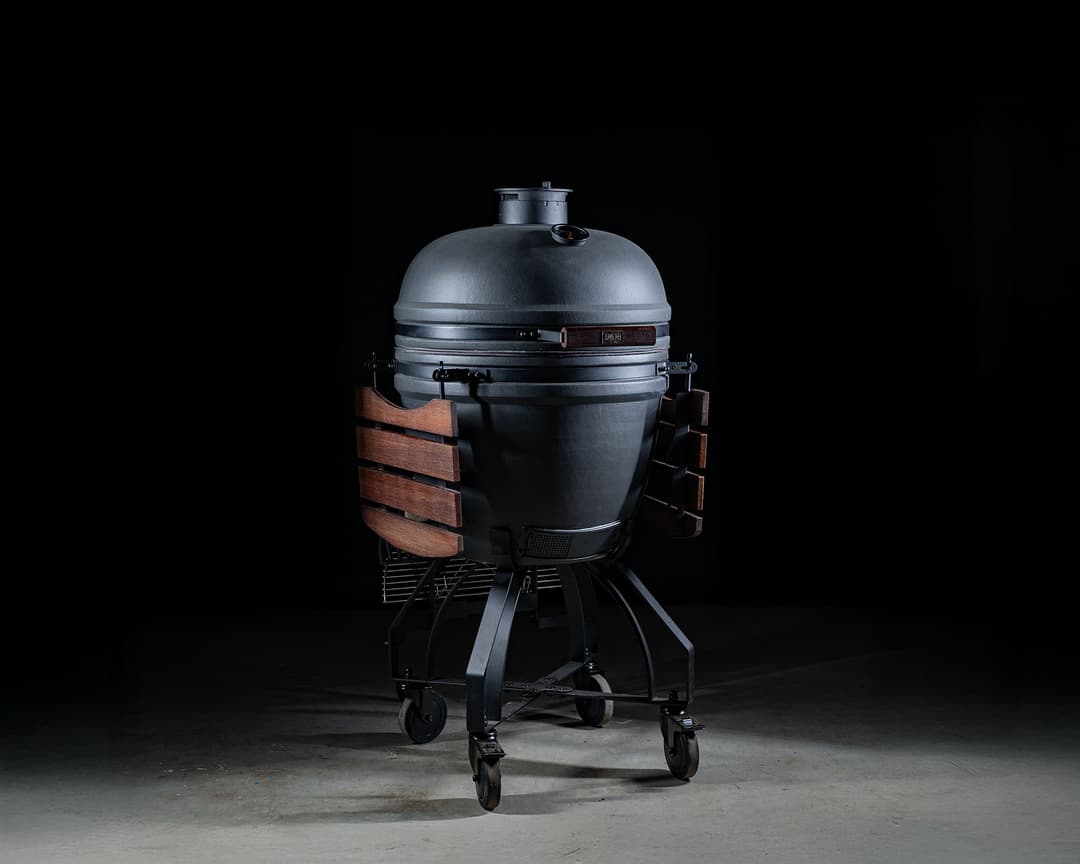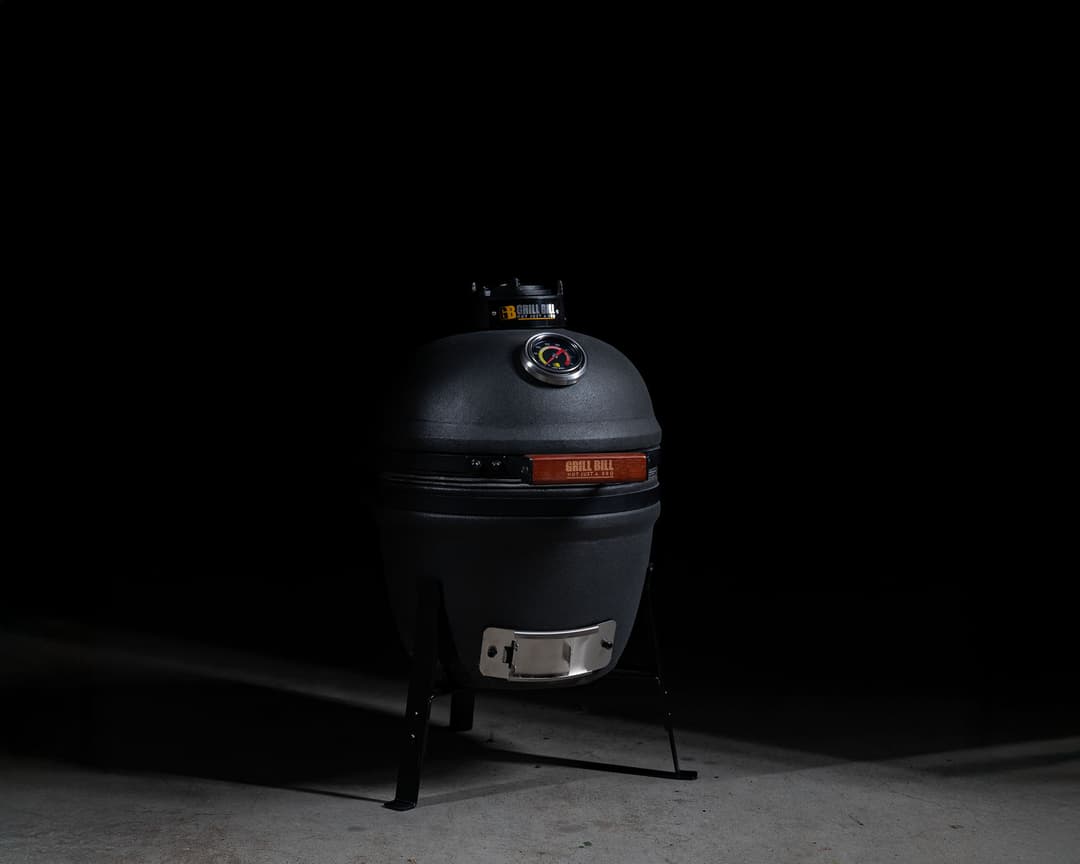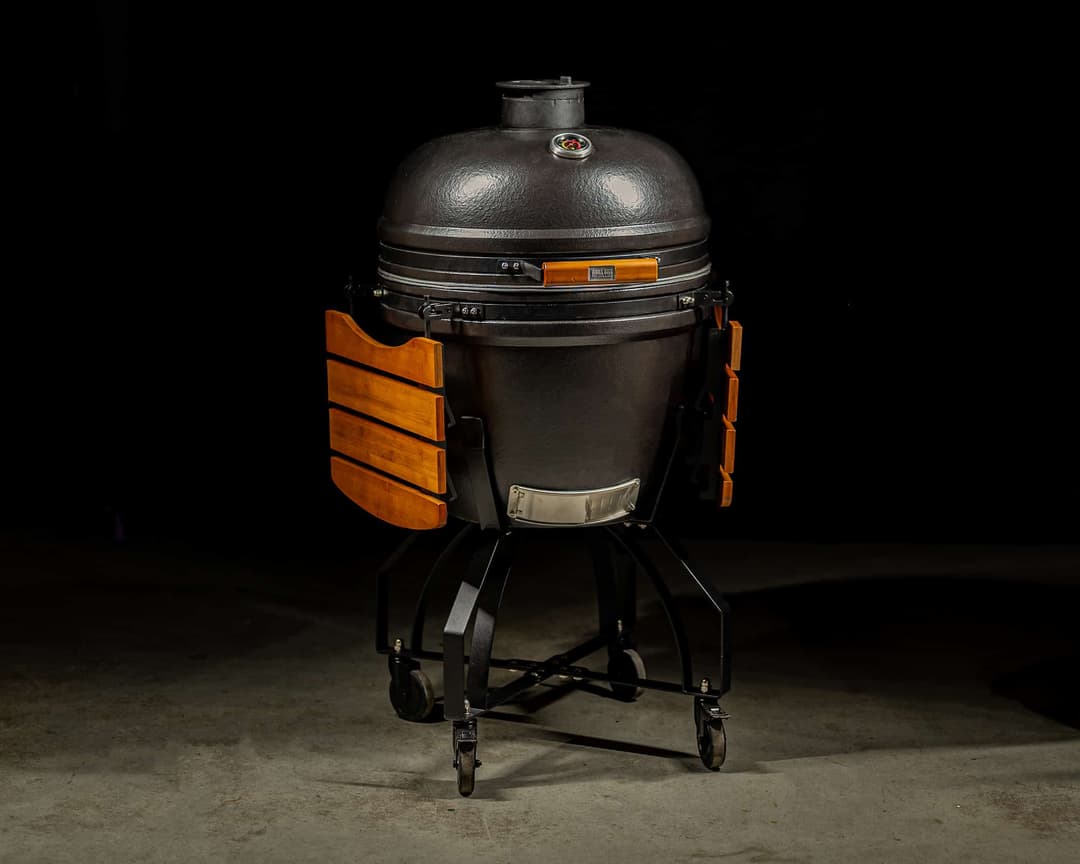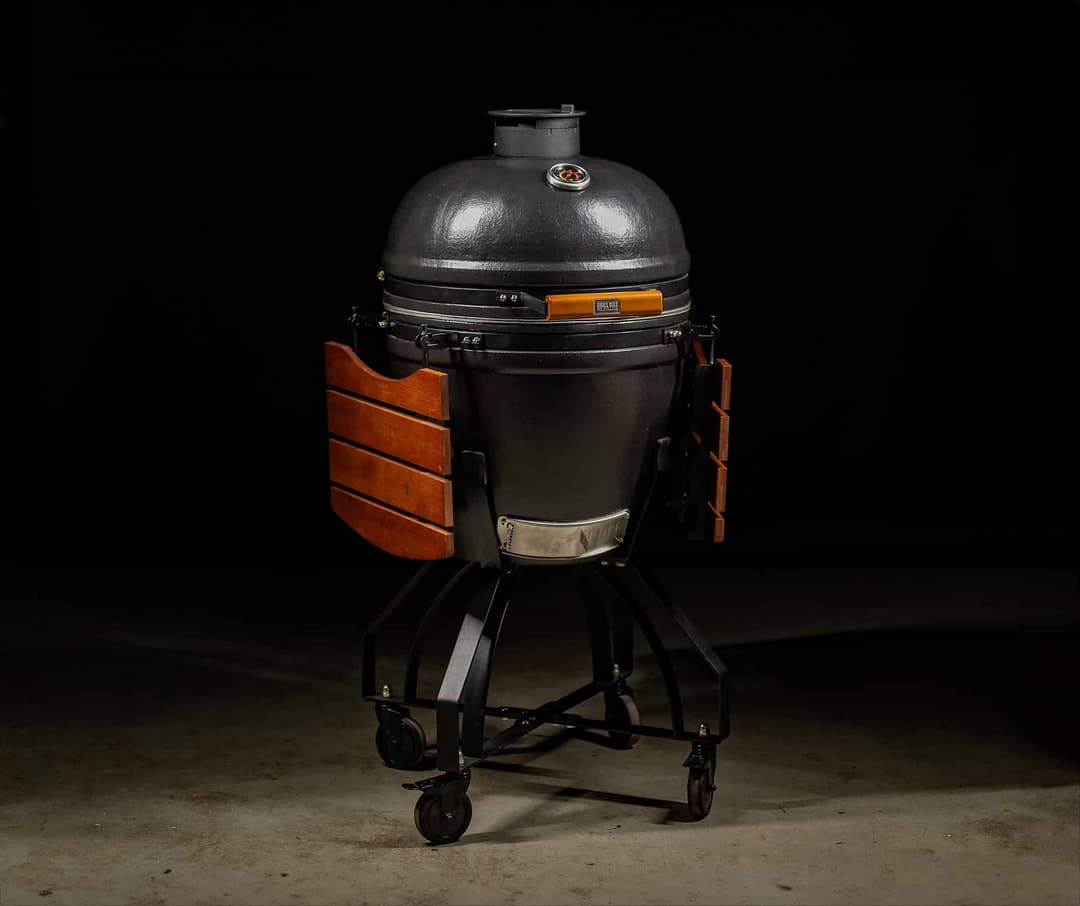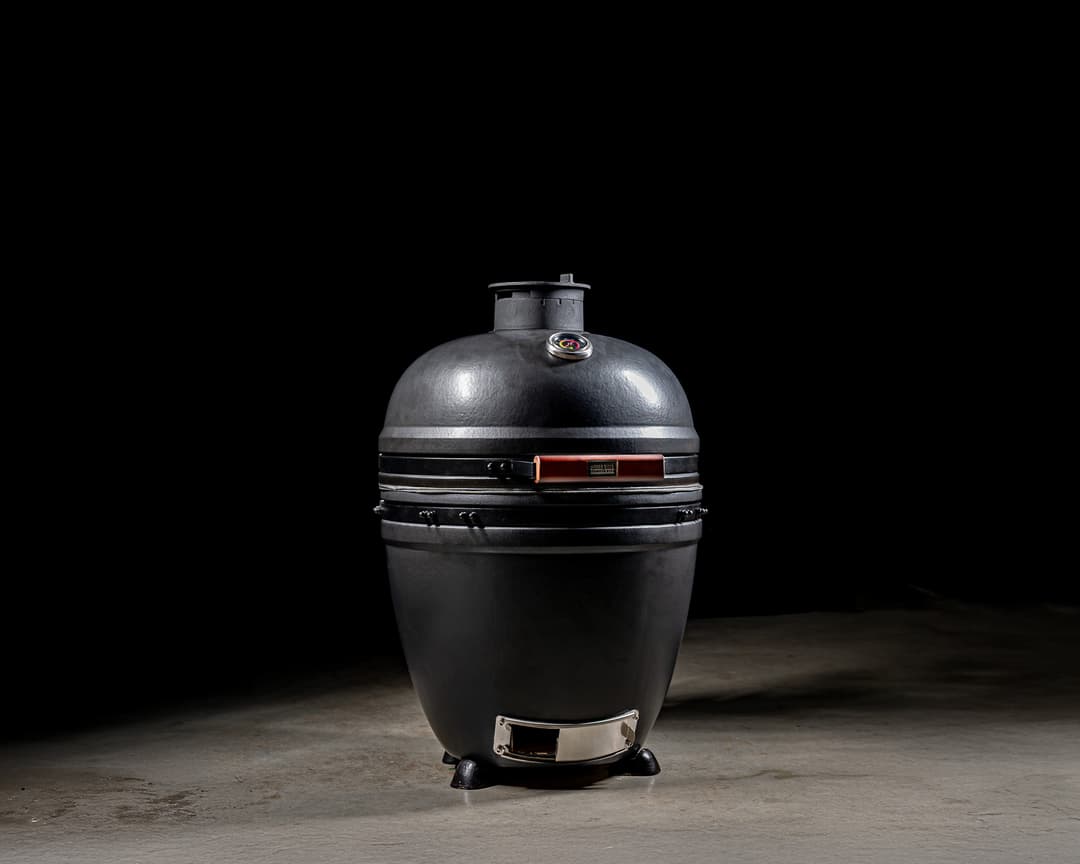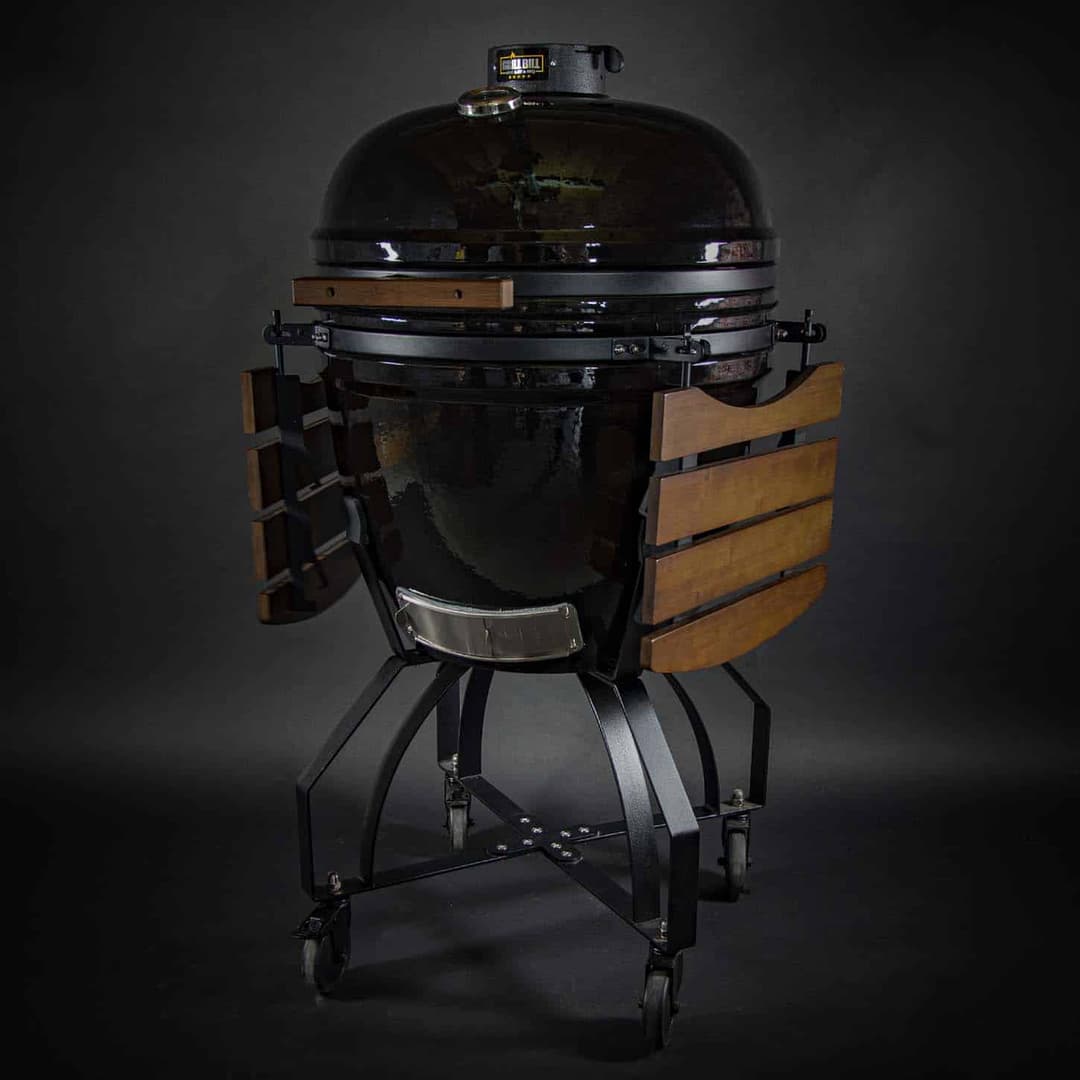
A kamado is not a summer BBQ but a ceramic outdoor kitchen you will enjoy for years. Across more than 6,000 Grill Bill kamados we keep seeing which choices make people happy, and which do not. This article bundles that experience into nine concrete points. Want to compare sizes and models straight away? Start with buying a kamado BBQ.
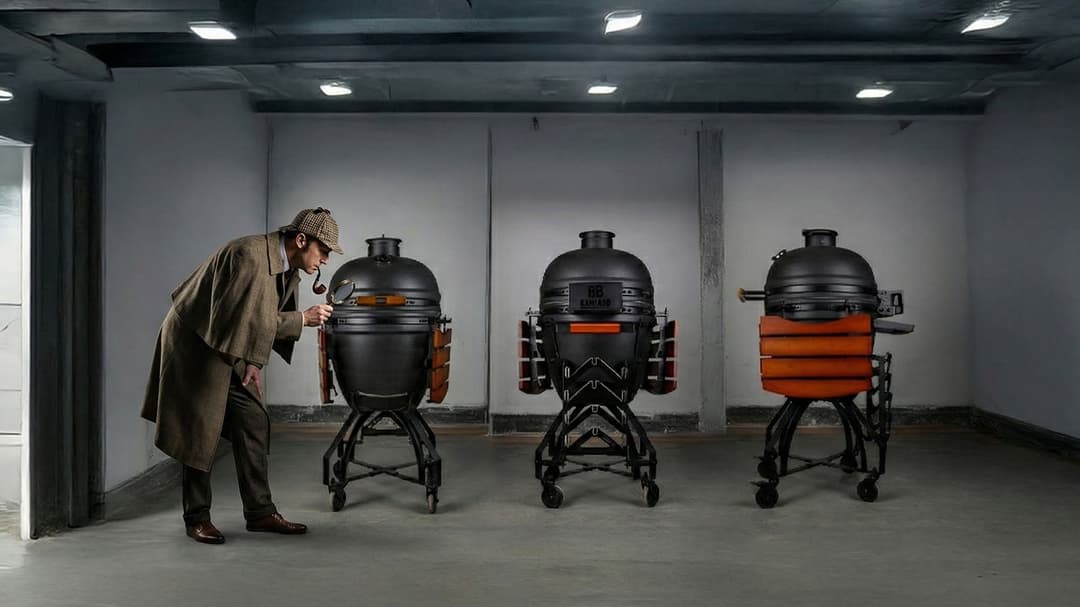
What to look for in a kamado: the 9 criteria that count

By Bobby
What should you look for in a kamado you want to buy?
Buying a kamado comes down to nine criteria, but only three are truly decisive: ceramic quality, the right size and what comes as standard. A more expensive kamado does not cook better, but it does cook more pleasantly. And buying too small is the most common mistake.
- Ceramic wall thickness: not under 1.8 cm
- For most buyers, the Large (21″) is the right size
- Above €1000 the ceramic is comparable across virtually all brands
- A heat deflector and a good grate are the only indispensable accessories
- Premium charcoal has 0.5–1% ash, budget charcoal 3–6%
Quick checklist: 9 points at a glance
Compare2 models
What to check
Importance
1. Ceramic quality
Wall thickness, not under 1.8cm
⭐⭐⭐⭐⭐
2. Hinge & gasket
Felt or fibreglass gasket, spring strength, does the lid open and close easily?
⭐⭐⭐⭐
3. Temperature control
Air intake precision + top vent material; cast iron is the most durable.
⭐⭐⭐⭐⭐
4. The right size
Grill surface vs. number of people and cooking style
⭐⭐⭐⭐⭐
5. Accessories & expandability
Heat deflector, grate system, compatibility — how complete is the kamado?
⭐⭐⭐⭐
6. Charcoal quality
Lump size, ash content, origin
⭐⭐⭐⭐
7. Practical use
Lighting, cleaning, moving
⭐⭐⭐
8. Avoiding mistakes
Size, charcoal, use, maintenance
⭐⭐⭐⭐
9. Maintenance & service life
Gasket, coating, storage, cleaning
⭐⭐⭐⭐
1. Ceramic quality — the heart of the kamado
The ceramic determines everything: how well the kamado holds heat, how stable the temperature stays and how efficiently you use charcoal. Thick, properly fired ceramic reduces the risk of thermal shock, cracking and heat loss. Thin or poor ceramic punishes every mistake — firing up too fast, rain on a hot kamado — immediately.
What to look for:
- Manufacturer and recipe — ask about it. At Grill Bill we work with a manufacturer that has been making ceramic products for over 25 years. Their formula is so refined that they have struck the perfect balance between durability, weight and heat resistance.
- Smooth vs. dimpled surface — purely aesthetic. A smooth surface is easier to clean; cooking performance is otherwise identical
- Glaze — glossy (cheaper) or matt (a more expensive production process). Above €1000 the ceramic itself is comparable across virtually all brands. The glaze determines looks and ease of maintenance, not cooking performance
Want to understand exactly what makes ceramic cooking unique? Read: What is convection heat in a kamado?
2. Hinge, gasket and finish
These are the parts that suffer most from daily use — and the ones most often overlooked at purchase. A poor hinge or a lifted gasket costs you temperature control and safety alike.
Hinge: it should open the lid smoothly and in a controlled way. Our view: the more complex parts, the more can eventually break. That is why Grill Bill uses a simple but strong hinge with just two sturdy springs — light and smooth in use, with little to go wrong.
Gasket:
- Felt gasket — standard on entry-level models. Seals fine, but wears faster. Replaceable, but needed more often
- Fibreglass gasket — standard on Pro II and Pro III. Lasts considerably longer, seals better during long sessions, needs less maintenance
Finish: stainless steel bolts, nuts and parts are heat-resistant and rust-free. On cheaper models you sometimes see ordinary steel parts that show rust spots after a single winter. On all Grill Bill Pro models, stainless steel parts and a heat-resistant coating are standard.
Do note that stainless steel does not mean maintenance-free. It needs care to keep looking good.
3. Temperature control — the biggest difference from ordinary BBQs
A kamado runs entirely on airflow. Oxygen enters through the air intake at the bottom, rises through the burning charcoal and leaves the kamado through the top vent. The precision with which you adjust these two sliders fully determines your temperature — to within 5°C once you get the hang of it.
This is exactly why a kamado works so fundamentally differently from a gas barbecue or an ordinary charcoal barbecue. The ceramic holds the heat and reinforces that control.
What to look for in the air controls:
- Step size of the sliders — smaller steps = more control. Cheap models have coarser regulation
- Top vent precision — how smoothly does the top controller turn? Does it stay in the position you set? What material is it made from? Cast iron, for example, is the most durable material for this application.
- Sealing — a poorly closing gasket lets air through uncontrolled, so the temperature rises without you noticing
Going deeper: Airflow in a kamado explained and How do you control the temperature in a kamado?
4. The right size — more important than most people think
The size of your kamado directly affects what you can cook, for how many people and which techniques are possible. Choosing too small is the most common mistake among kamado buyers — and the most expensive, because upgrading also means buying all your accessories again.
Fully worked out per size: Which size kamado should I buy?
The right kamado size
Compare3 models
Suitable for
Capacity
Advice
Small (13″)
1–2 people, balcony
2 steaks / 1 small chicken
As a second kamado or for a balcony
Medium (16″)
2–3 people
4 burgers / 1 chicken
Fine as a second kamado, but soon too tight
Large (21″)
3–6 people
8 burgers / 2 chickens / ribs
✅ The right choice for most buyers
XL (23.5″)
6–12 people
Whole brisket / several chickens
For large groups / pitmasters
5. Accessories and expandability — think ahead
You do not buy a kamado for a single season. Expandability determines how long you keep enjoying the same kamado. Two kamados with identical ceramic can drift apart for years in ease of use, purely on the basis of accessories.
Essential accessories — the ones you need straight away:
- Heat deflector — indispensable for indirect cooking and low & slow. Without it there is no pulled pork, brisket or baked bread. Supplied as standard with all Grill Bill models
- Grate — stainless steel for grilling, cast iron for crust and sear marks. Pro II and III both include them as standard
Handy extras — the ones you will want later:
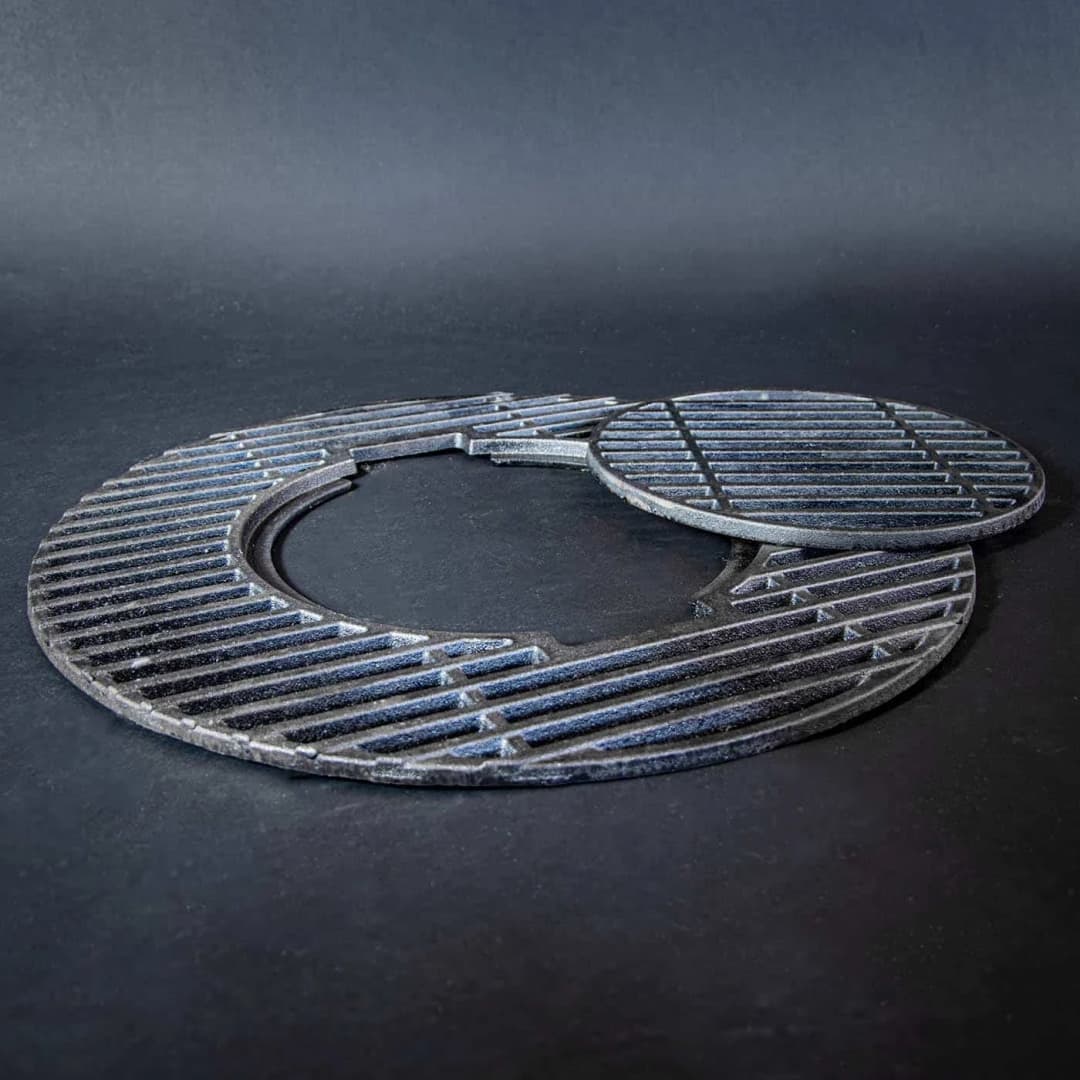
- Smart Qooking System — Grill Bill’s modular grate system. Several levels at once, direct and indirect combined. Take a look: Discover what the Smart Qooking System can do
- Charcoal basket — improves airflow from below and makes cleaning easier. Standard on Pro II and Pro III
- Ash drawer — faster cleaning, less mess after a long session. Standard on Pro II and Pro III
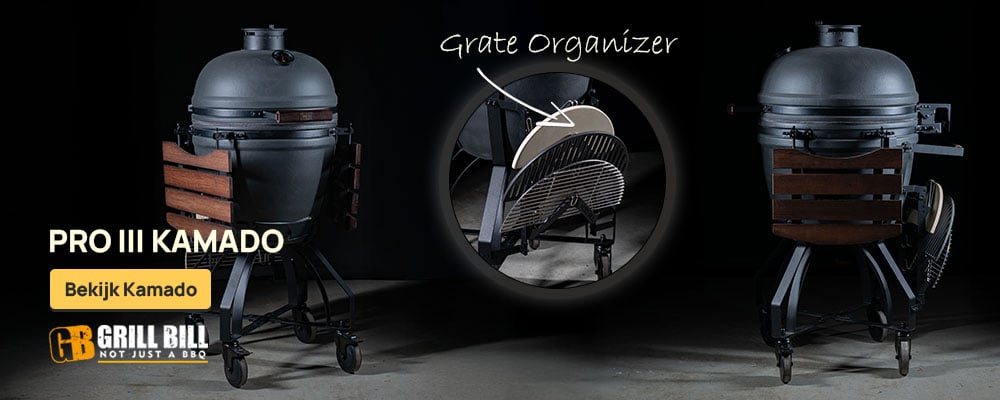
- Grate Organizer — store grates and deflectors neatly and safely. Standard on Pro III
- Pizza stone, wok ring, rotisserie — extras for specific techniques
Note: all accessories are size-specific. Grates for a Large will not fit a Medium. If you change size, you start over with accessories.
Model comparison with accessories per model: The difference between cheap and expensive kamados.
6. Charcoal — the fuel that determines everything
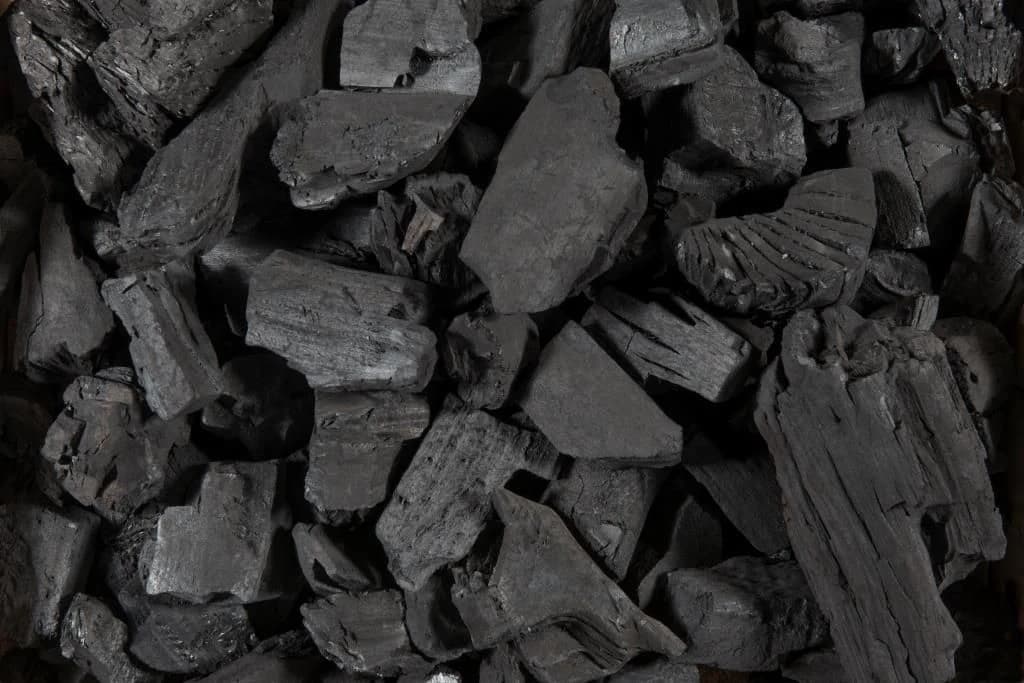
A good kamado deserves good charcoal. That sounds obvious, but it is structurally underestimated. Poor charcoal gives unstable temperatures, more smoke, more ash and shorter session times — no matter how good your kamado is.
What makes charcoal good or bad:
- Lump size — large, hard lumps give better airflow and burn longer and more steadily. Fine, granular charcoal clogs the air intake
- Ash content — premium charcoal: 0.5–1% ash. Budget charcoal: 3–6%. More ash = ventilation clogs sooner
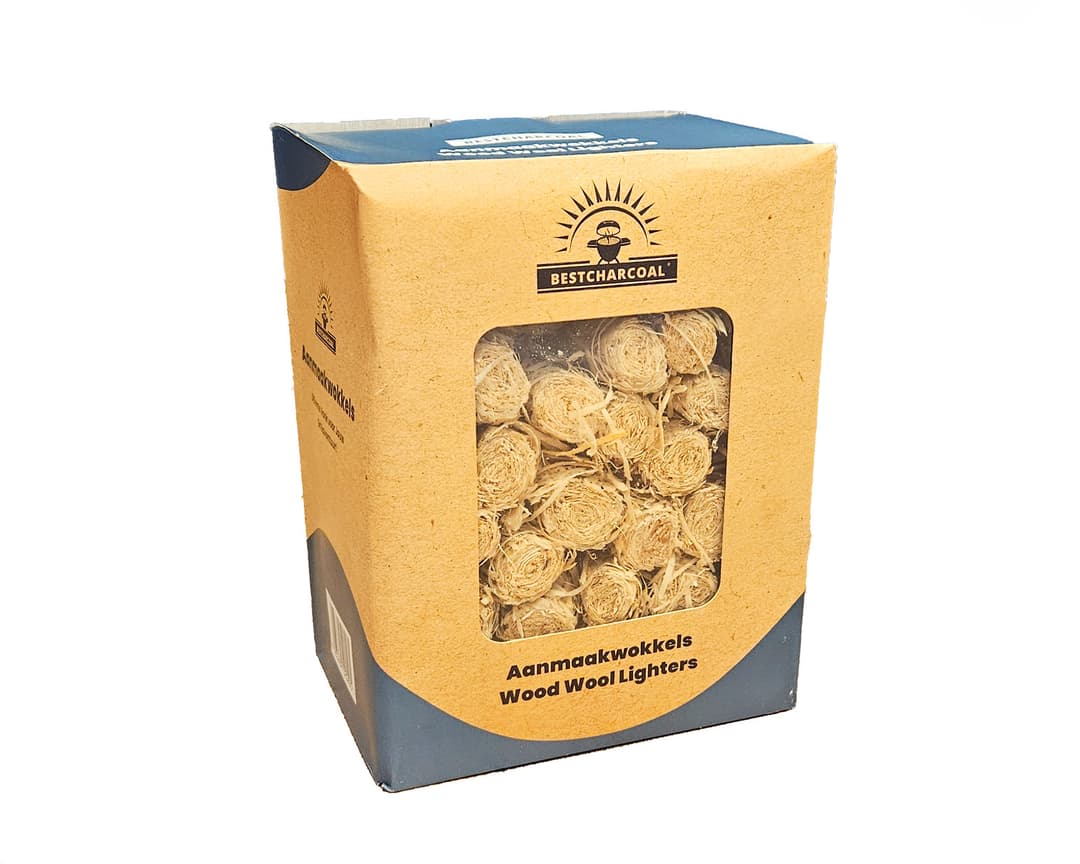
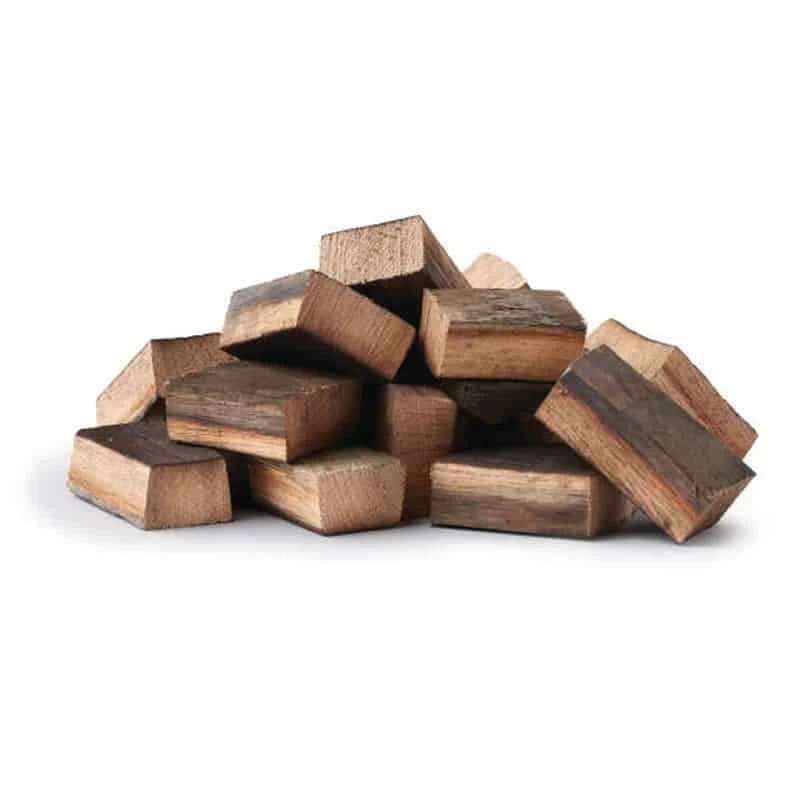
- Wood type — hardwood (oak, beech) burns hotter and longer than softwood. Never burn conifer wood in a kamado — the resins damage the ceramic
- Charcoal vs. briquettes — charcoal for high temperatures and short sessions. Briquettes for stable low temperatures and long low & slow sessions. Both have their place
Everything about fuel: Which charcoal suits your kamado best?
7. Practical day-to-day use
How easily a kamado fits into daily life ultimately determines how often you use it. A kamado that is a hassle to light or clean will stay closed more often.
The five practical questions:
- How easy is it to light? — With a good fan or an electric starter you are up to temperature in 15–20 minutes. Read: How do you light a kamado?
- How predictable is the temperature control? — After 2–3 sessions you get to know your kamado. After that, temperature control is intuitive. Good ceramic makes this easier
- Is the kamado suitable for both quick and long sessions? — Yes, that is precisely the strength of a kamado. From a quick steak in 20 minutes to a 16-hour pulled pork — on the same kamado
- How stable are the hinges? — Test this when buying. A good hinge holds the lid open in a controlled way without dropping back
- How easy is cleaning? — Ceramic largely cleans itself at high temperature (pyrolysis). An ash drawer (Pro II and Pro III) makes this easier still. More on maintenance: Using a kamado BBQ for beginners
8. Common mistakes — so you do not have to make them
New kamado users keep making the same mistakes. Most cost you time and frustration, but are easy to avoid if you know them beforehand:
More mistakes and deeper explanation: Common kamado mistakes — and how you avoid them.
Common mistakes — so you do not have to make them
Compare2 models
Consequence
How to avoid it
Too much charcoal at once
Temperature shoots up, impossible to tame
Start with little, build up calmly to the target temperature
Firing up too fast
Thermal shock can damage the ceramic
Always heat up slowly, especially in the first sessions
Opening the lid too often
Temperature drops 20–40°C each time, session time stretches considerably
Trust the thermometer. Only open when really necessary
Airflow open too far
Temperature rises uncontrolled, charcoal burns too fast
Adjust in small increments — small steps have big effects
Not burning in on first use
Ceramic does not stabilise, risk of cracking, warranty may be void
Always burn it in. Read: Burning in a kamado: how to do it properly
Buying poor charcoal
Unstable temperature, more smoke, shorter session time
Invest in restaurant-quality charcoal with low ash content
Buying too small a size
Upgrade needed within a year, accessories bought again
In doubt? Choose one size larger. Always.
9. Maintenance and service life
A quality kamado lasts for decades. Ceramic is extremely durable — but it does need proper maintenance to reach that lifespan. The good news: most maintenance is simple and takes little time.
The four pillars of kamado maintenance:
- Cleaning — ceramic cleans itself at high temperature (self-cleaning through pyrolysis). Regularly remove ash from the ash drawer or the base. Never use water or chemical cleaning agents on the ceramic
- Replacing the gasket — a felt gasket wears out after 1–2 years depending on use. A fibreglass gasket (Pro II and Pro III) lasts considerably longer. Replacing it is simple and inexpensive
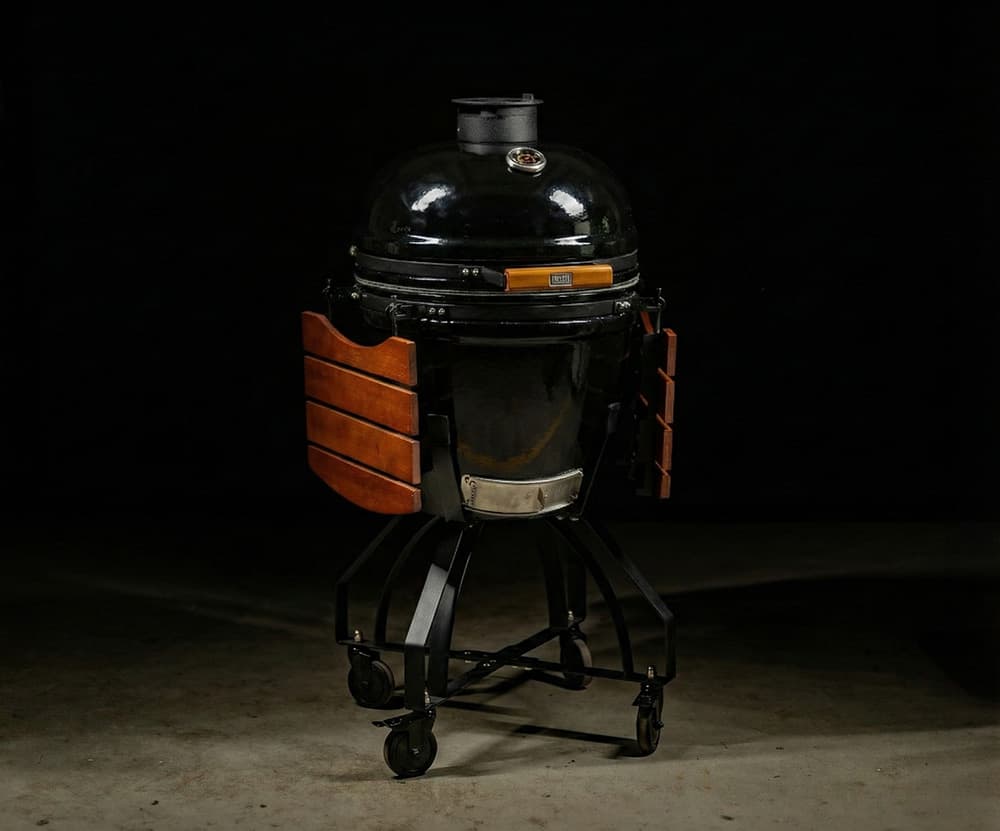
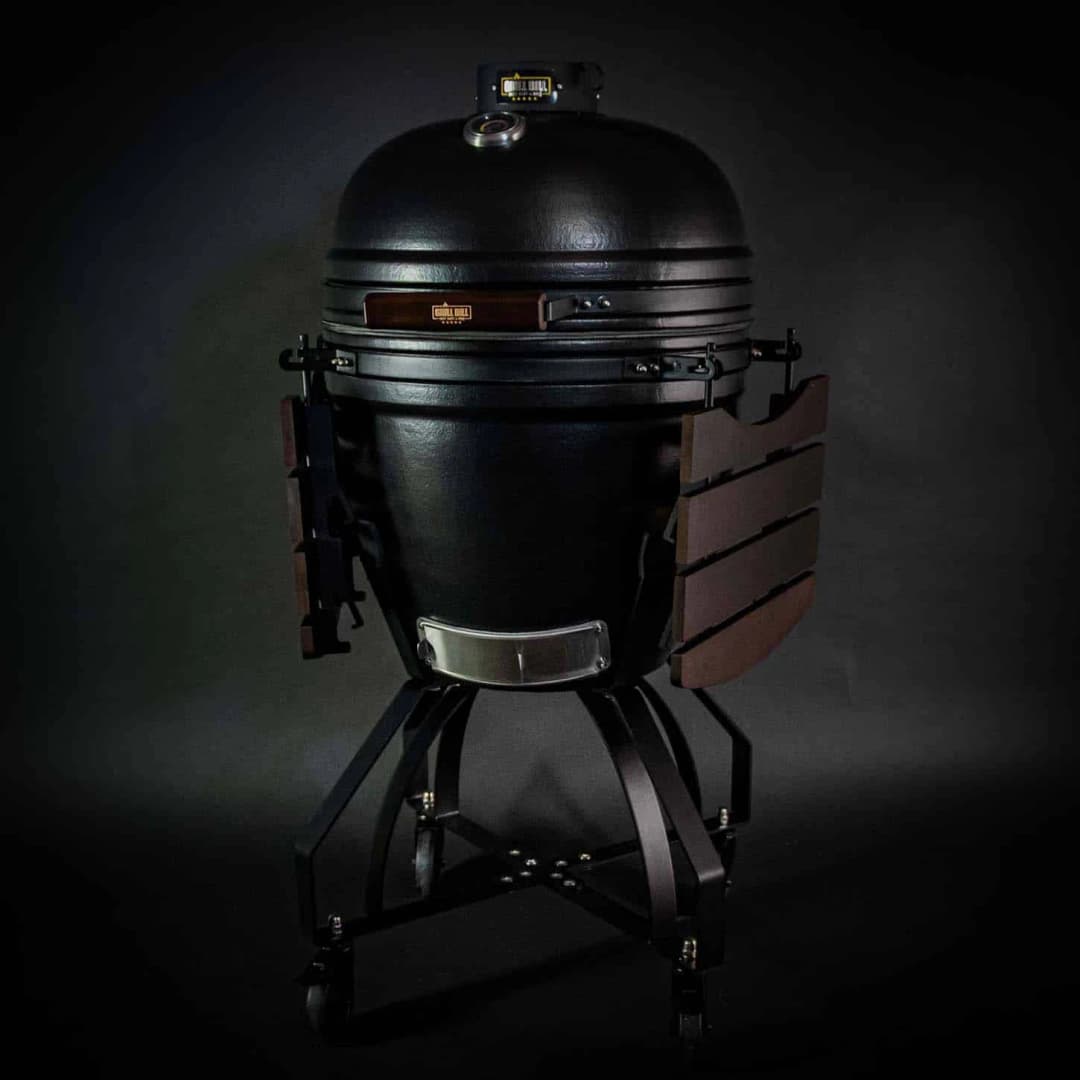
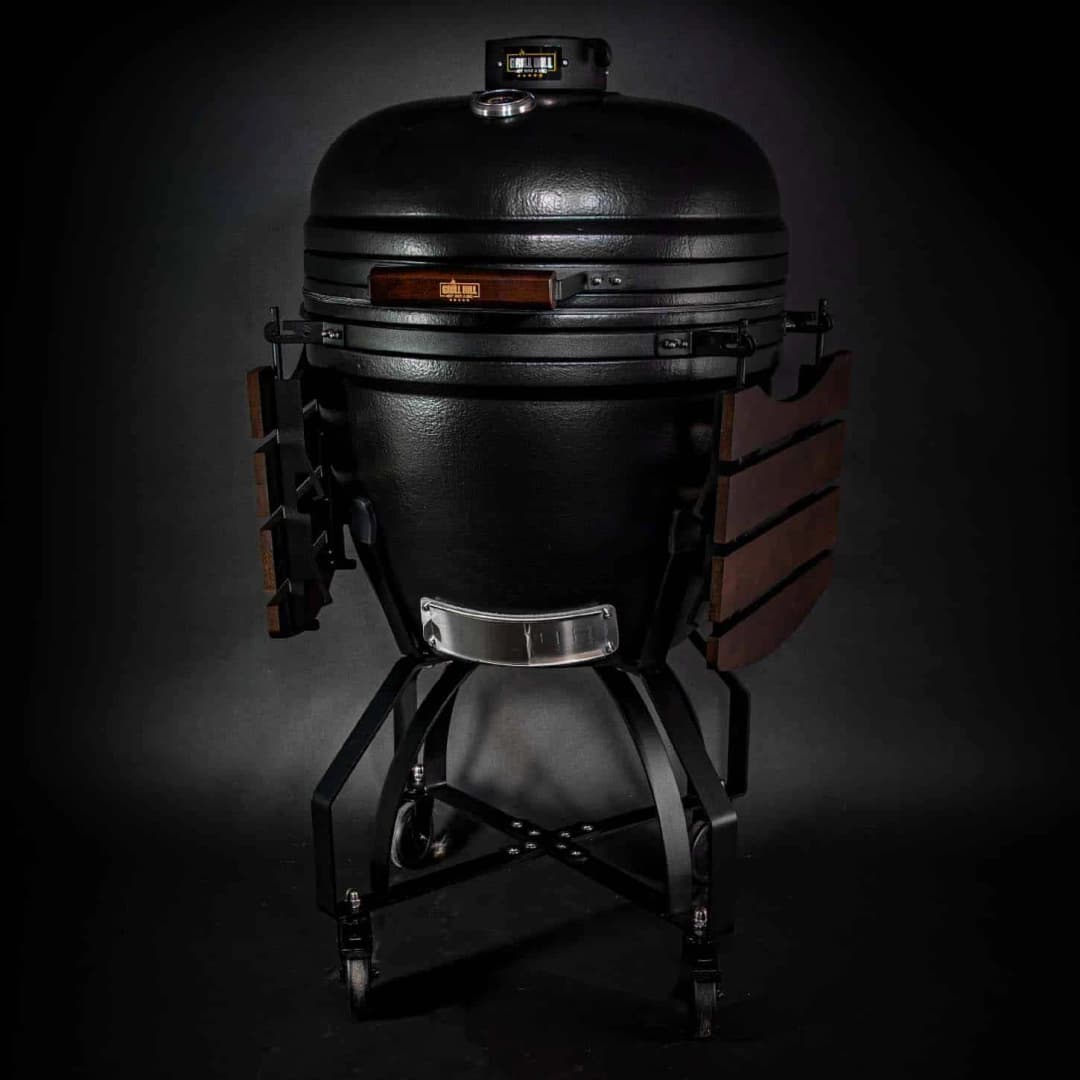
- Storage — ceramic is frost-resistant and can stay outdoors all year. Use a protective cover for the metal parts. For longer periods of non-use: store dry. The wooden side tables can be removed in 2 seconds; put them in the shed where it is less damp.
- Checking parts — every quarter, check hinges, bolts, nuts and screws, vent sliders and stainless steel parts. Lubricate with heat-resistant oil if needed
About the warranty: Grill Bill gives 10 years' warranty on the ceramic of the Classic and up to 20 years on the Pro II and Pro III (10 years as standard, 20 years if you complete the free GB Academy). The condition: you burn the model in correctly on first use. See: Burning in a kamado: giving your Grill Bill a good start.
What to look for in a kamado: further reading
Work through it step by step with the full buying guide:
- Buying a kamado: where do you start? — Orientation and first steps
- Which size kamado should I buy? — Choosing a size based on use
- The difference between cheap and expensive kamados — What the price gap really means
- What is the best kamado for beginners? — Classic, Pro II or Pro III?
- Burning in a kamado: giving your Grill Bill a good start — First use
- How do you light a kamado? — Lighting step by step
- Which charcoal suits your kamado best? — Choosing fuel
- Common kamado mistakes — and how you avoid them — Learn from others
FAQ
What matters most when buying a kamado?
The three most important criteria are: ceramic quality (wall thickness, manufacturer), the right size (too small is the most common mistake) and what comes as standard (heat deflector, grate, gasket). These three have the greatest influence on performance and years of enjoyment. Grill Bill kamados are significantly better finished and more completely equipped than entry-level models from DIY stores or garden centres — even within the same price bracket.
Is an expensive kamado really better than a cheap one?
In cooking results, hardly — above €1000 the ceramic is comparable across all brands. The real difference lies in finish, glaze, gasket, accessories and ease of use. A more expensive kamado does not cook better, but it does cook more pleasantly. Read the full comparison: The difference between cheap and expensive kamados.
Which size kamado should I choose?
For most users a Large (21 inch) is the right choice — suitable for 3 to 6 people, every technique and future-proof. Buying too small is the most common mistake: accessories are size-specific, so upgrading costs double. In doubt? Choose one size larger. More information: Which size kamado should I buy?
What are common mistakes when buying a kamado?
The seven most common mistakes: (1) buying too small a size, (2) using too much charcoal at once, (3) firing up too fast on first use, (4) opening the lid too often while cooking, (5) opening the airflow too far, (6) not burning it in on first use and (7) using poor charcoal. Fully worked out: Common kamado mistakes.
Which accessories do you really need with a kamado?
Two accessories are indispensable: a heat deflector (for indirect cooking and low & slow) and a good grate. Everything after that is an extra. A charcoal basket (for airflow), ash drawer (for cleaning) and the Smart Qooking System (for several levels at once) make daily use significantly more pleasant — and come as standard with the Pro II and Pro III.
Do I have to burn in a new kamado?
Yes, this is required for the warranty and for the lifespan of the ceramic. Burning in stabilises the ceramic and the gaskets by slowly building up temperature over several sessions. Skip it and you risk cracking and lose your warranty rights. Read the exact instructions: Burning in a kamado: giving your Grill Bill a good start.
Can a kamado stay outdoors all year?
Yes. Ceramic is frost-resistant and stands up to all weather conditions. Protect the metal parts with a cover during longer periods of non-use. Fit your kamado with a good cover and you can leave it outside all year without worry.
What is the difference between charcoal and briquettes in a kamado?
Charcoal burns hotter (up to 350°C+) and is ideal for high temperatures and short sessions such as steaks. Briquettes burn more steadily and longer at low temperature and are ideal for low & slow sessions of 8–16 hours. Many users combine the two: briquettes as the base, charcoal for the peak. More information: Which charcoal suits your kamado best?
Written by

Grill Bill specialises in ceramic kamado barbecues and shares knowledge about low & slow cooking, smoking, grilling and baking on the kamado.
Read onThree more
![Beenham van de kamado]()

Three more
from the archive.
Beenham van de kamado
Beenham roken en glazen op de kamado. Doelterm: beenham kamado (720) — concurrent staat hier op positie 1.
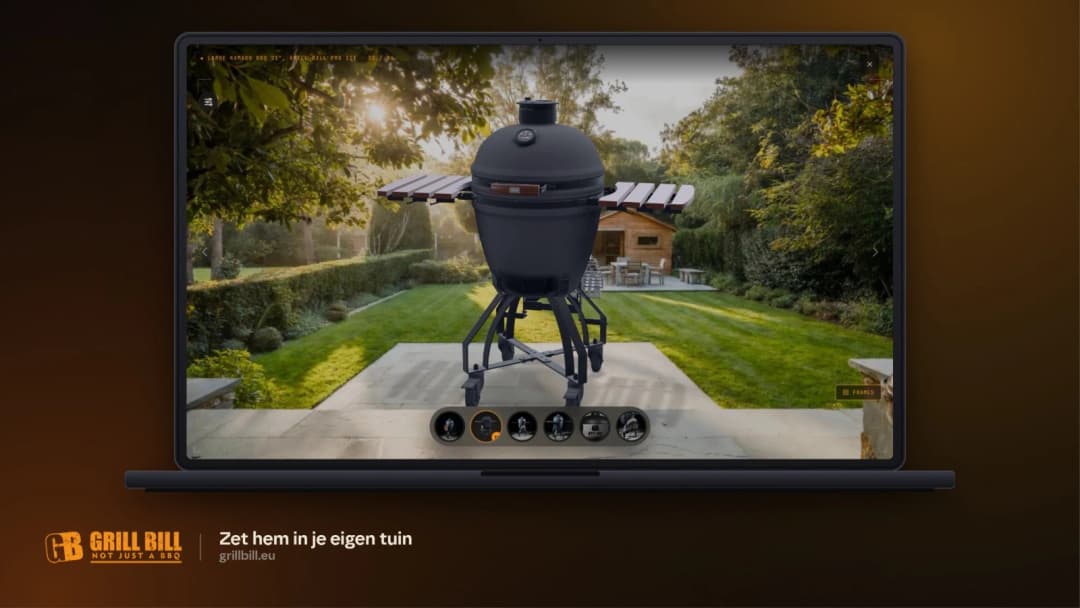
The new grillbill.eu: view your kamado in 3D and place it in your own garden
The new grillbill.eu is live. Spin the Pro III in 3D, place it in your own garden, compare every model side by side and learn to cook in the GB Academy.
Building a kamado in: table, outdoor kitchen or Solo
Cut-out dimensions per Grill Bill size, ventilation at the bottom, shielding timber and the choice between buying, having it built or making it yourself. Plus the Large and XL Solo without trolley.
Stook inOnce a month,
Once a month,
a echte letter.
Recipes, drops and long essays about smoke. No noise, never resold.