Grill Bill
Kamado maintenance
Grill Bill
By Grill Bill
Published
22 April 2026

What does maintaining a kamado involve?

A kamado needs little maintenance, but it needs it at fixed moments. The fire does most of the work: every hot session burns off leftover fat. What you do is clear the ash, keep the airways free and once a year go over the parts that are not ceramic. The one step you must not skip is firing up gently after a long period standing idle.

  • After every session: vents closed and the ash out
  • Every quarter with weekly use: the ash built up under and behind the fire bowl
  • Once a year: check the gasket, hinges, cast iron and wood
  • After a long standstill, first an hour at 100 °C, only then higher
  • Never use cleaning products inside the kamado, the fire does the work

Maintenance in three rhythms

Most maintenance guides hang on a season, as if there is one moment a year when it has to happen. That is not how it works. What a kamado needs is spread across three rhythms, and if you keep to those you will never be caught out.

The handy part is that the heaviest rhythm comes round least often. After every session you are busy for two minutes. Once a quarter, a quarter of an hour. And once a year, usually in spring because that is when the appliance has stood idle longest, you do the full service.

Good maintenance is not a cleaning ritual but a way of keeping your temperature control in shape. Almost everything below comes down to that in the end: ash and dirt block airways, and a worn gasket lets air in along a route you are not steering. More advice on everyday use is at kamado user tips.

After every session: two minutes

Close both vents. That puts the fire out and saves the rest of the charcoal for next time. It is the single most important action and most people already do it.

Take the ash out. In principle every time. That sounds more often than necessary, but it is half a minute of work and it prevents the problem most temperature complaints trace back to: ash choking off the bottom air intake, so the fire gets too little oxygen and you no longer reach temperature.

Leave the lid closed. Not only against rain on the coals, but also because the kamado then cools down slowly and evenly.

Cleaning is not needed. Leftover fat burns off by itself during your next hot session. Anyone who scrubs the ceramic after every barbecue is doing work the fire does for free.

Every quarter: under and behind the fire bowl

The ash you clear after every session is not all the ash. Over time material also builds up under and behind the fire bowl, in the spot you cannot reach without taking things out. It happens slowly, but it happens.

With weekly use, once a quarter is the right rhythm. If you cook daily you need to look more often: it depends on how much you burn, not on the calendar.

Take out the fire ring and the fire bowl and remove the built-up ash with an ash poker or a small vacuum cleaner. While you are there, check the air vents at the bottom and in the top vent for cobwebs and caked-on dirt. Why that airway matters so much is in airflow in a kamado explained.

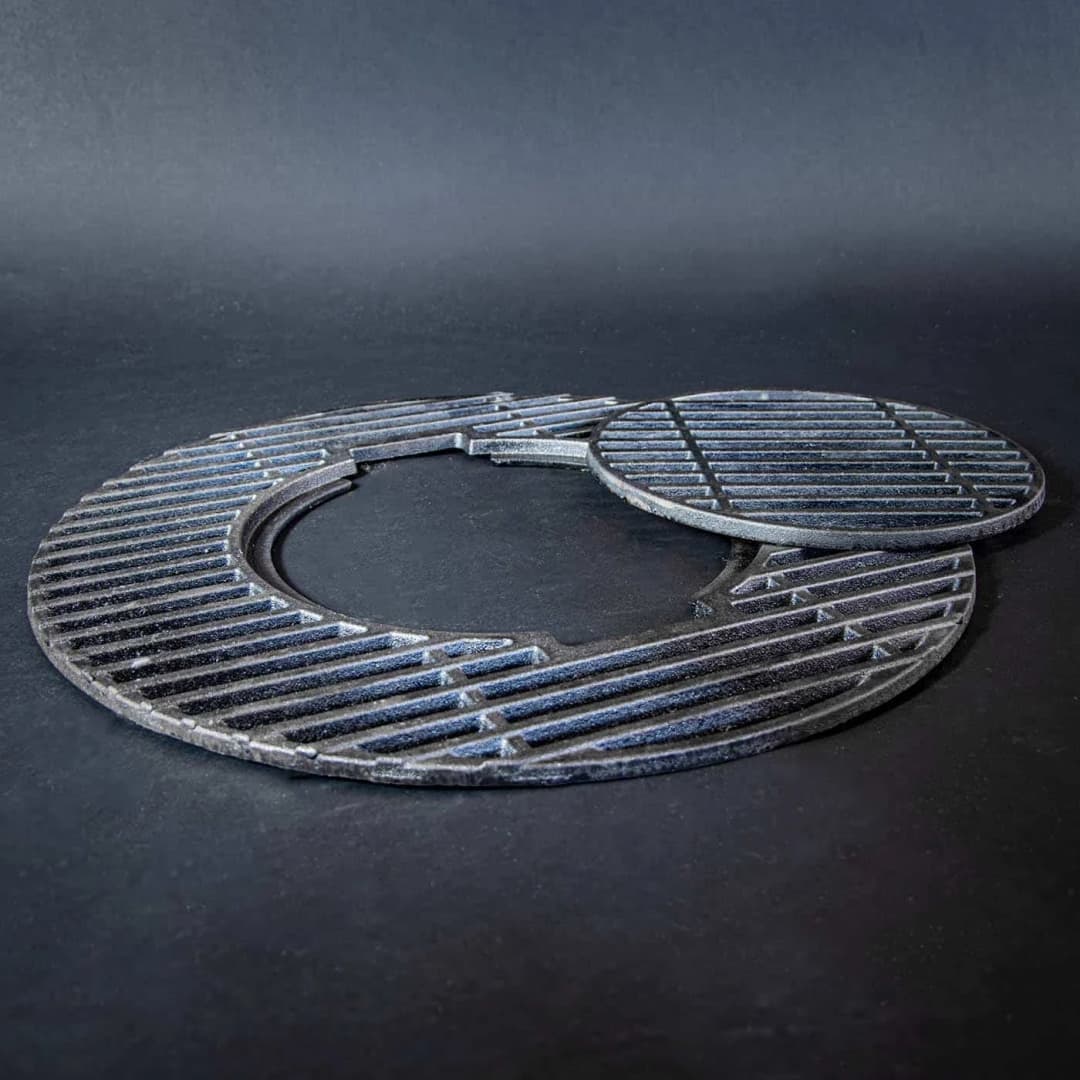
Take the opportunity to brush the grates as well, preferably while they are still warm. Cast iron grates then get a thin layer of oil against rust.

Once a year: the full service

This is what most people do in spring, and that makes sense: that is when the appliance has stood idle longest. It concerns the parts that are not ceramic, because those are the only ones that genuinely wear.

Gaskets: squeeze them back into shape before replacing. A fibreglass gasket gets flattened through use, and the first thing people think is that it needs replacing. Usually it does not.

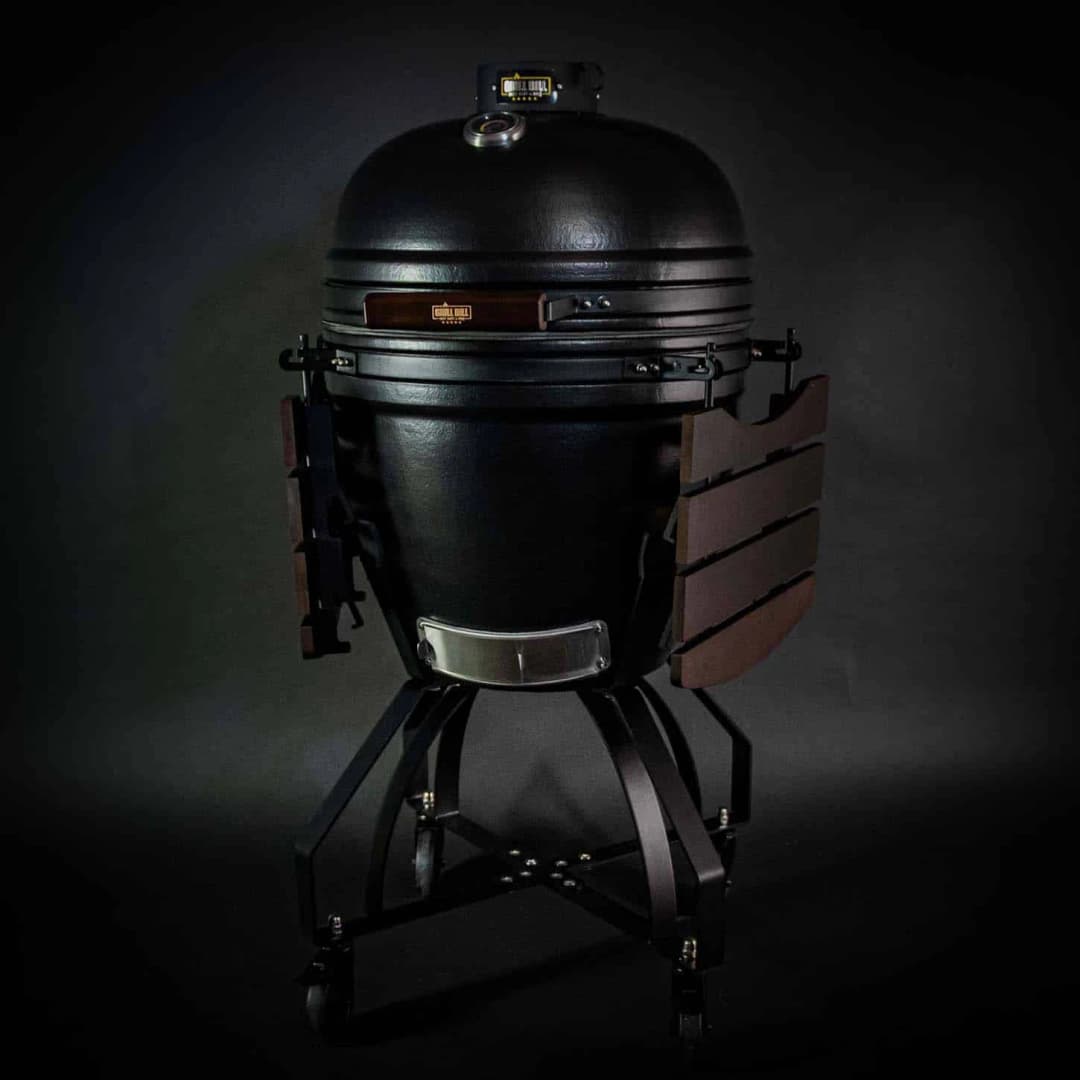
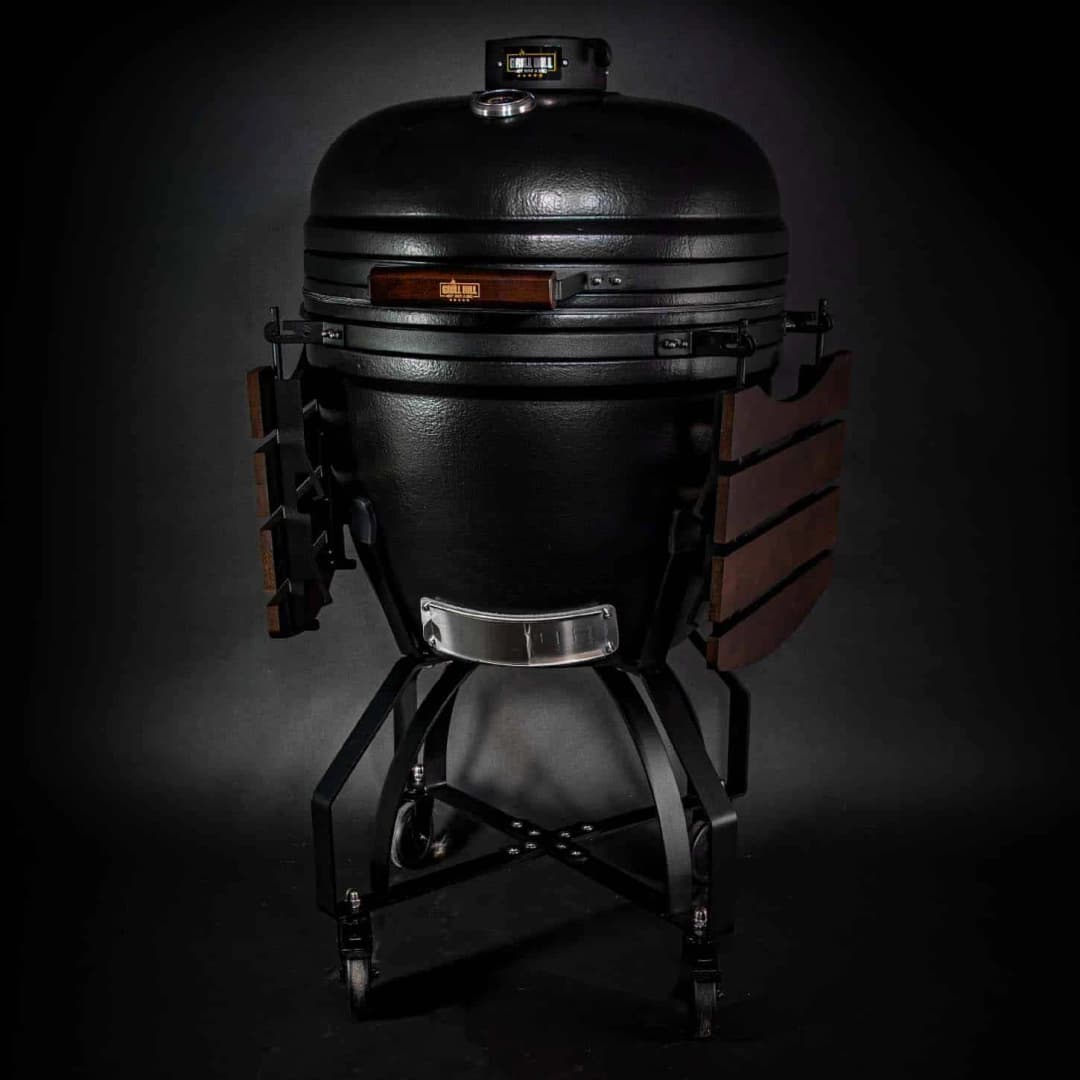
Our gasket has a brass sleeve inside it. If the gasket has gone flat, squeeze it so that sleeve comes back into shape. The gasket regains its volume, the lid seals as it should again and closes noticeably more softly. That is a minute of work and it saves you a replacement.

Replacing is only called for when the gasket is genuinely worn out: frayed, coming loose in places, or no longer able to be squeezed back into shape. Why this matters: a gasket that does not seal means air comes in along a route you are not steering, and then you can no longer control the temperature precisely. You notice it mostly in low temperatures you can no longer keep low. See also How do you control the temperature in a kamado?.

Hinges and bolts. A year of temperature swings shakes bolts loose. Check whether the lid still hangs in balance and adjust where needed. Moving parts get silicone spray, not scented oil: that soaks into the ceramic and into your food.

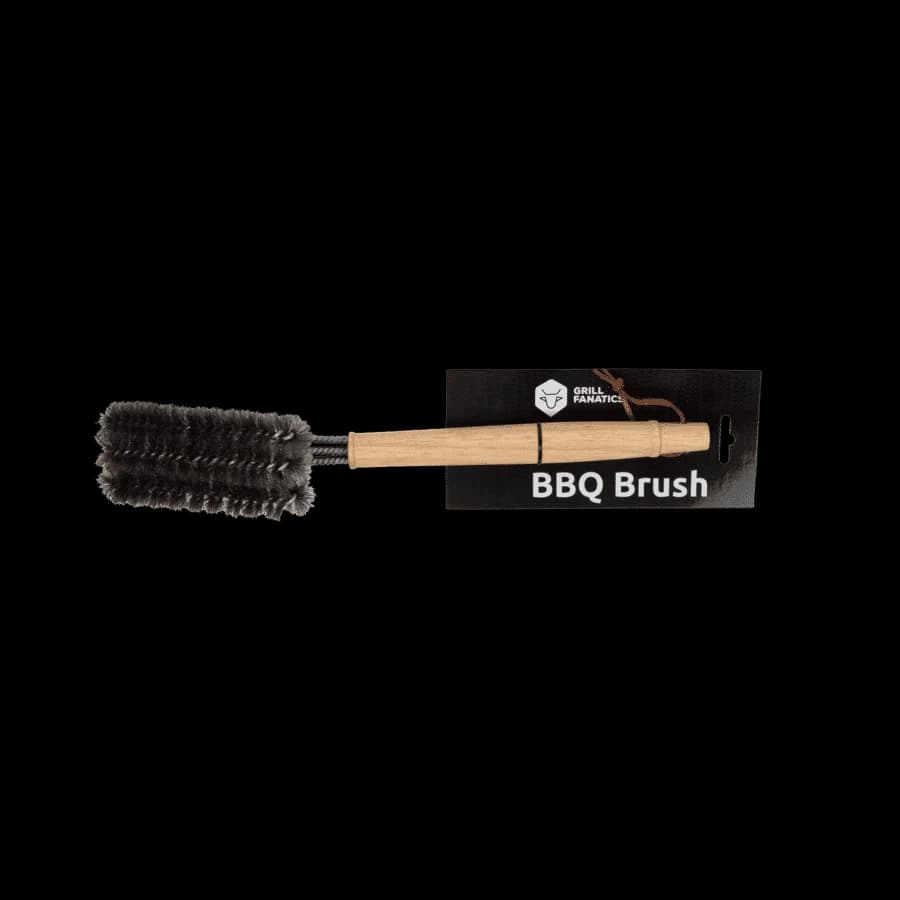
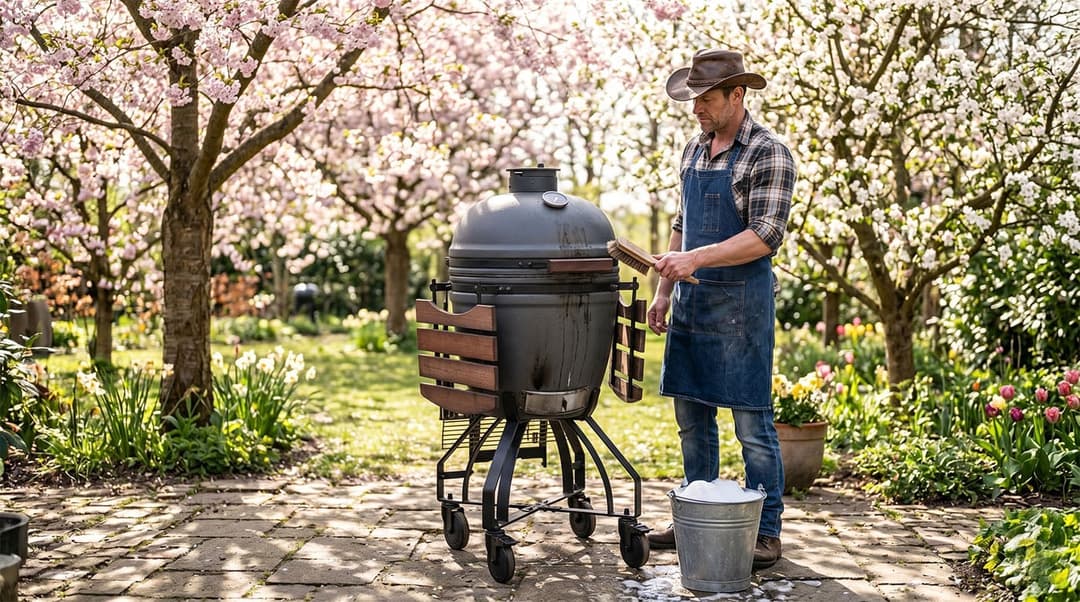
Cast iron. The top controller is the part where damp takes hold fastest. Work rust away with a BBQ brush, not steel wool: that is too aggressive and leaves scratches in which new rust settles. Finish with linseed oil.

Wood and exterior. Wipe the side tables and the handle with lukewarm water, then dry thoroughly. A treatment with outdoor furniture oil belongs here. The ceramic exterior has no pits where dirt can lodge, so a cloth does the job.

What you need

  • BBQ grill brush or scraper, also for rust on cast iron
  • Soft cloths or microfibre cloths
  • Lukewarm water, and soft soap for the exterior only if water is not enough
  • Food-safe mineral oil and linseed oil
  • Silicone spray for hinges, bolts and nuts
  • Ash poker or small vacuum cleaner
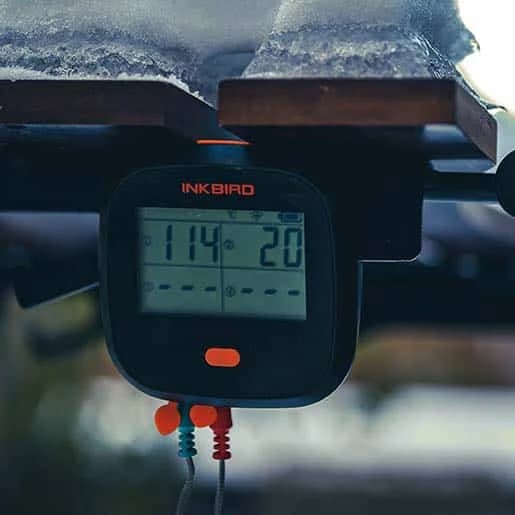
  • A thermometer to follow the firing up

That is all you need. Together it is one drawer in your shed, and it lasts for years.
What does not belong inside the kamado

One rule that overrides all the others: no cleaning products inside the kamado. No washing-up liquid, no degreaser, no oven cleaner, not even when it looks stubborn. Ceramic is porous and takes on what you put into it, and that comes back out during the next session, into your food.

For the interior, the fire is your cleaning agent: a hot session burns off what is there. For the exterior, lukewarm water and a cloth is enough. If that does not do it, soft soap may come into play, but that is the exception and not the routine.

Also to avoid: steel wool and abrasives. They damage glaze and cast iron, and the scratches they leave are exactly where rust and dirt take hold. A BBQ brush or a plastic scraper does the same job without that damage.

Firing up after a long standstill

This is the only step where you can genuinely cause damage, and at the same time the easiest one to get right.

Ceramic that has stood outside for months has absorbed moisture. Water expands when it heats up, and if that happens too fast you get thermal shock: cracks in the ceramic that you cannot repair. So do not fire it straight through to 400 degrees.

  1. First at least an hour at around 100 °C. Use little charcoal and keep the air vents only slightly open, so the temperature stays stable there. In that hour the moisture evaporates gradually.
  2. Only then up to 220 °C, for a burn-out of thirty to forty-five minutes. That burns off the last of the residue from the previous season.
  3. From that moment it is in normal use again. Build the first sessions up gently and only then work back towards high temperatures.

This applies to every ceramic barbecue, regardless of brand or price. It is physics, not a quality issue. Skipping it is one of the most common kamado mistakes, and the damage that follows cannot be repaired.

For a new kamado a similar story applies for a different reason: there the gasket has to settle. That is in Breaking in a kamado BBQ. Ordinary lighting, outside these situations, is in how to light a kamado BBQ.

Where to put it and how to cover it

Maintenance starts with the spot. A stable, dry surface of stone or raised wood saves you half the problems, and standing out of the wind helps with controlling the temperature.

A cover is for the metal and the wood, not for the ceramic. The latter handles rain, frost and sun. Choose one that is water-repellent but still ventilates, and take it off before you fire up so it can dry. In the range of kamado accessories you will find a suitable size.

More important than the cover: keep the lid and the top vent closed when the kamado stands outside, so no rainwater collects in the fire bowl. That is exactly the moisture that gets you into trouble the first time you fire up.

Where to read on

If you notice the temperature is harder to steer than last year, look at the ash and the gasket before doubting your technique: How do you control the temperature in a kamado? explains what should be happening, and How does a kamado BBQ work? why.

The mistakes that most often lead to wear are in My biggest kamado mistakes, and which fuel leaves less ash in Which charcoal suits your kamado best?. What else comes with owning a kamado, including the less enjoyable sides, is in The drawbacks of a kamado BBQ.

Frequently asked questions about kamado maintenance

Do I need to clean the ceramic?
No. Leftover fat burns off by itself during the next hot session. Never use cleaning products or abrasives inside the kamado: ceramic is porous and takes on whatever you put into it. If you do want to work on the interior, use a plastic scraper or a BBQ brush.
How often should I remove the ash?
The ash from your session comes out every time, in principle. On top of that, material builds up under and behind the fire bowl, and you only reach that by taking out the fire ring and fire bowl. With weekly use that is every quarter, with daily use more often. Too much ash is the most common cause of a kamado that no longer reaches temperature.
My gasket is flat, does it need replacing?
Usually not. Our fibreglass gasket has a brass sleeve inside it: squeeze the gasket so that sleeve comes back into shape, and it regains its volume and seals the lid as it should. You notice it straight away, because the lid closes softly again. Replacing is only needed when the gasket is frayed or loose, or can no longer be squeezed back into shape.
Why do I have to fire up carefully after a long standstill?
Because the ceramic has absorbed moisture. That water expands when heated, and firing up too fast causes thermal shock and cracks. An hour at 100 °C lets the moisture evaporate gradually, after which you can go up to 220 °C for a burn-out of thirty to forty-five minutes.
Does this apply to every brand of kamado?
Yes. Whether you have a Big Green Egg, a Bastard or a cheap unit from the DIY store: every ceramic BBQ absorbs moisture. That is physics and has nothing to do with price or brand.
Can my kamado stay outside all year round?
Yes, the ceramic is frost-proof. Keep the lid and the top vent closed so no water gets into the fire bowl, and cover the metal and wooden parts with a cover.
What does maintaining a kamado cost?
Almost nothing. Some oil and silicone spray, and a brush that lasts for years. A gasket can usually be squeezed back into shape rather than replaced, so there is rarely a cost there either. The ceramic itself does not wear, and on that we give up to 20 years of warranty.
Fire up

Eens per maand,
een real brief.

Recipes, drops and long essays about smoke. No noise, never resold.