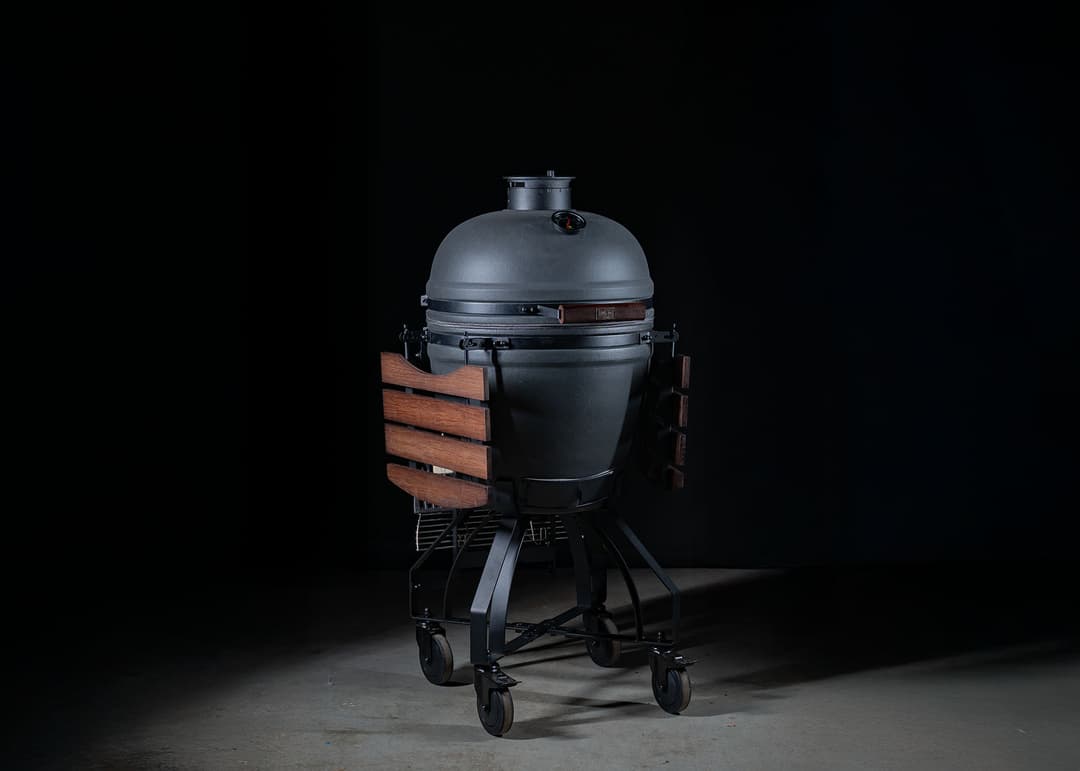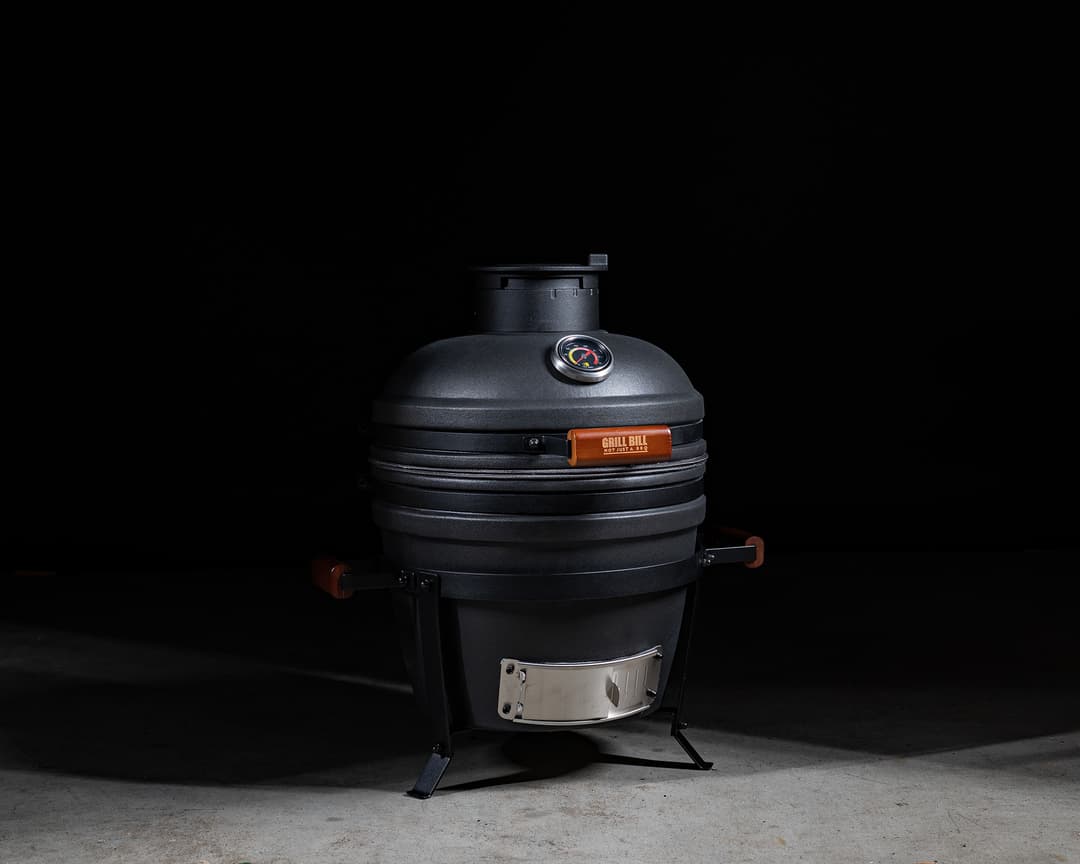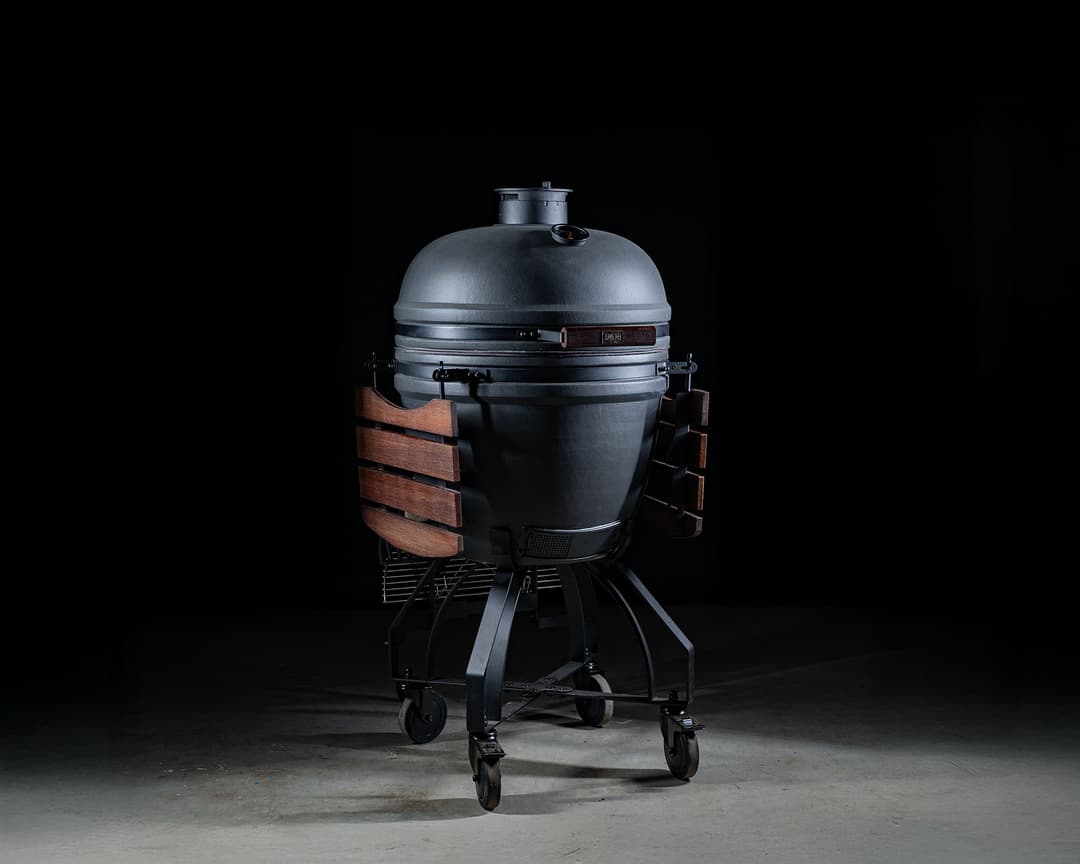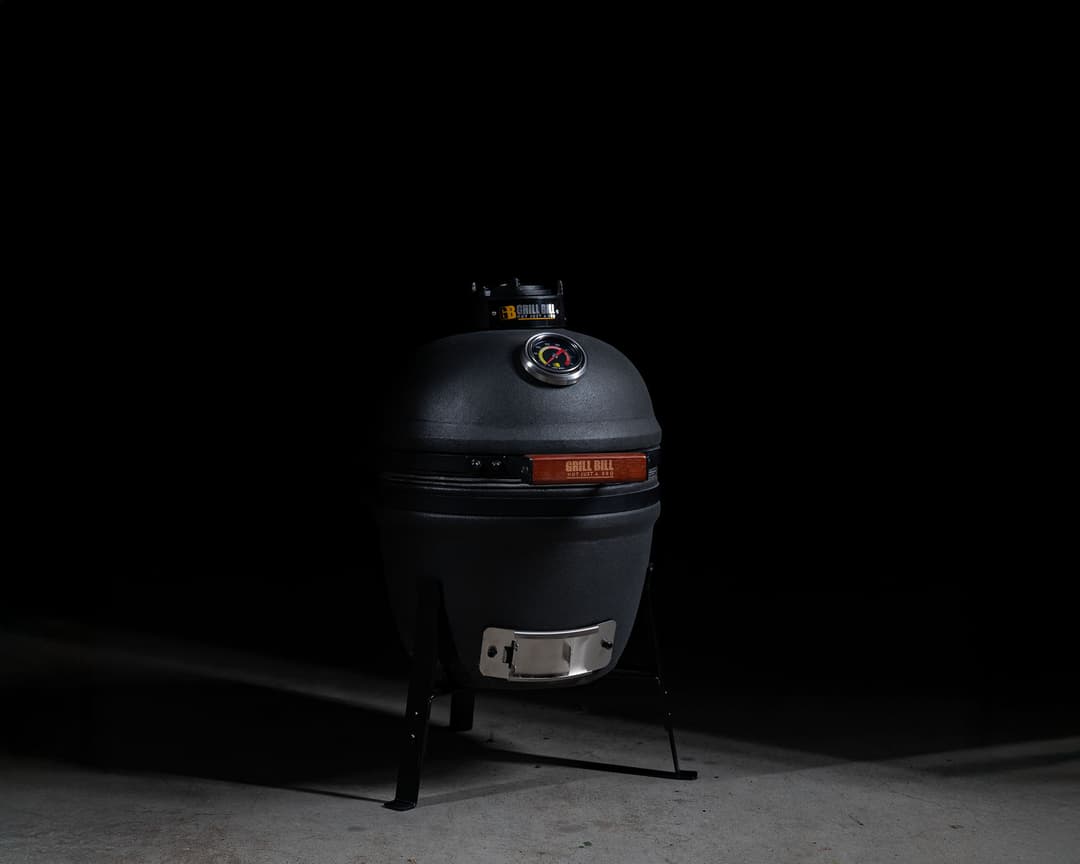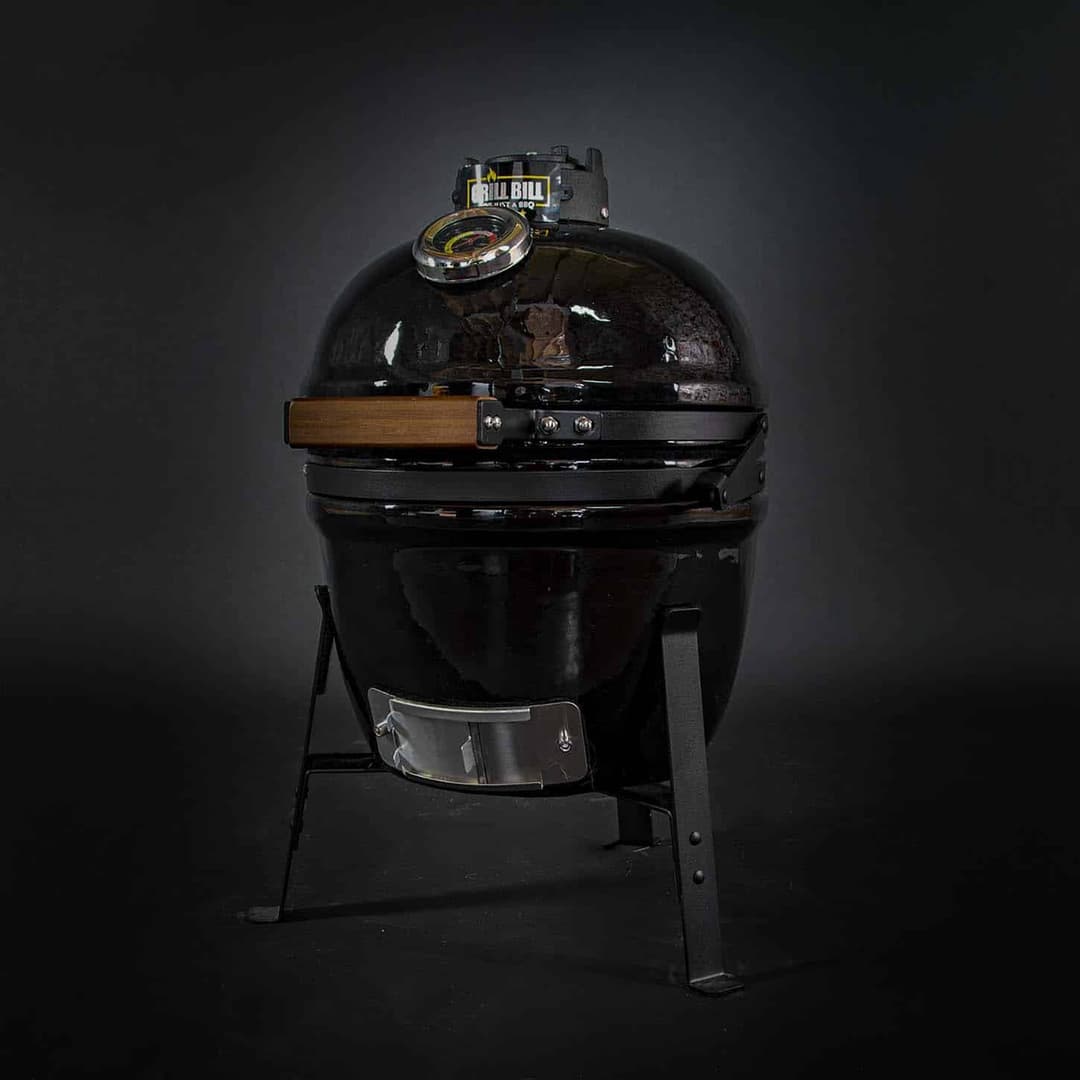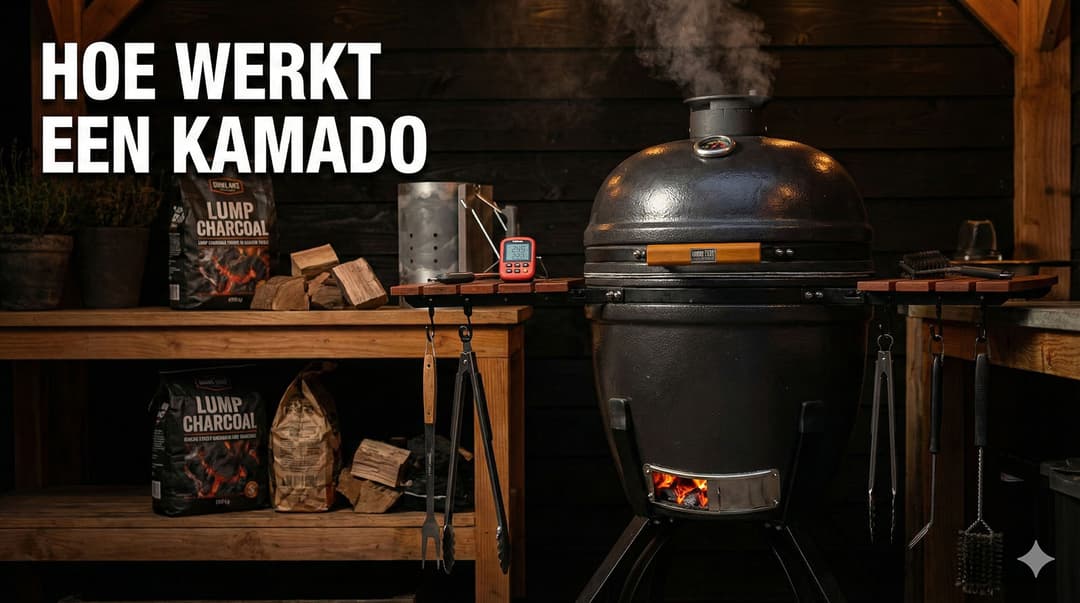
For the basics of temperature control (and why a kamado behaves differently from an “ordinary” BBQ) start with How does a kamado BBQ work?. After that, everything you do with the vents suddenly makes sense.
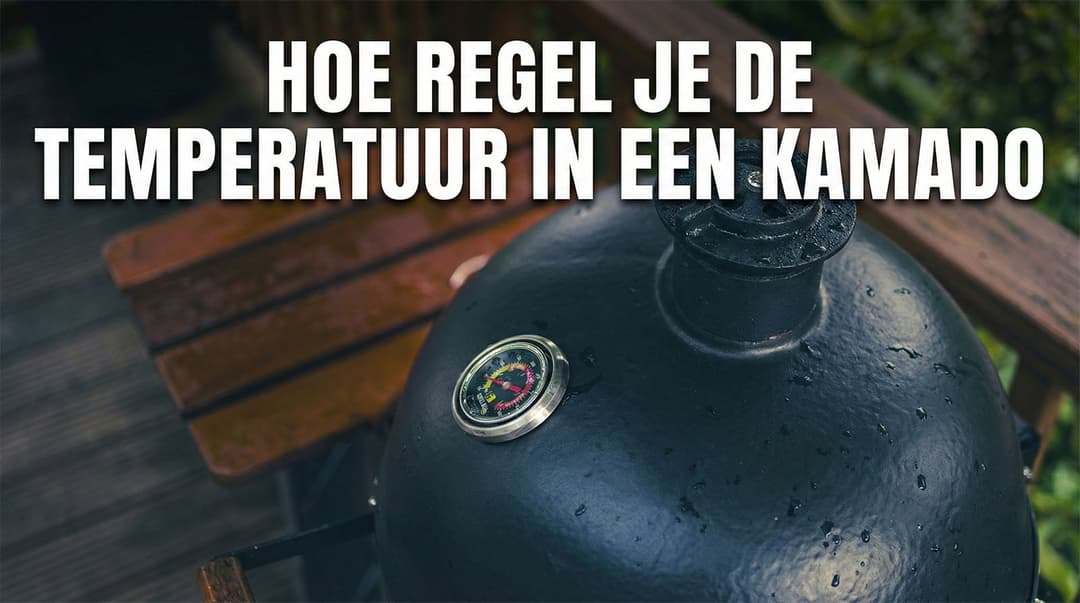
How do you control the temperature in a kamado?

By Bobby
How do you control the temperature in a kamado?
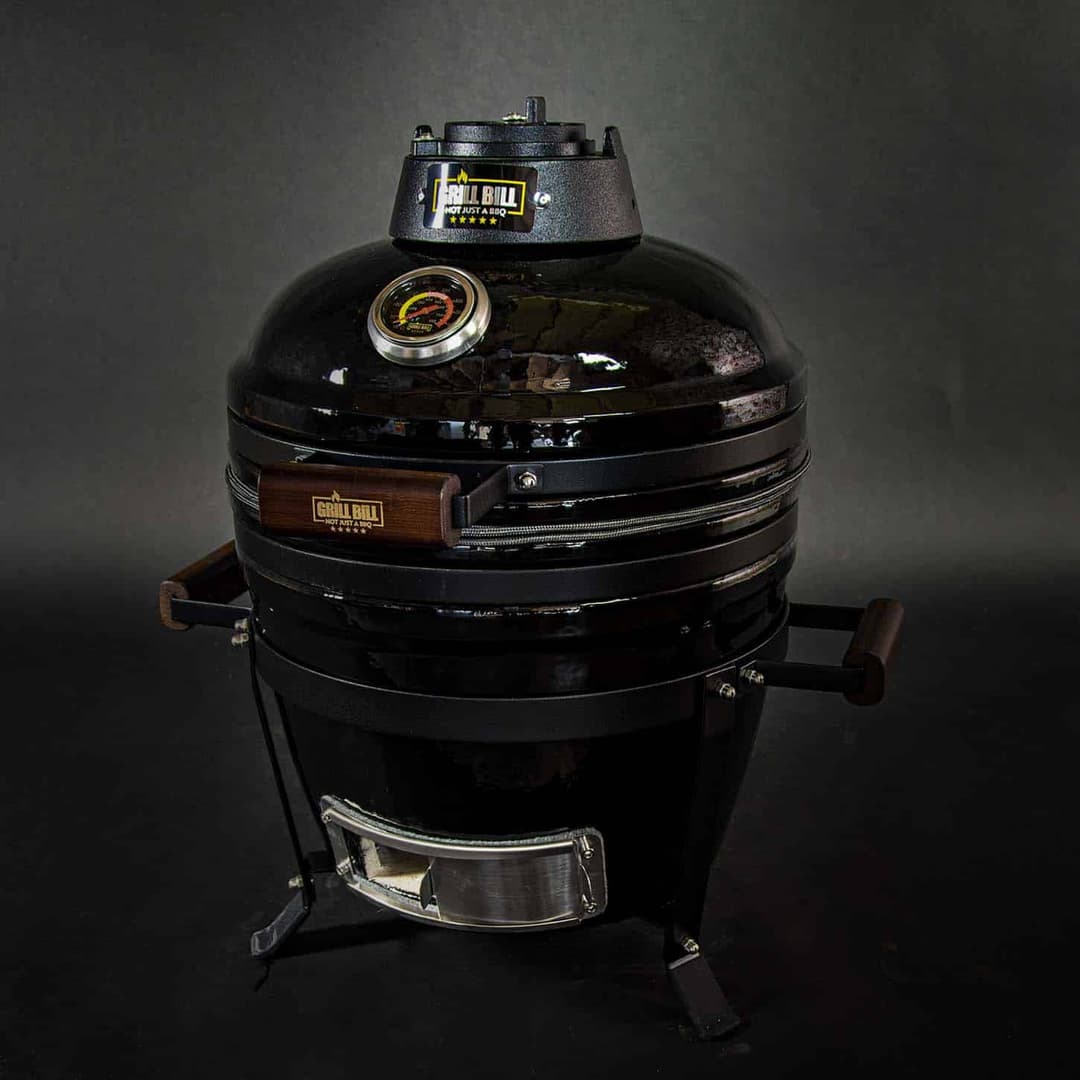
You control the temperature with two vents: the air intake at the bottom sets how much oxygen the fire gets, the top vent sets how much warm air can leave. Adjust them in pairs, in small steps, and wait each time for the kamado to respond. Ceramic holds on to heat, so a correction only takes effect after a few minutes.
- Bottom air intake = oxygen in, top vent = heat out
- Always adjust in pairs: closing the bottom? Bring the top with it
- 100-135 °C for low & slow (pulled pork, ribs, brisket)
- 150-200 °C for roasting and baking (chicken, rolled roasts, bread)
- 250 °C+ for pizza and high-heat grilling
The two controls that matter
- Air intake at the bottom: sets how much oxygen (and therefore fire) your charcoal gets
- Top vent at the top: sets how much warm air and smoke can escape
Raising the temperature
Want it hotter? Give the fire more oxygen. Open the bottom air intake in small steps and let the kamado respond. Opening it too far, too fast is the classic way to gift yourself “pizza mode” within ten minutes. Overshot and need to come back down quickly? Then follow the safe procedure: shutting down a kamado and cooling it down fast.
Lowering the temperature
Want it cooler? Choke the oxygen supply by closing the air intake and/or top vent a little further. Important: a kamado does not react instantly, because the ceramic holds a lot of heat. So: one adjustment, wait a while, and only then the next step. (If you want to understand why it works this way: airflow in a kamado explained.)
Pro tip: whatever air goes in at the bottom has to come out at the top. So always adjust in pairs: closing the bottom a little? Bring the top with it. That keeps the burn clean and stops smoke building up. This matters most on long sessions like low & slow.
The different temperature zones
- 100–135°C: low & slow (the classic range for pulled pork, ribs, brisket)
- 150–200°C: roasting and baking (chicken, rolled roasts, bread)
- 250°C+: pizza & high-heat grilling (steaks, smash burgers, quick hits)
Want more than just “temperature”, and clever zones within a single session (direct/indirect, hot/cool)? Then have a look at creating temperature zones in a kamado.
Common mistakes
- Correcting too soon (your kamado needs time to respond)
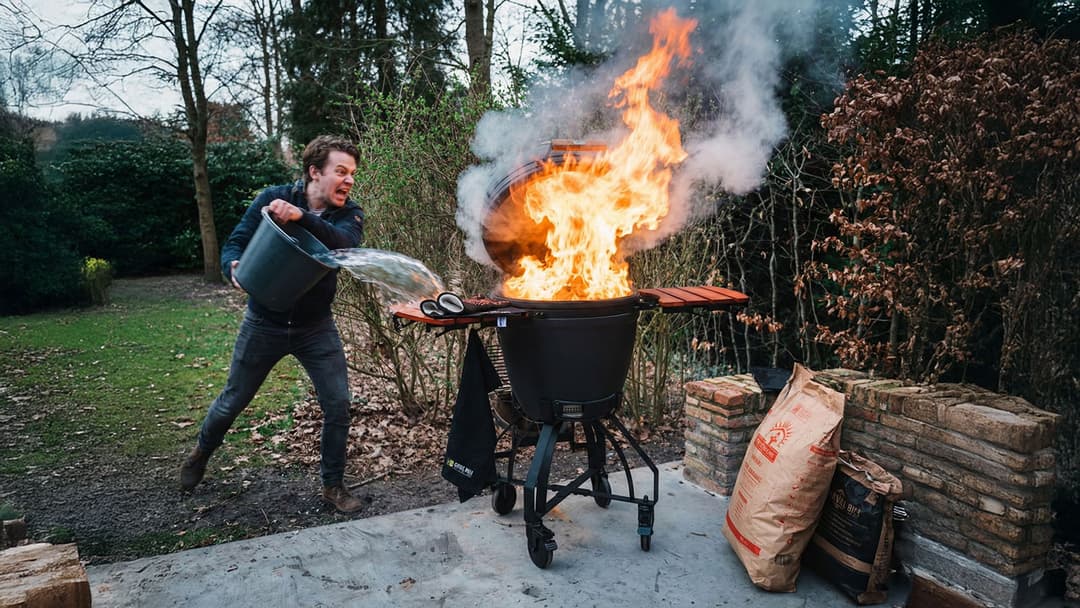
- Opening the dome over and over (heat out, oxygen in, chaos on top)
- Using damp or poor-quality charcoal
- Ash and debris building up at the bottom and choking the airflow
- Charcoal stacked badly: see how do you light a kamado BBQ?
FAQ
Why does a kamado react so slowly?
Because ceramic stores a lot of heat (thermal mass). The temperature therefore rises and falls gradually rather than instantly. That is exactly what makes it ideal for stable cooking, certainly for low & slow.
How do you keep a temperature stable?
Work with small adjustments to the air intake and top vent, and give the kamado time to respond each time. Also make sure the airflow is clear and the charcoal is right for the job.
How do I bring the temperature down quickly?
Choke the oxygen supply: close the bottom air intake almost fully and shut the top vent a long way, though usually leave a small gap. Then wait 5–10 minutes before adjusting again. If you want to do it safely and step by step, see: shutting down a kamado and cooling it down fast.
Written by

Grill Bill specialises in ceramic kamado barbecues and shares knowledge about low & slow cooking, smoking, grilling and baking on the kamado.
Read onThree more
![Beenham van de kamado]()

Three more
from the archive.
Beenham van de kamado
Beenham roken en glazen op de kamado. Doelterm: beenham kamado (720) — concurrent staat hier op positie 1.
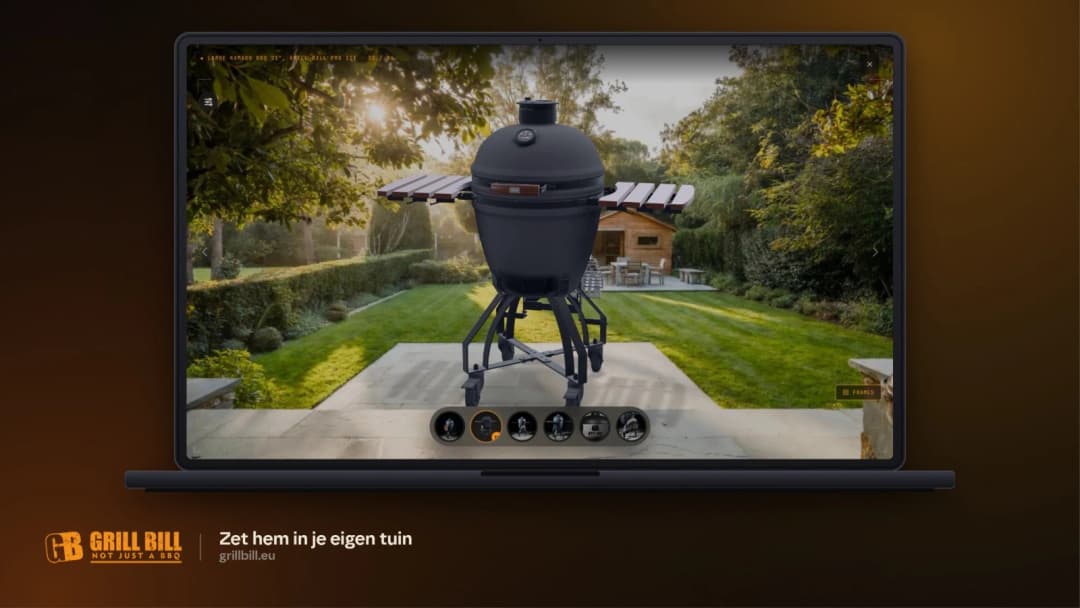
The new grillbill.eu: view your kamado in 3D and place it in your own garden
The new grillbill.eu is live. Spin the Pro III in 3D, place it in your own garden, compare every model side by side and learn to cook in the GB Academy.
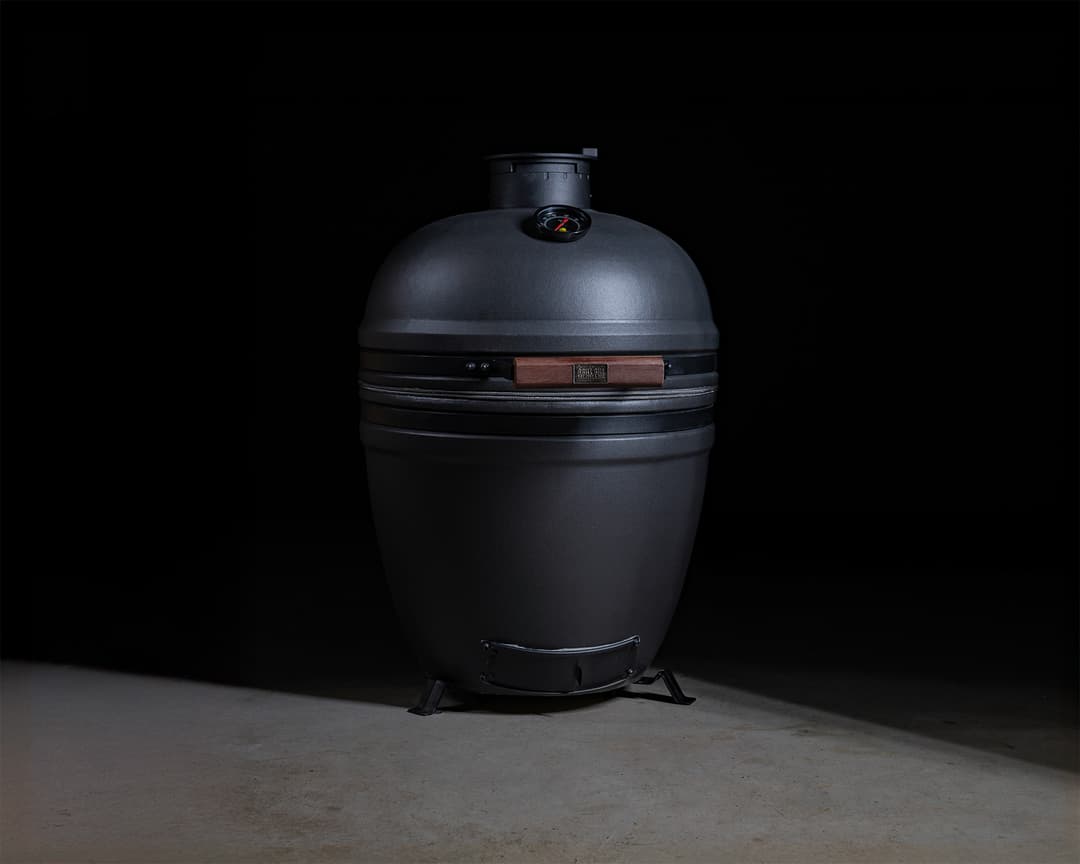
Building a kamado in: table, outdoor kitchen or Solo
Cut-out dimensions per Grill Bill size, ventilation at the bottom, shielding timber and the choice between buying, having it built or making it yourself. Plus the Large and XL Solo without trolley.
Stook inOnce a month,
Once a month,
a echte letter.
Recipes, drops and long essays about smoke. No noise, never resold.