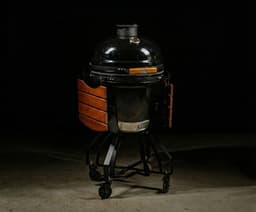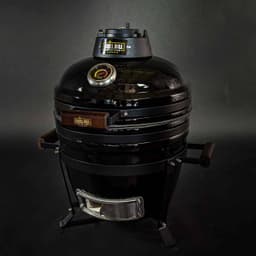
To understand how heat retention works, see What makes ceramic cooking different?.
How much and which charcoal should you use in a kamado?

By Bobby
How much charcoal should you use in a kamado?
Fill your firebox to match your cook: half a load or a charcoal basket for a short grill session, right to the top for a long cook, and at least three quarters for pizza. Always sort first, big lumps at the bottom for airflow and small pieces on top. Loaded like that, a full Grill Bill will run up to 24 hours low & slow.
- Short grill session: half a firebox or a charcoal basket
- Long cook: a full firebox or charcoal basket
- Pizza: at least three quarters full
- Big lumps at the bottom, small pieces on top, used charcoal last
- Up to 24 hours low & slow, or 2 to 6 hours at 180-200 degrees
Quick guidelines
- Short grill session: half a firebox or a charcoal basket
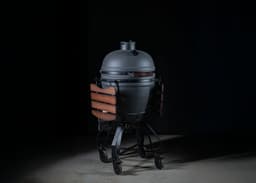
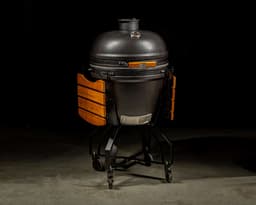
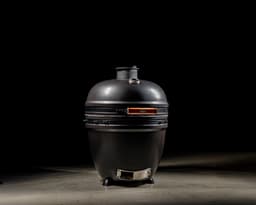
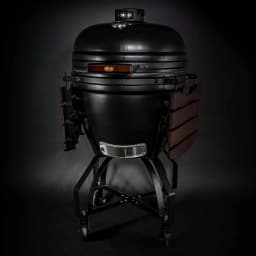
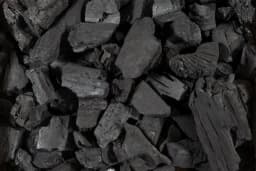
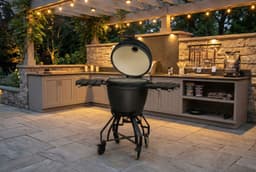
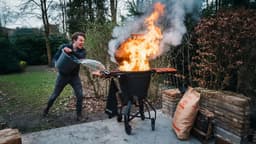
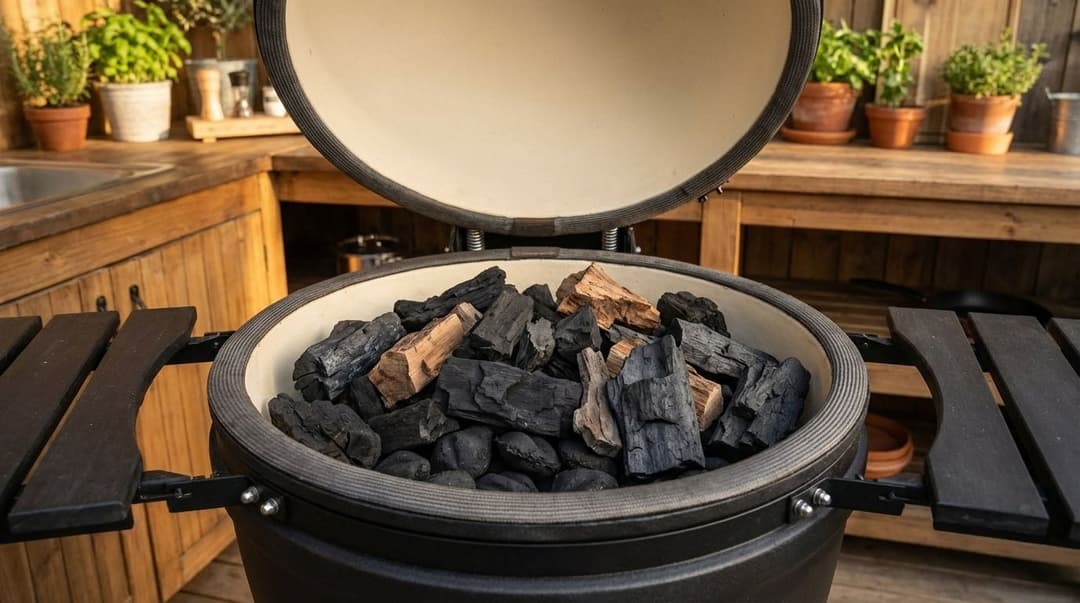
- Long cook: a full firebox or charcoal basket. So don't pile your kamado full to the brim like in the picture above!
- Pizza: at least three quarters full
Pro tip: for a short grill session, pile the charcoal up on one side, stacked as high as you can. That puts the fire closer to the grate so you can sear faster. Our charcoal baskets have a divider built in, which makes this a lot easier.
Sorting and loading your charcoal
Another pro tip! Sort your charcoal. It works best when you separate the big lumps from the small ones, so you get proper airflow between the pieces. Don't tip the whole bag into your kamado, or the dust and small fragments will end up blocking the air holes.
Load your kamado the same way every single time. Clean it out, a little ash is fine, and fill it. If you always do it the same way, you'll get a feel for cooking on a kamado much faster, because it will react in more or less the same way every time.
(Thank us later. The technique takes a little time, but it saves you time too, because your kamado settles at a stable temperature far quicker.)
- Big lumps at the bottom for proper airflow, and so the bed can't collapse as the charcoal burns down, which would cause temperature swings.
- Small pieces on top, because they catch faster
- Charcoal left over from your last session? Take it out of the kamado first, then put it back on top of the fresh charcoal. Used charcoal has already been lit once and catches even faster.
Use a charcoal box to store your charcoal, which also makes sorting the pieces easier. And buy good quality charcoal for more enjoyment from your kamado.
How long does charcoal last?
Depending on the charcoal, a fully loaded Grill Bill kamado can burn for up to 24 hours low & slow, and 2 to 6 hours at a grilling temperature of 180/200 degrees. That's all down to the temperature stability of the ceramic.
Comparison table: charcoal types for the kamado
There are a few more types out there, plus blends mixed from these. But these are the most common woods available in the Netherlands. You can also order this charcoal online.
Wood types side by side
Compare4 models
Burn time
Heat
Smoke flavour
Suitable for
Quebracho Blanco
⭐⭐⭐⭐⭐ (up to 24h)
Very high
Powerful, earthy
Low & slow, pizza, steak
Marabu
⭐⭐⭐⭐⭐ (up to 22h)
Very high
Mild, woody
Low & slow, long sessions
Oak
⭐⭐⭐⭐
High
Classic, all-round
Beef, pork, game
Birch
⭐⭐⭐
Medium-high
Light and fruity
Poultry, fish
Beech
⭐⭐⭐
Medium-high
Mild and neutral
Anything, also for beginners
Acacia
⭐⭐⭐
Medium-high
Subtle, almost neutral
Delicate dishes, fish
Coconut briquettes
⭐⭐⭐⭐
Medium-high
Neutral
Low & slow, slow to light
Cheap charcoal
⭐
Variable
Variable
Not recommended for kamado
Hardwood vs. softer wood: what's the difference?
Charcoal made from hardwood, such as oak, quebracho or marabu, consists of dense pieces that burn slowly and hot. That gives you a steady fire and a long-burning coal, exactly what a kamado needs for the best temperature control. Softer wood burns up faster, delivers less heat and leaves more ash behind. For a kamado, which runs on airflow and heat retention in the ceramic, hardwood is almost always the better choice.
How do you recognise good quality charcoal?
You can spot good kamado charcoal at a glance: big, irregular lumps, hardly any dust at the bottom of the bag, and it feels dry and light. A bag full of fine dust is a bad sign, because that dust ends up in your charcoal basket and blocks the airflow, so your kamado never properly comes up to temperature.
Quality checklist
- Large pieces without much breakage
- Little dust or grit at the bottom of the bag
- Dry and immediately flammable
- Stands up to high heat and long sessions
Which charcoal do you use for low & slow?
For pulled pork, brisket or spare ribs you want to cook for hours at a stable temperature between 90 and 120 degrees. That calls for big, hard chunks of charcoal that burn slowly and need almost no adjustment. Quebracho Blanco and Marabu are the outright champions here: super dense hardwood that lasts up to 24 hours at 100-110 degrees on a low & slow cook. You fill the basket, set the temperature and let the kamado do its thing. Want to know more about filling the basket? Read how much charcoal you need in a kamado.
Which charcoal is suitable for high temperatures?
Pizzas, flatbreads, smash burgers or a proper steak crust all ask for fast, intense heat. A hardwood mix in medium-sized pieces heats up quickly and delivers plenty of power for high temperatures, without your kamado running away with you. Struggling to control the temperature at high heat? Then have a look at how to control the temperature in a kamado.
Smoke and flavour development: how does that work?
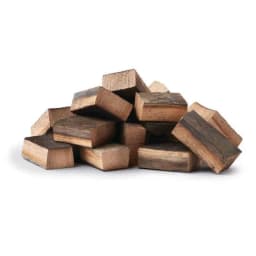
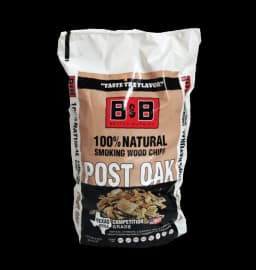
Charcoal itself already gives a subtle smoke flavour, but if you want to add specific flavours you do that with smoking wood chunks or chips on top of the coals. Small addition, big effect. Roughly ordered from more to less smoke flavour:
- Quebracho (powerful and earthy)
- Oak (classic, all-round)
- Birch (light and fruity)
- Beech (mild and neutral)
- Acacia (subtle, almost neutral)
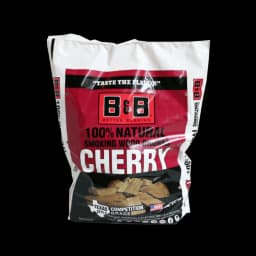
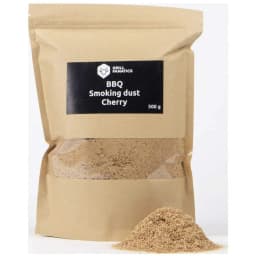
Cherry and other fruit woods work beautifully with poultry, oak with beef. Feel free to experiment: a kamado picks up those flavours superbly thanks to the closed dome. Want to know which cooking technique suits your dish best? Then read direct and indirect cooking on the kamado.
Can you use cheap charcoal in a kamado?
You can, but you'll notice the difference straight away. Cheap charcoal often consists of smaller, softer pieces that burn up faster, leave more ash and disrupt the airflow in your kamado. It may even be waste wood from the furniture industry. For a short one-hour grill session it might still do the job, but for longer cooks you'll soon get temperature swings, or your charcoal will simply run out in no time. The kamado just performs best with charcoal that is made for long, stable burning.
When do you go for premium charcoal?
Premium charcoal, Quebracho, Marabu or Binchotan, is made from exceptionally dense wood with an extremely long burn time and high heat resistance. It's worth the investment if you regularly do long sessions or really want the best temperature stability. Many users find they don't just barbecue more efficiently, they also have to adjust far less. That's exactly what a kamado does at its best: quietly cooking away while you get on with something else.
Common mistakes when choosing charcoal
The most common mistake: only opening the bag once you already want to grill, and tipping the lot into the kamado. The dust and grit at the bottom of the bag goes straight into your charcoal basket. Better to empty the bag outside first and sort the pieces before you fill: big lumps at the bottom, small ones on top. Reused charcoal from the last session goes on last of all. Have a look at the other common kamado mistakes too, to learn what to do and what to avoid.
Frequently asked questions
Why does a kamado use so little charcoal?
A kamado uses so little charcoal because the thick ceramic holds heat extremely well. That means you need to top up far less often and burn much less fuel than you would on a steel barbecue.
Which charcoal works best?
Restaurant-grade charcoal with big lumps works best in a kamado. Large chunks give you a steady burn, good airflow and an even heat output.
Where can I order charcoal?
You can order charcoal suitable for your kamado from the Nomad Fire webshop. There you'll find charcoal that matches the heat control and efficiency of a Grill Bill kamado perfectly.
Can I use damp charcoal?
No, wet charcoal is unusable. It lights poorly, steams heavily and gives you unstable temperatures. Always use dry charcoal.
Why do I need to load my kamado properly with charcoal?
Loading your kamado properly keeps the distance between fire and grate short. The grate heats up faster, holding temperature is easier, and you have enough fuel for longer sessions without topping up.
How much charcoal fits in a charcoal basket?
A 10kg bag will fill your basket roughly 4 to 5 times.
What do I do with leftover charcoal?
As long as it isn't damp, you can reuse it. Any piece bigger than 2 to 3cm is worth keeping. The charcoal basket that comes with our kamado is ideal for sorting used charcoal: give it a good shake, and whatever stays in the basket can be reused. Put those reused pieces on top of the fresh charcoal. They catch more easily, and they stop the charcoal bed from collapsing and causing temperature swings.
What is the advantage of restaurant-grade charcoal?
Restaurant grade is generally a marketing term. But what they mean is big, uniform chunks. The airflow in your kamado is better as a result, the temperature more stable, and you need to make fewer adjustments along the way. When you're choosing charcoal, don't be misled by the restaurant-grade label. Look at which type of wood is actually in the bag.
Does premium charcoal really burn longer?
Yes. Quebracho and Marabu in particular are known for their exceptionally long burn time: on a low & slow cook, up to 24 hours at 100-110 degrees. That saves a lot of topping up and adjusting.
Can I use cheap charcoal in my Grill Bill?
You can, but expect more ash, a shorter burn time and a less stable temperature. For short sessions it's acceptable, for longer cooks we'd advise against it.
Which charcoal gives the most flavour?
Charcoal itself gives a light smoke flavour. For pronounced aromas you add smoking wood chunks. From most to least smoke flavour: Quebracho, oak, birch, beech, acacia.
Can I use briquettes in a kamado?
Only coconut briquettes. They are pressed from carbonised coconut shells with a natural binder, burn for a long time and smell neutral. Ordinary briquettes contain binders and often fillers: they produce far more ash, which blocks the airflow, and a chemical smell that soaks into the open ceramic structure and gives your food a bitter aftertaste. Our advice stays the same: just good lump charcoal. Less ash, up to temperature faster, and the wood type determines how hot and how long it burns. Also read common kamado mistakes.
Written by

Bobby founded Grill Bill and has been cooking on ceramic kamados for years. His background is in tech, design and marketing, and it shows on the site you are reading right now: he designed and built grillbill.eu himself, on his own platform Neuramerce, from the recipes and the dealer finder to the checkout. Here he writes about low and slow, smoking, grilling and baking on the kamado, drawing on the thousands of customers he helped get going with their first Grill Bill.
Read onThree more

Three more
from the archive.
Building a kamado in: table, outdoor kitchen or Solo
Cut-out dimensions per Grill Bill size, ventilation at the bottom, shielding timber and the choice between buying, having it built or making it yourself. Plus the Large and XL Solo without trolley.
Grill Bill Classic, or a Pro Kamado BBQ after all?
Classic, Pro II or Pro III: the ceramic is the same in all three; the warranty is 10 years on the Classic and up to 20 years on the Pro II and III. You pay for the seal, the glaze and the equipment. Laid out per size, with complete specification tables.
Kamado maintenance
Maintaining a kamado is not a one-off spring service but three rhythms: after every session, every quarter and once a year. Including squeezing the gasket back into shape rather than replacing it, and firing up safely after a long standstill.
Fire upOnce a month,
Once a month,
a real letter.
Recipes, drops and long essays about smoke. No noise, never resold.