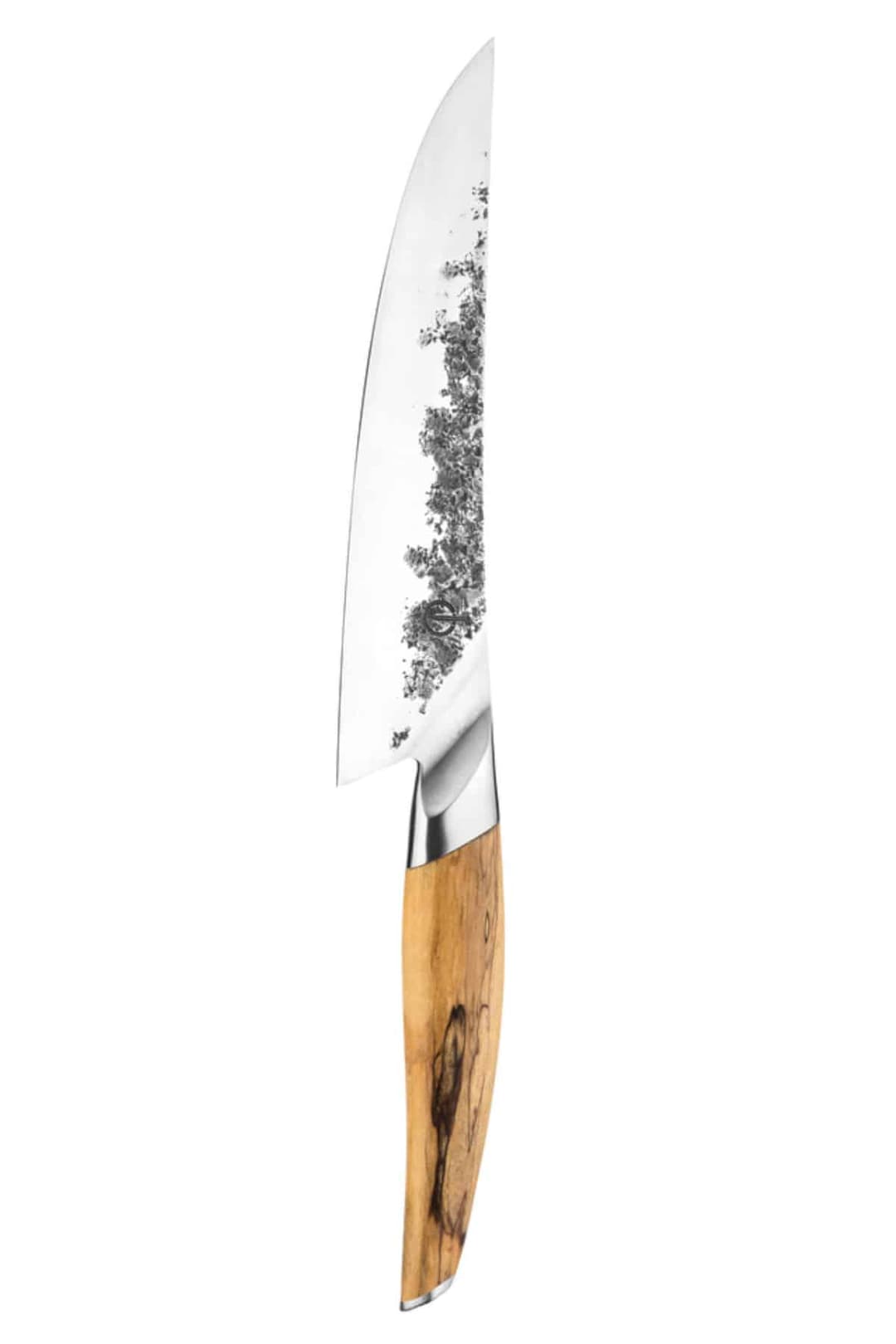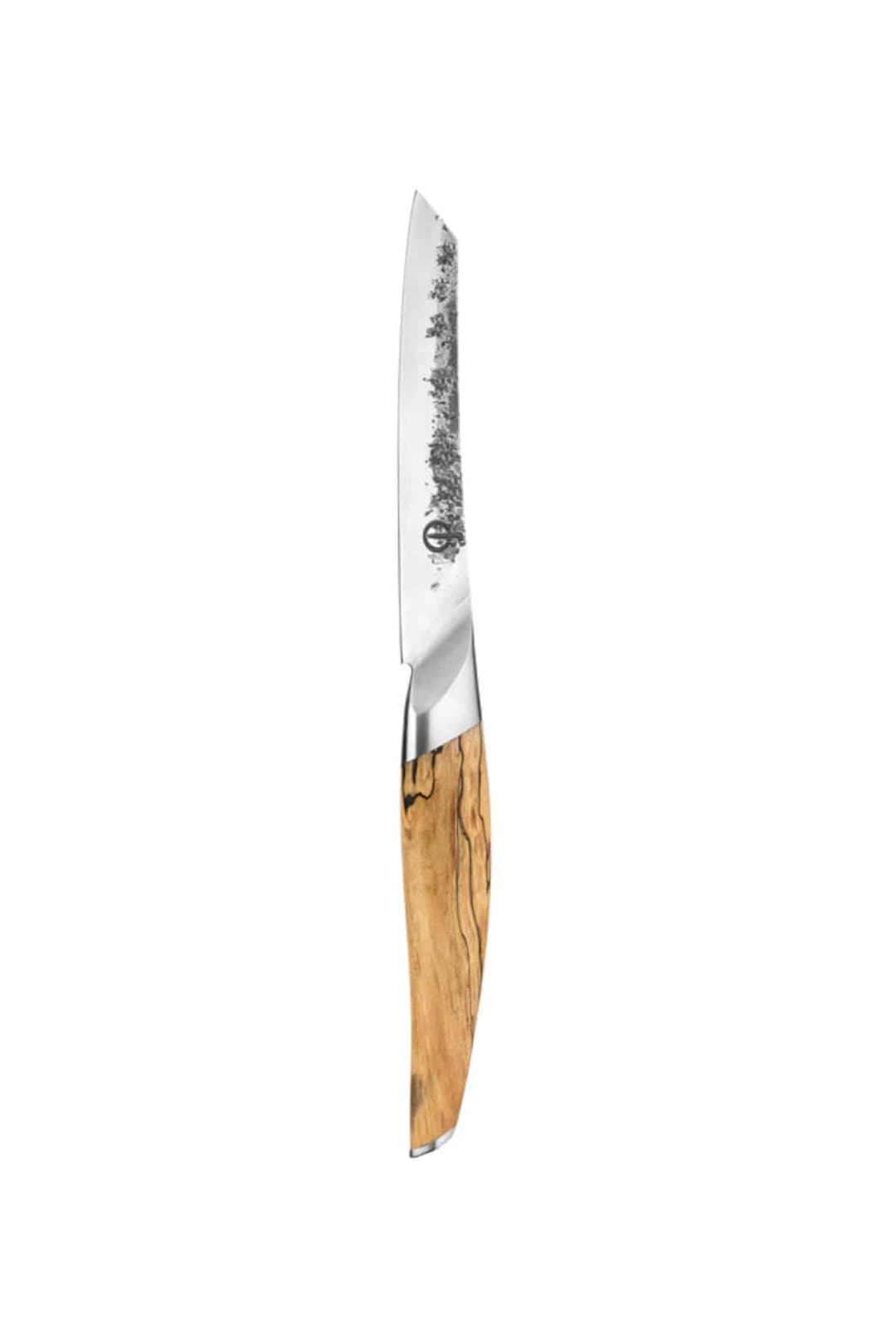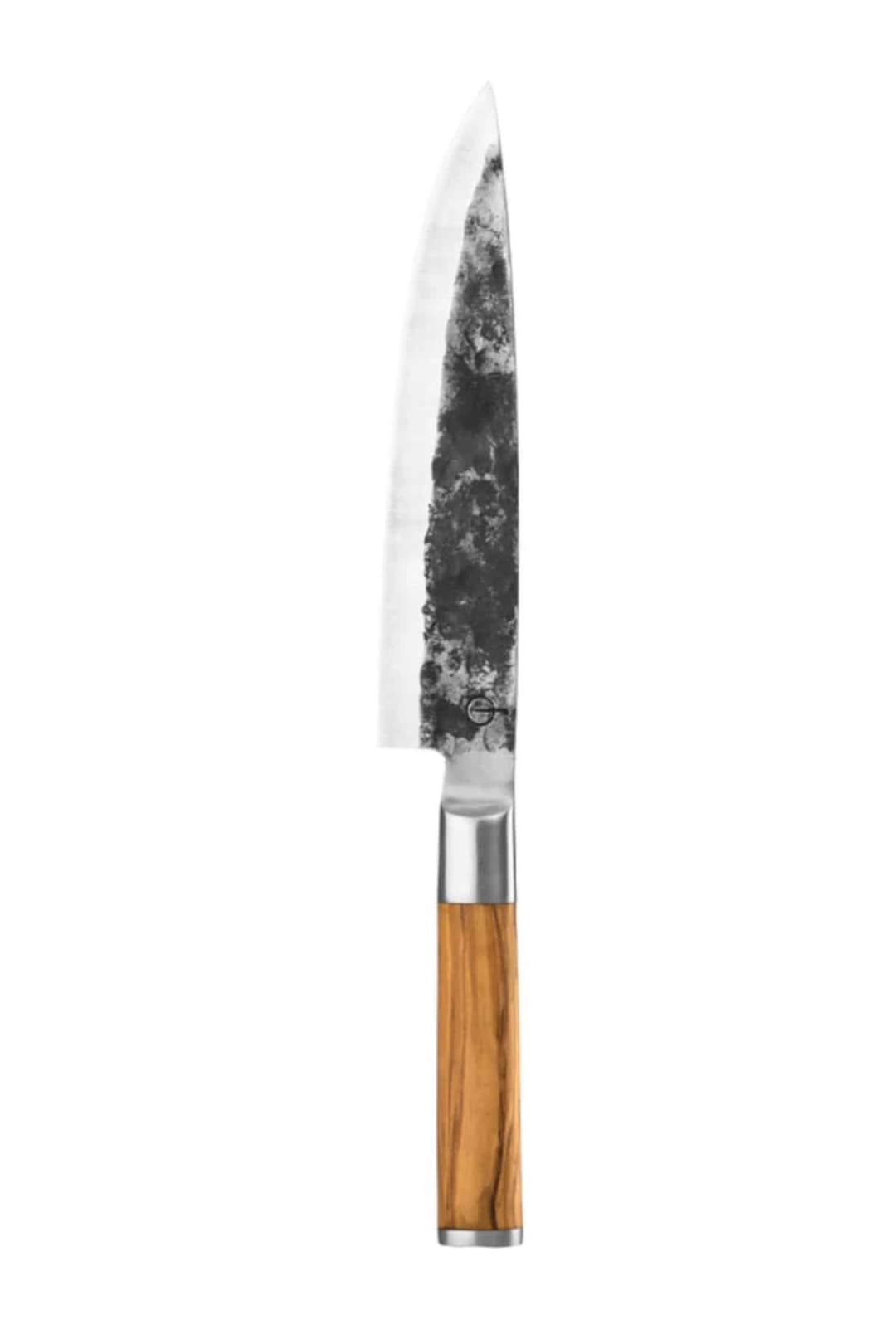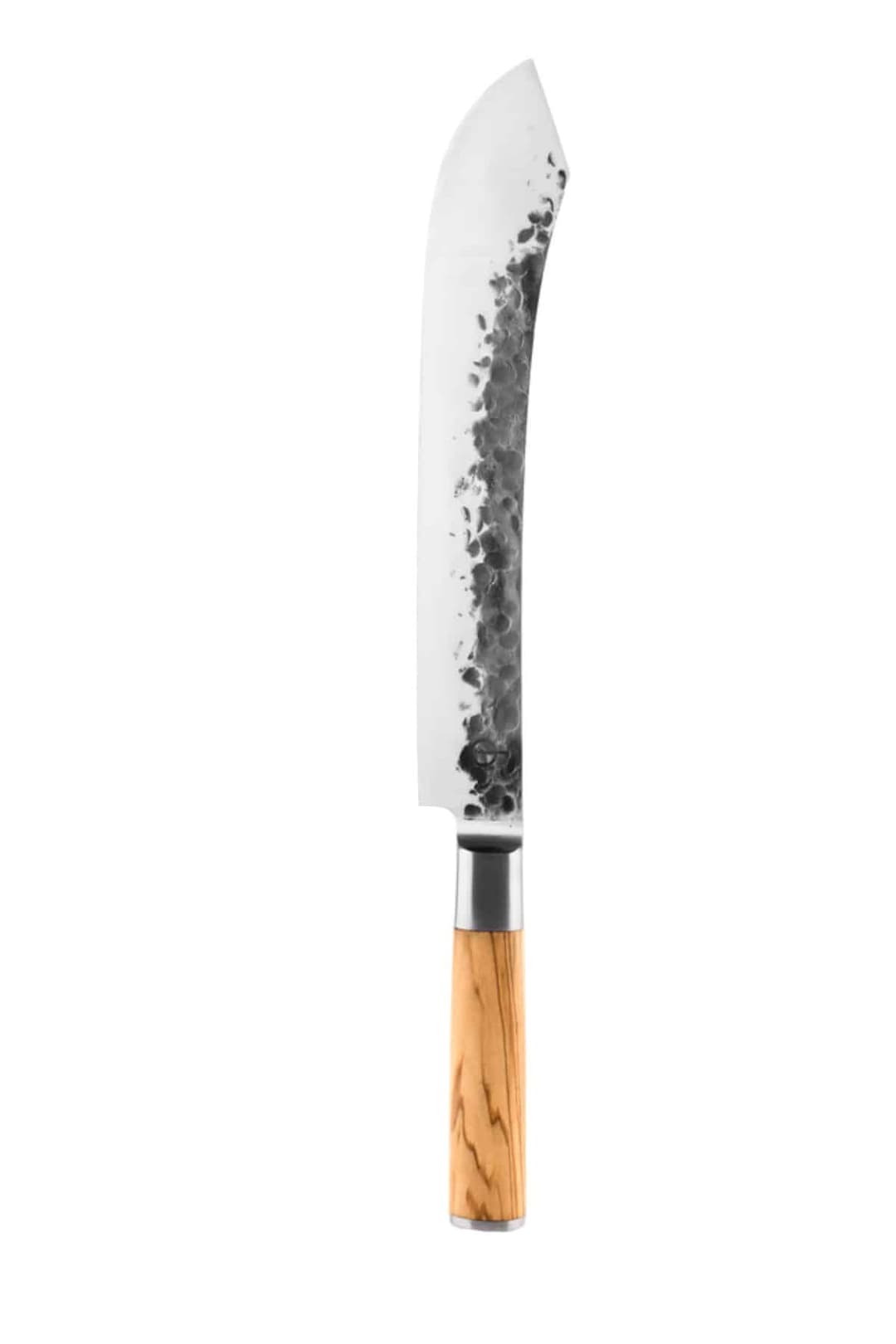
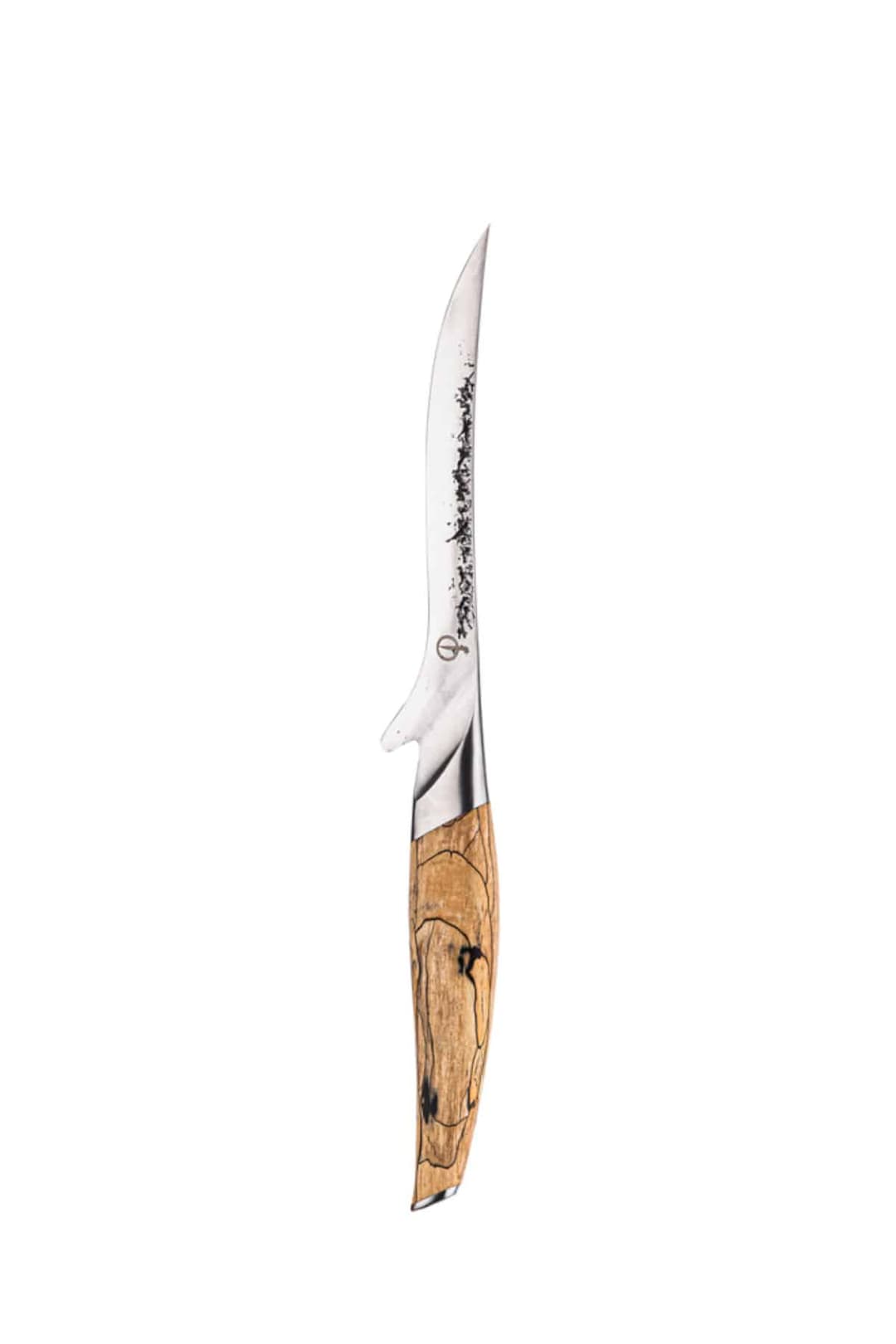
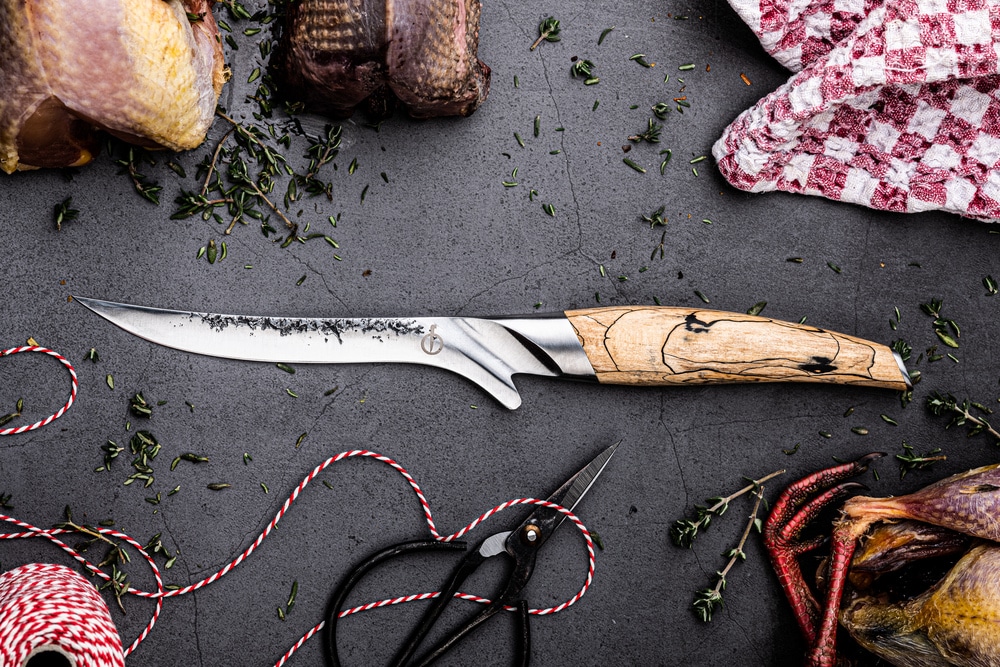
The Katai boning knife does one thing very well: guiding the blade along bone and tendon without tearing the meat apart. This Katai Forged knife has a narrow, agile blade for exactly that, following the contours of a bone closely. You cut cleaner, keep more usable meat and finish faster.
You notice the difference most with whole chickens, legs of lamb and rib joints you prep yourself for the kamado. The knife steers lightly and stays easy to control even with greasy hands.
- Narrow blade that runs tightly along bone and tendon
- Forged steel, so sturdy with little flex
- Pointed tip to free up joints
- Handle with grip for wet and greasy work
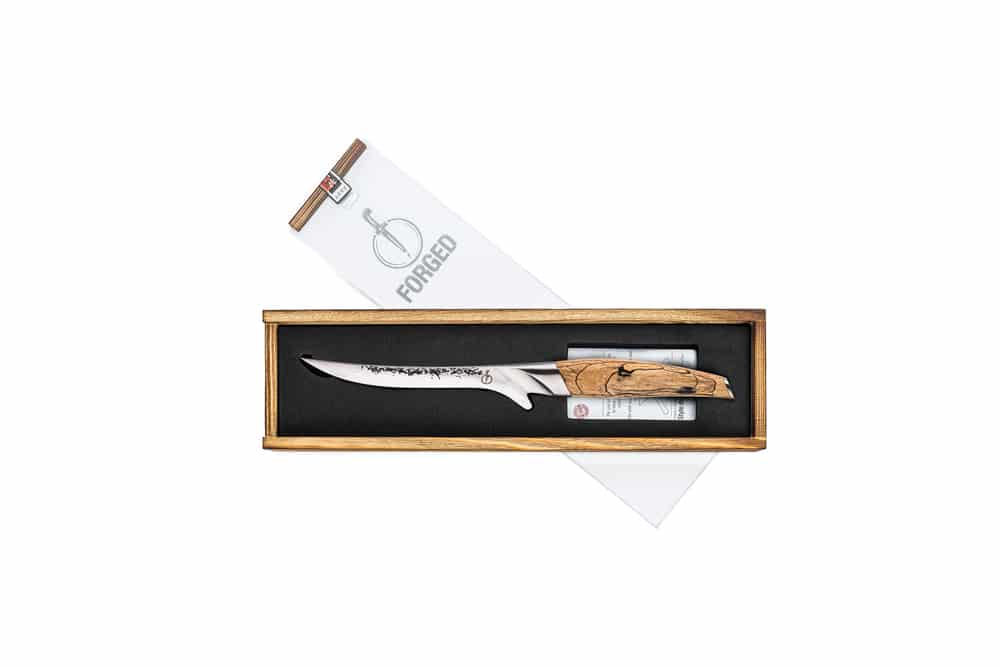
- Matches the Katai Forged series in shape and balance
Why a Katai boning knife cuts differently
With a wide chef's knife, you push meat away as soon as you hit a bone. A narrow blade can bend and move with it instead, letting you free up the last few centimetres of meat rather than cutting it away. Over a whole chicken, that's easily an extra portion.
How to approach boning
Work on a stable chopping board and always cut away from your hand. Find the joint first, set the tip into it and then run the blade along the bone with short strokes. Never force it through: if the knife catches, change the angle rather than applying more force.
Bill's tipPut the freed meat straight into a bowl and keep the bones separate. Later you can simmer those bones into a stock and reduce it on the kamado.
Maintenance and staying sharp
Wash the knife by hand and dry it immediately; the dishwasher damages both the steel and the handle. Straighten the edge regularly with a Katai Forged honing steel and only sharpen once honing no longer helps, for example with a sharpener from our Horl knife sharpeners range. More knives from the same line are in the knives category.