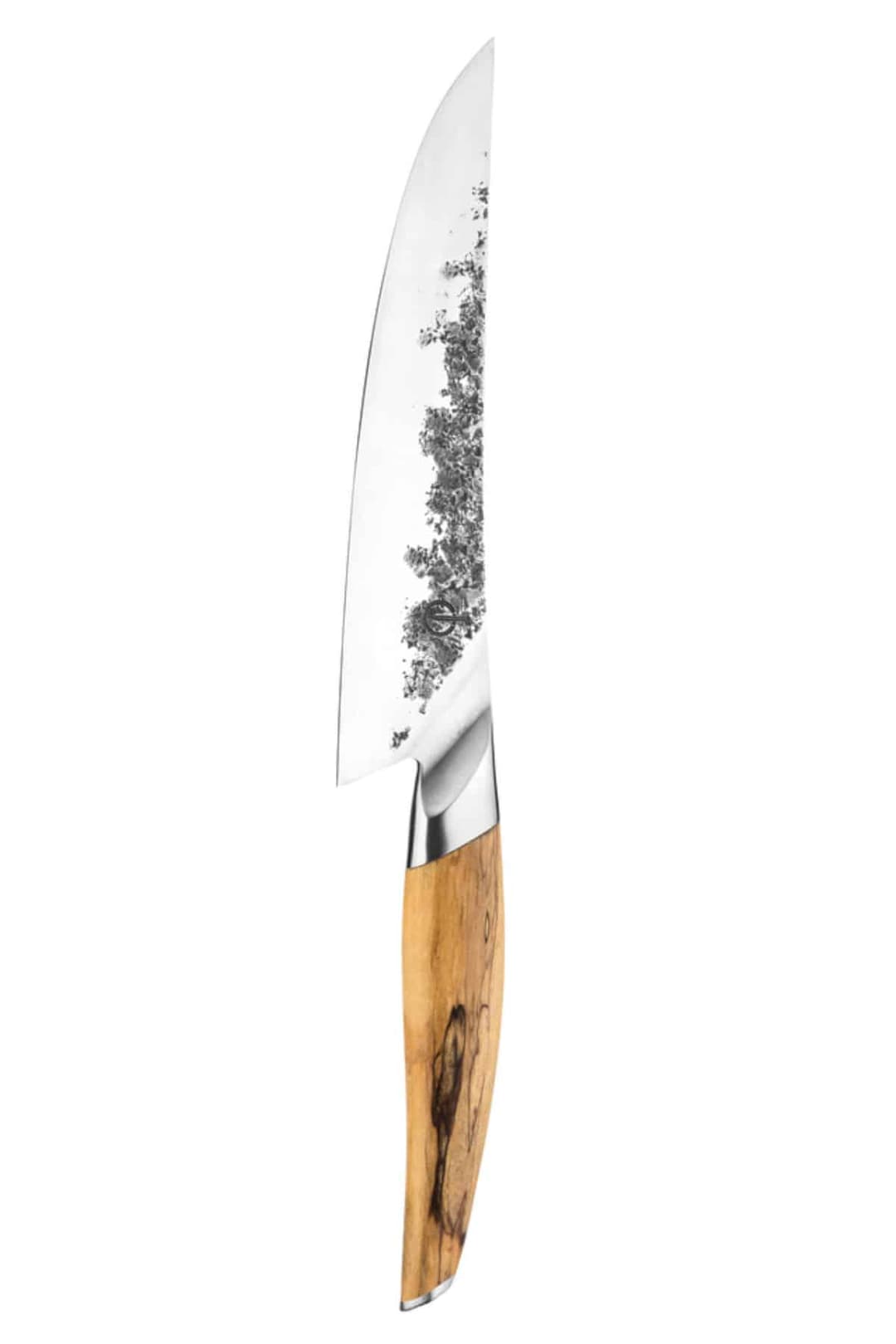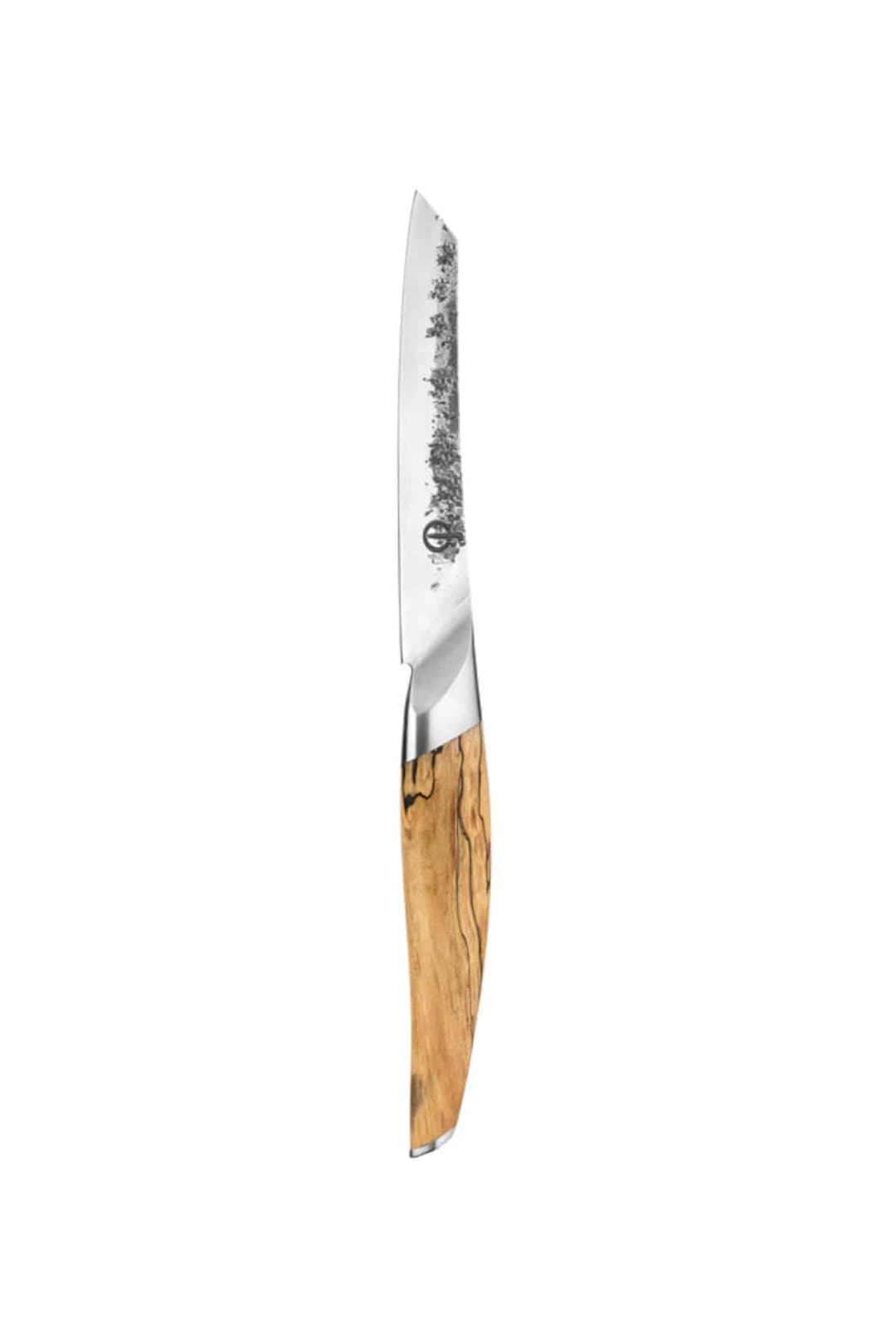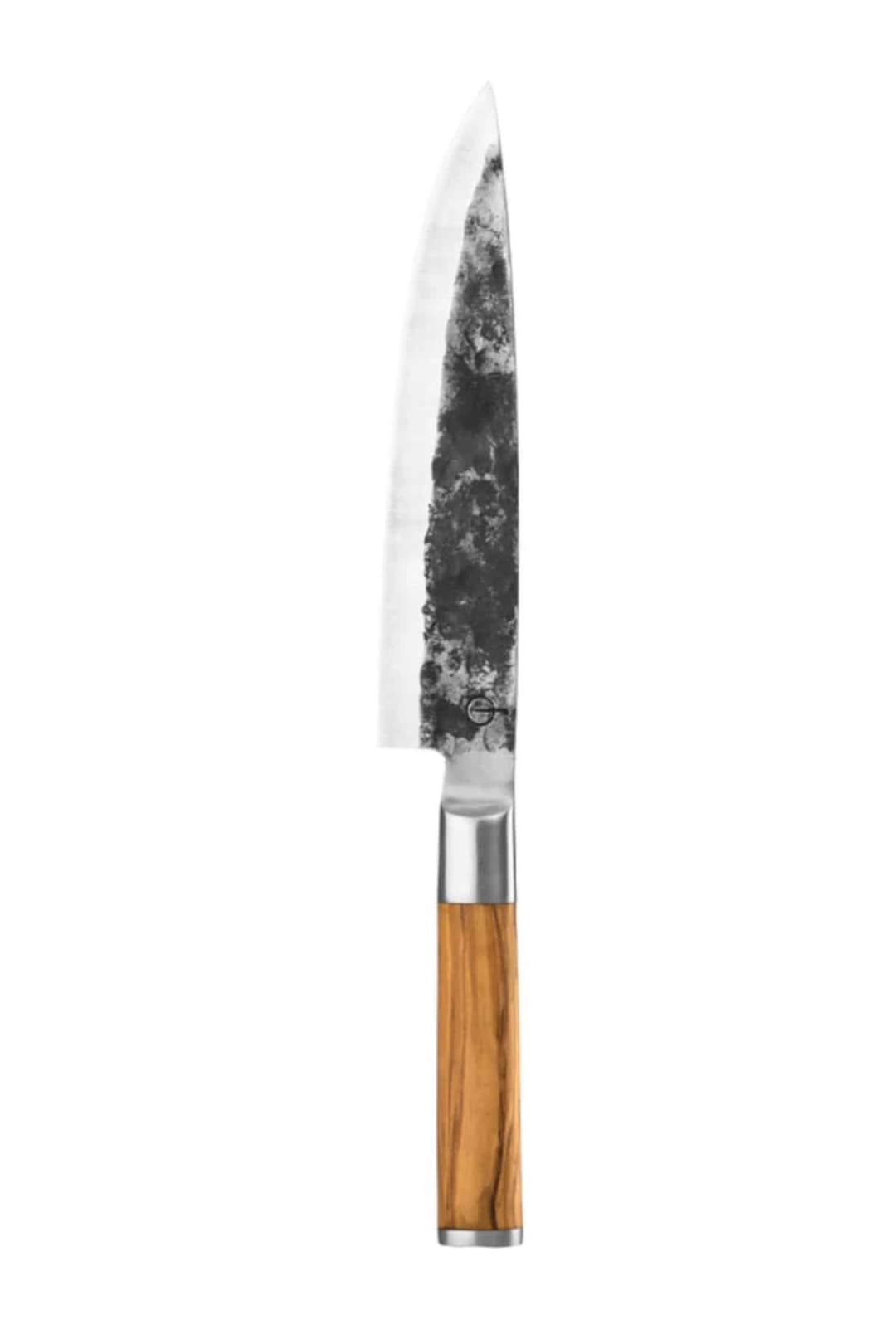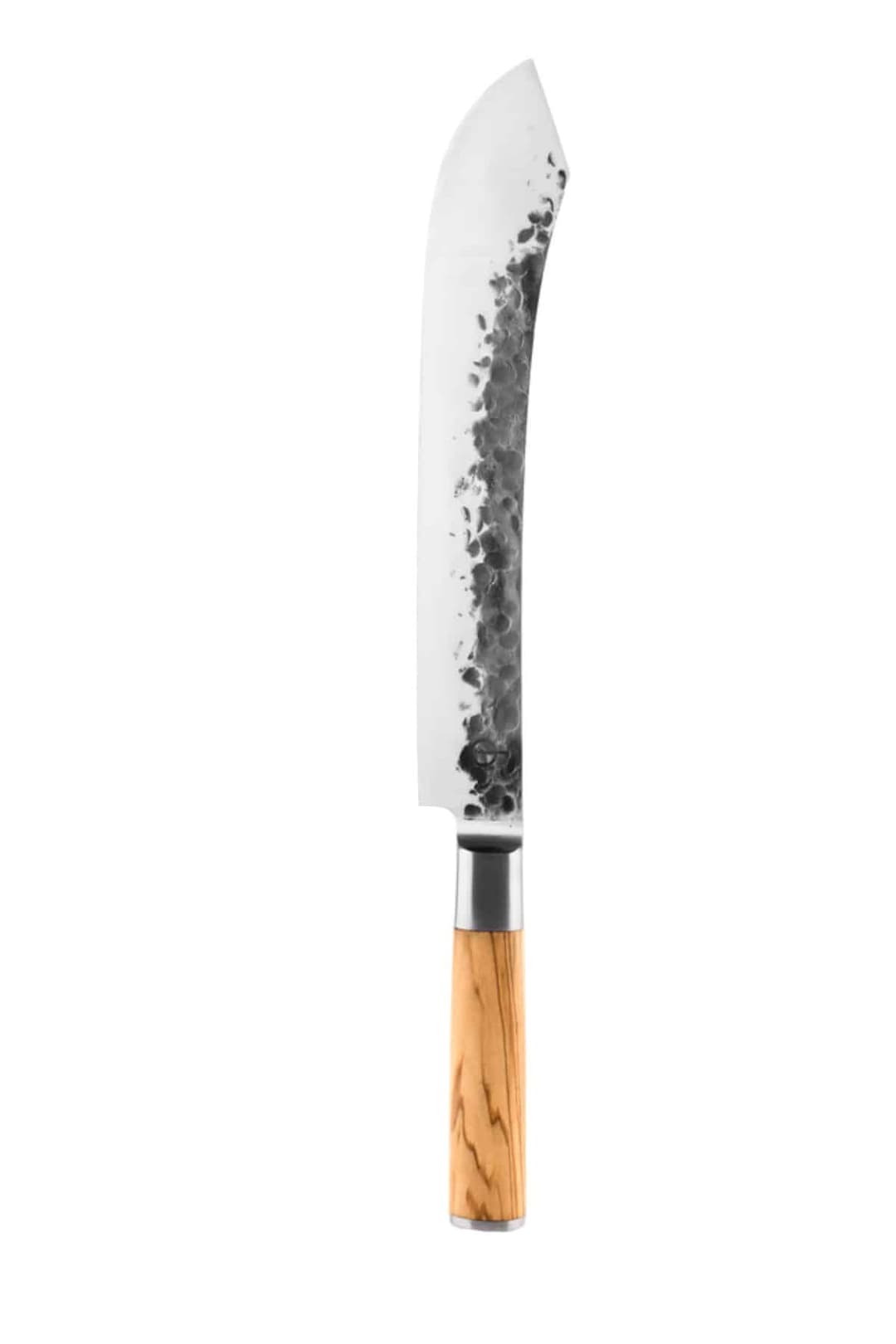
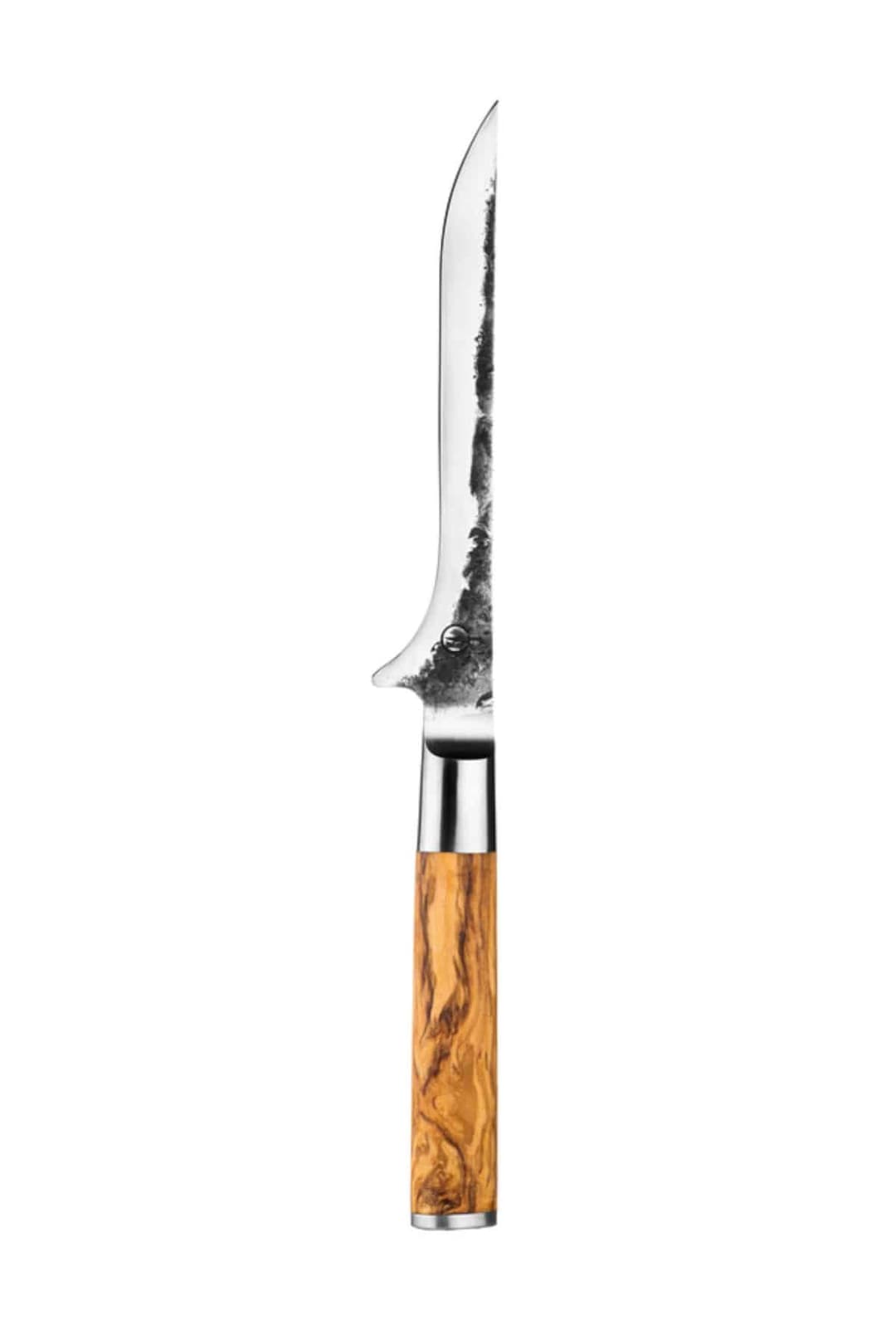
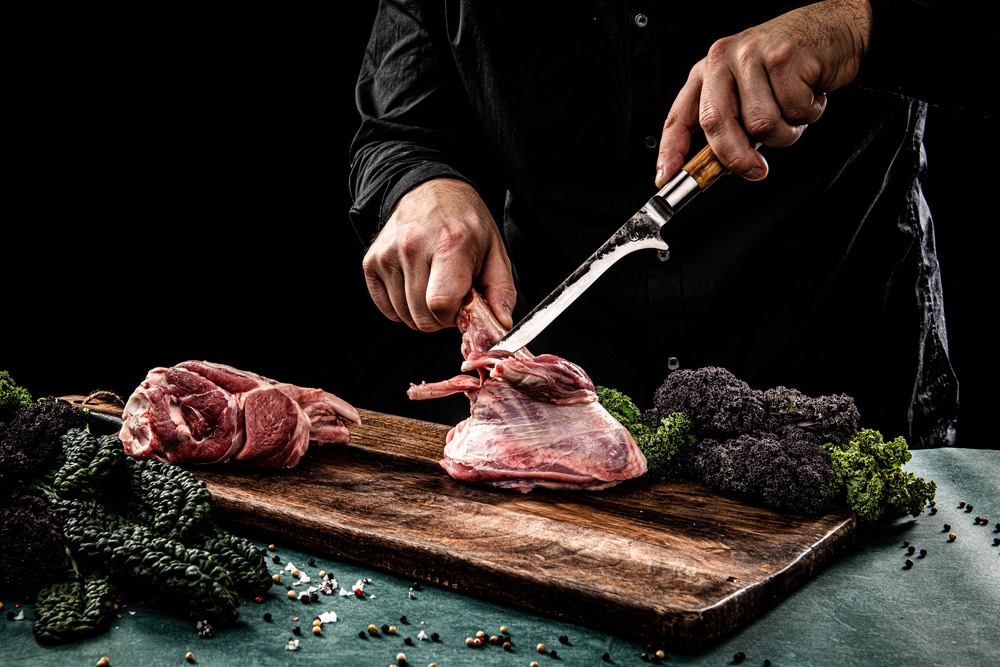
A forged boning knife is narrower and pointier than a chef's knife, and that's exactly the point. You push the tip along the bone, let the blade flex with the shape and cut the meat free without tearing it apart. You're left with intact cuts and leave less behind on the carcass.
The blade runs all the way into the olive wood handle, so the knife has no play when you apply force at a joint. If you regularly bone a whole chicken, a leg of lamb or a pork shoulder for the kamado, this knife pays for itself in meat you'd otherwise throw away.
- Narrow, agile blade for work along bone and joint
- Pointed tip to free sinew and tendons
- Continuous steel into the handle, no play or twisting
- Also suited to trimming and cutting away fat before smoking
- Matches the other knives in the Olive Forged series
How to work with a forged boning knife
Always cut away from yourself and hold the meat with a fork or a cloth, not with your free hand in front of the blade. Find the joint first and cut through the tendon, then the bone often comes free on its own. Push the tip close along the bone and let the knife do the work: applying force is almost never necessary.
Maintenance
Rinse the knife with warm water straight after use and dry it immediately. Fat and acids from meat attack the edge if you leave it lying around. Not in the dishwasher: that dries out the olive wood. Hone the edge regularly on a honing steel.
Browse the rest of the knife collection, work on a sturdy wooden chopping board, and keep the edge in shape with one of the Horl knife sharpeners.