Grill Bill
In this category

€100 off

Sign up for the newsletter
Reverse sear on a kamado, why it works so well
Grill Bill
By Grill Bill
Published
22 December 2025

What is reverse sear on a kamado?

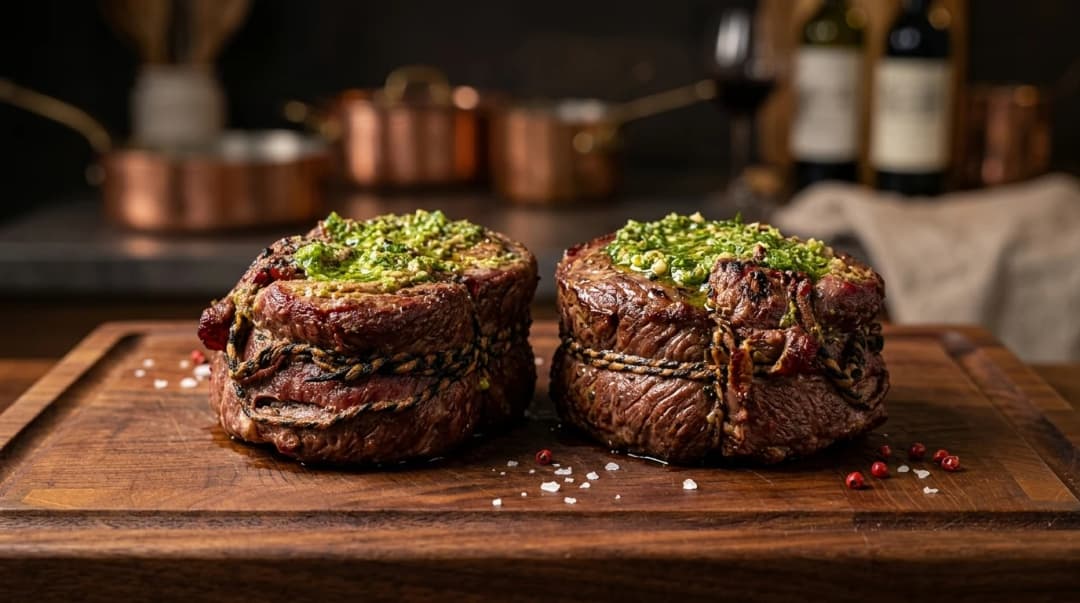
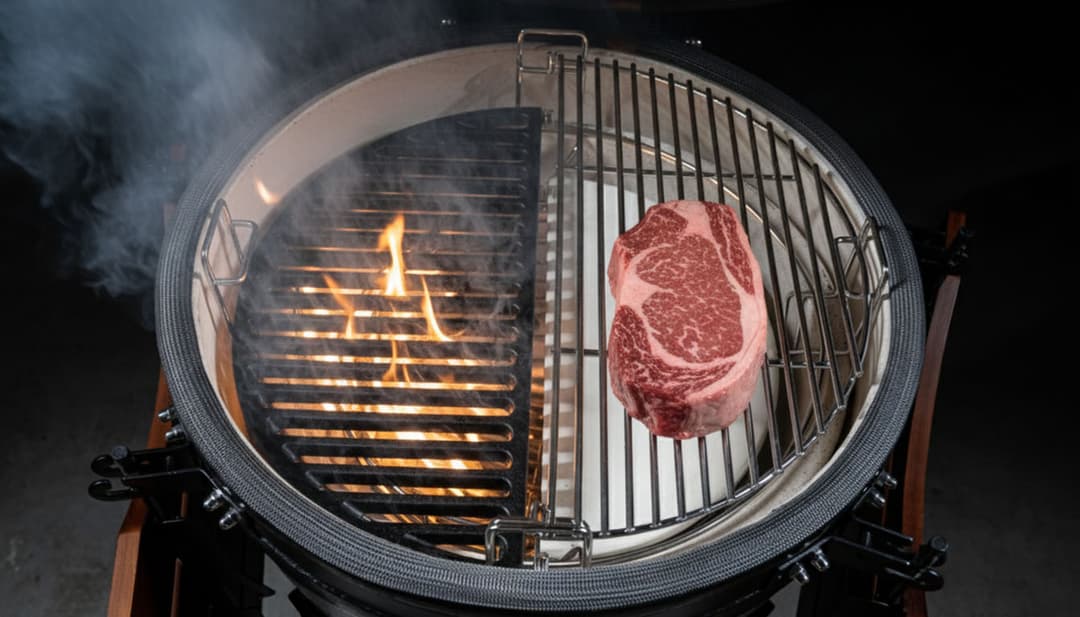
With reverse sear you first cook the meat indirectly at 100 to 130 degrees until it is just below the core temperature you want, then sear it briefly straight over the charcoal. The core stays evenly cooked and you still get a deep crust. It works best on thick steaks, côte de boeuf, tomahawk and ribeye.

  • Phase 1: indirect at 100 to 130 degrees, bottom vent barely open
  • Phase 2: heat deflector out, open the airflow in a controlled way
  • A short sear gives fast caramelisation without the core cooking further
  • For thick steaks, côte de boeuf, tomahawk, ribeye and large pork chops
  • Rest the meat briefly after grilling

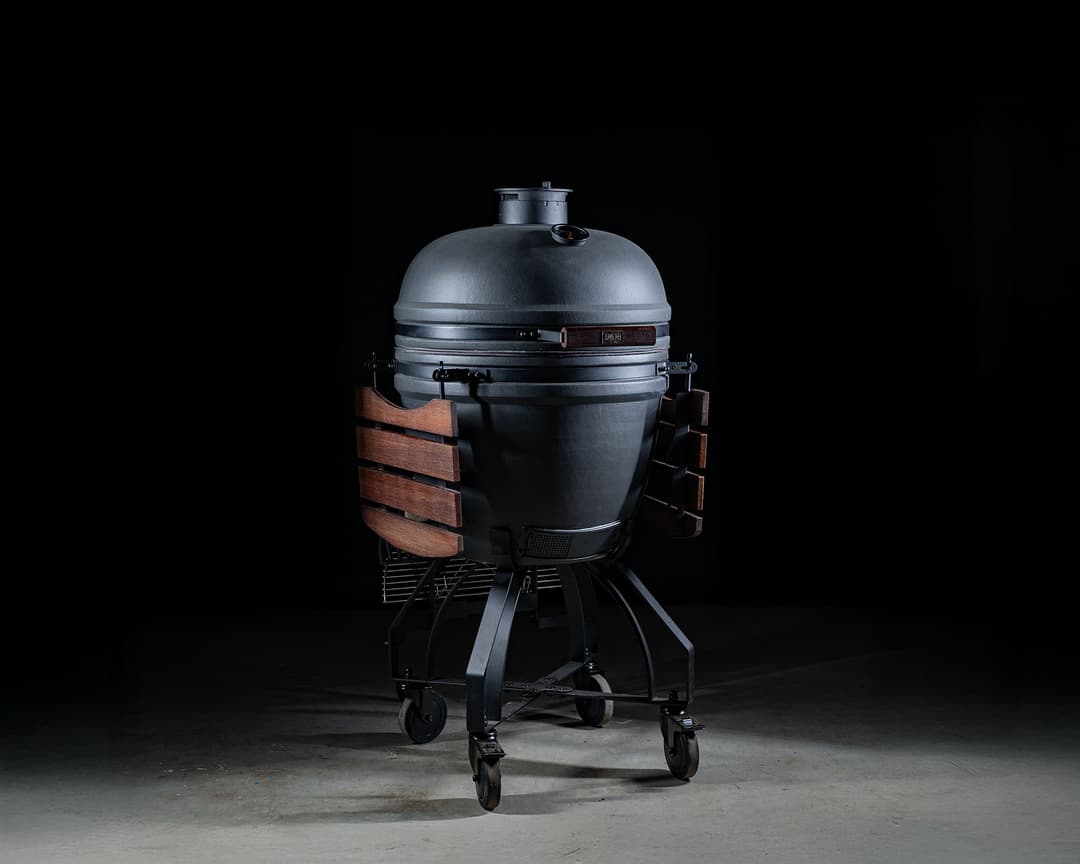
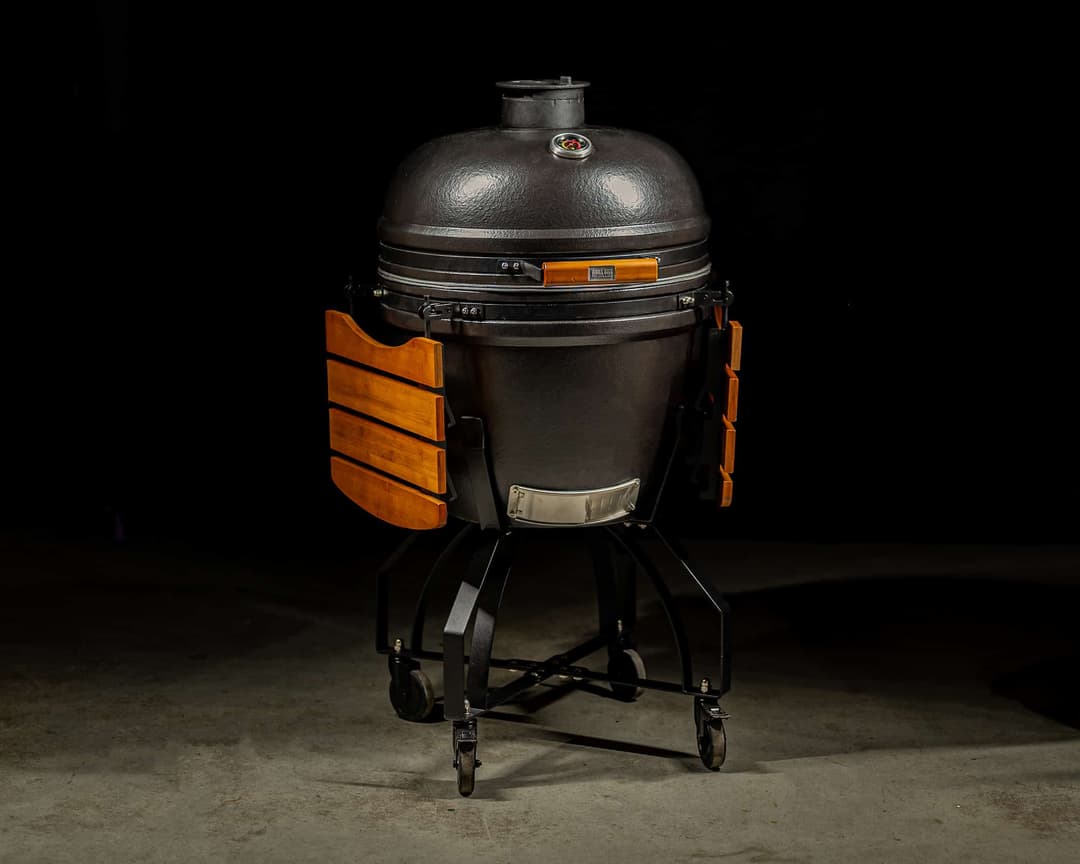
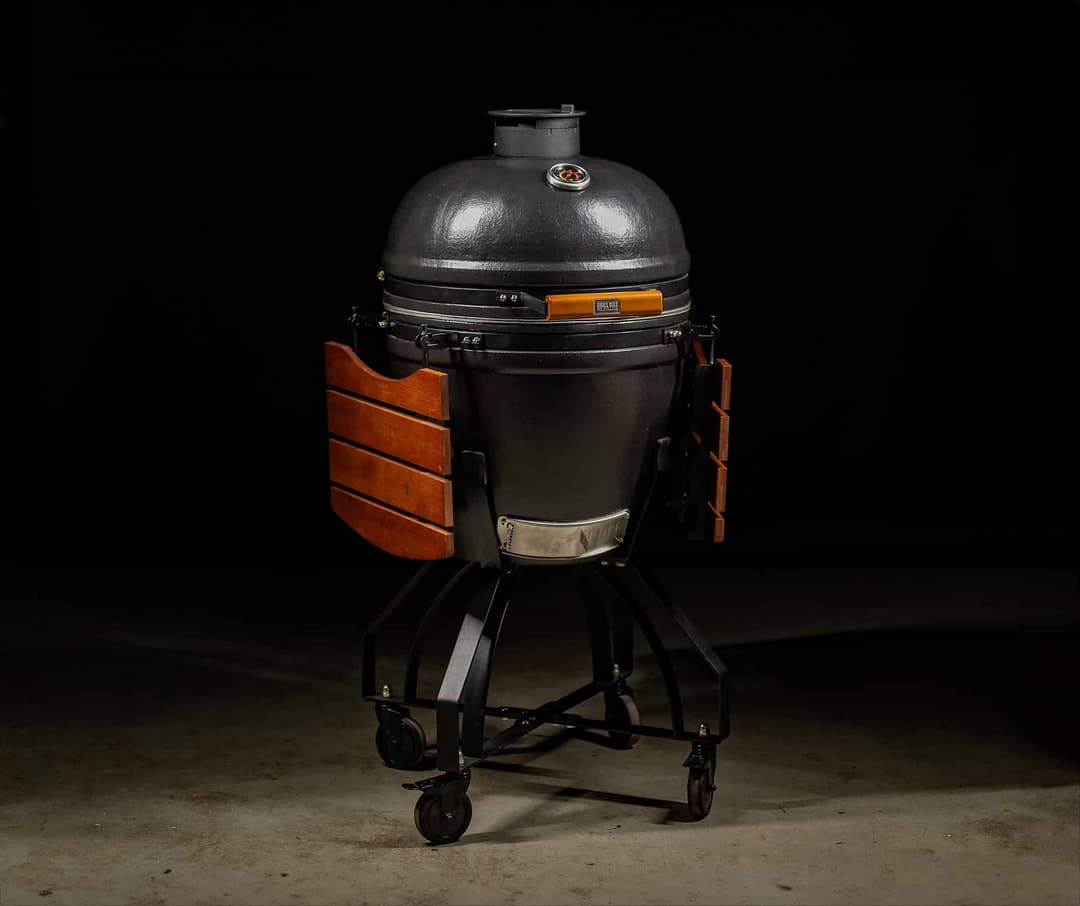
Cook it gently first, then sear it hot and fast. Thanks to ceramic, convection heat and a steady airflow, this technique works exceptionally well on our Grill Bill kamado. Especially in combination with the Smart Qooking Multilevel system.

In this article we explain exactly what reverse sear is, why it suits a kamado so well technically, and how it delivers even cooking, more control and a better crust.

What is reverse sear?

With reverse sear you first cook the meat indirectly at a low temperature until it is just short of the core temperature you want. Only then do you raise the heat and grill the meat briefly straight over the charcoal for colour and crust.
This is the opposite of traditional grilling, where meat is seared hard first and then finished indirectly. On a kamado, reverse sear gives you more control and far more consistent results.

Why reverse sear suits a kamado perfectly

Our kamados excel at stable low temperatures and even convection heat. That makes them ideal for cooking meat gently without temperature spikes. Because the ceramic stores heat, our kamados stay reliable even during long sessions.

After that you can switch to direct heat easily by removing the heat deflector and opening the airflow a little. The kamado responds predictably, so the final sear is quick and controlled.

This combination of indirect and direct cooking makes reverse sear the logical next step after Indirect cooking on a kamado and Direct cooking on a kamado.

The role of convection heat in reverse sear

During the first phase convection heat does most of the work. The heat circulates calmly around the meat and cooks it evenly from the outside in. As a result there is no large temperature gradient between the core and the surface.

That stops the outside from being done or dry while the core is still raw. If you want to understand this principle better, read What is convection heat in a kamado.

Why the crust is better with reverse sear

Because the meat is already close to temperature before you sear it, it only needs a short spell over direct heat. That gives you fast caramelisation without the core cooking any further.

The result is a deep, even crust and a juicy interior. With thick steaks and larger cuts in particular the difference is clearly visible.

Temperature and airflow during reverse sear

In the first phase you work with a low temperature and a calm airflow. The bottom vent is barely open and the top vent keeps the exhaust steady. As soon as the meat is close to its core temperature, you increase the air intake in a controlled way.

The important thing is not to do this too abruptly. A kamado reacts slowly, and changes made too quickly can lead to overshoot. You can read more about this in Airflow in a kamado explained.

When do you use reverse sear?

Reverse sear is mainly suited to thicker cuts of meat that benefit from even cooking, such as:

  • Thick steaks
  • Côte de boeuf
  • Tomahawk or ribeye
  • Large pork chops

For thin cuts reverse sear makes little sense and direct cooking is usually enough.

Common mistakes with reverse sear

  • Starting too hot in the first phase
  • Switching to direct grilling too late
  • Opening the airflow too aggressively during the sear
  • Not resting the meat after grilling

These mistakes throw away the whole advantage of reverse sear. You will find more background in common kamado mistakes.

Why reverse sear is all about control

Reverse sear is not a quick trick but a controlled process. By creating calm first and only then adding intensity, you work with the character of the kamado instead of against it.

That makes the technique reliable, repeatable and a perfect fit for kamado cooking.

FAQ

What is reverse sear on a kamado?
Reverse sear is a technique where you cook the meat indirectly first and then sear it briefly over direct heat for a good crust.
Why does reverse sear work so well on a kamado?
Because a kamado combines stable low temperatures with controlled high heat, thanks to the ceramic and the airflow.
What temperature do you use for reverse sear?
A low temperature of 100 to 130 degrees first, then high direct heat for the final sear.
Is reverse sear suitable for every cut of meat?
No, mainly for thicker cuts. Thin cuts are better grilled directly.
Do you need to rest the meat after reverse sear?
Yes, a short rest lets the juices redistribute and keeps the meat juicier.
Fire up

Eens per maand,
een real brief.

Recipes, drops and long essays about smoke. No noise, never resold.