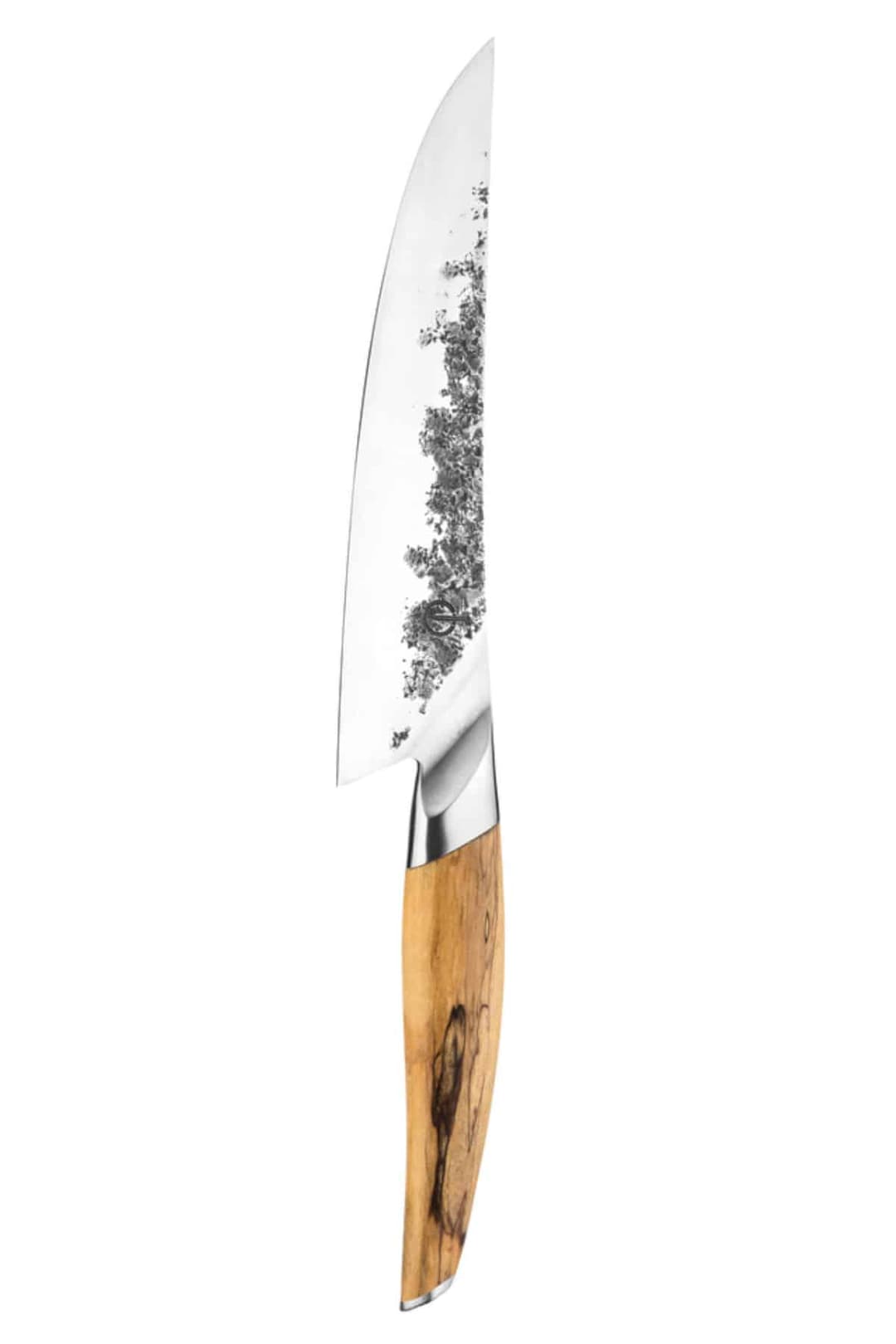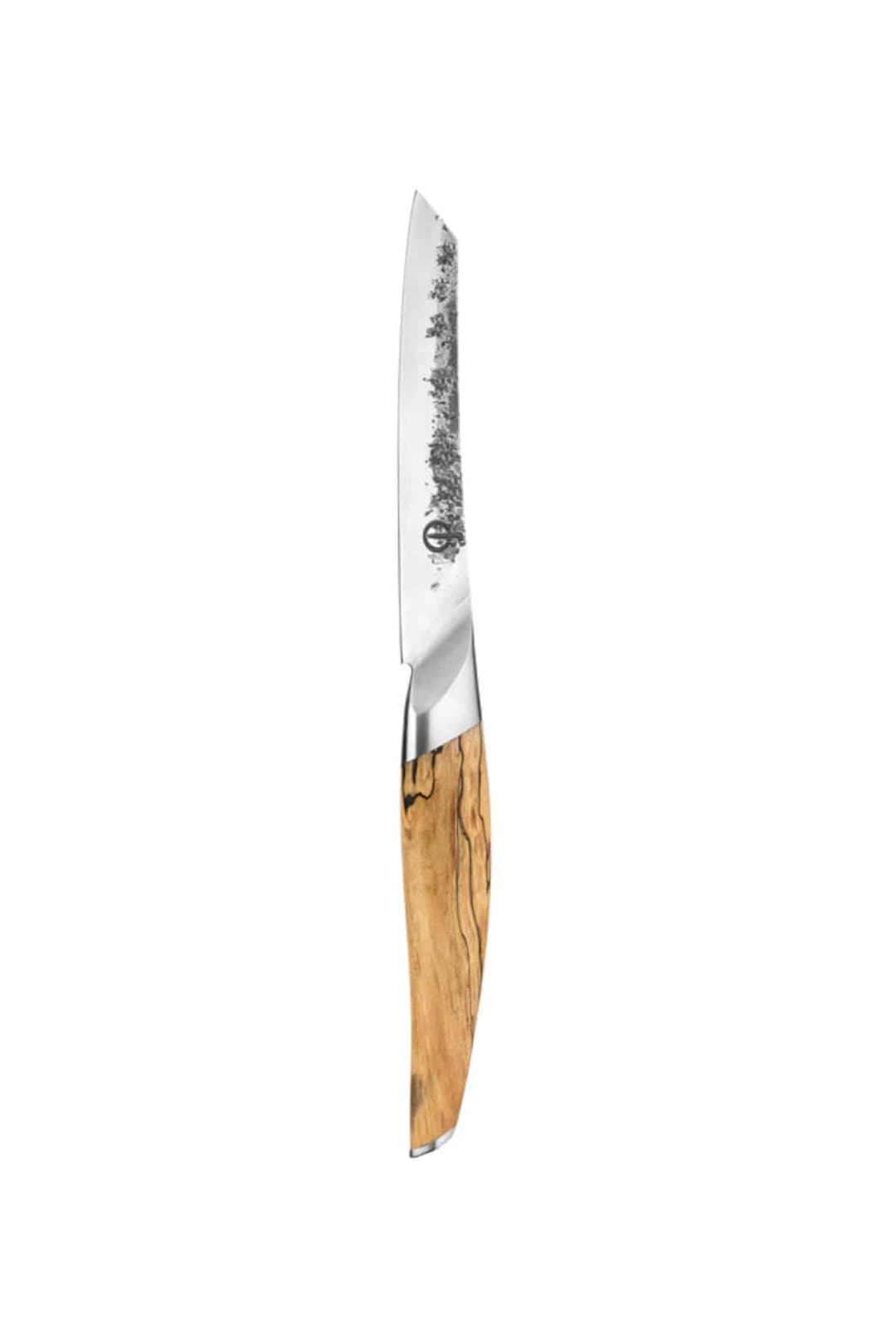




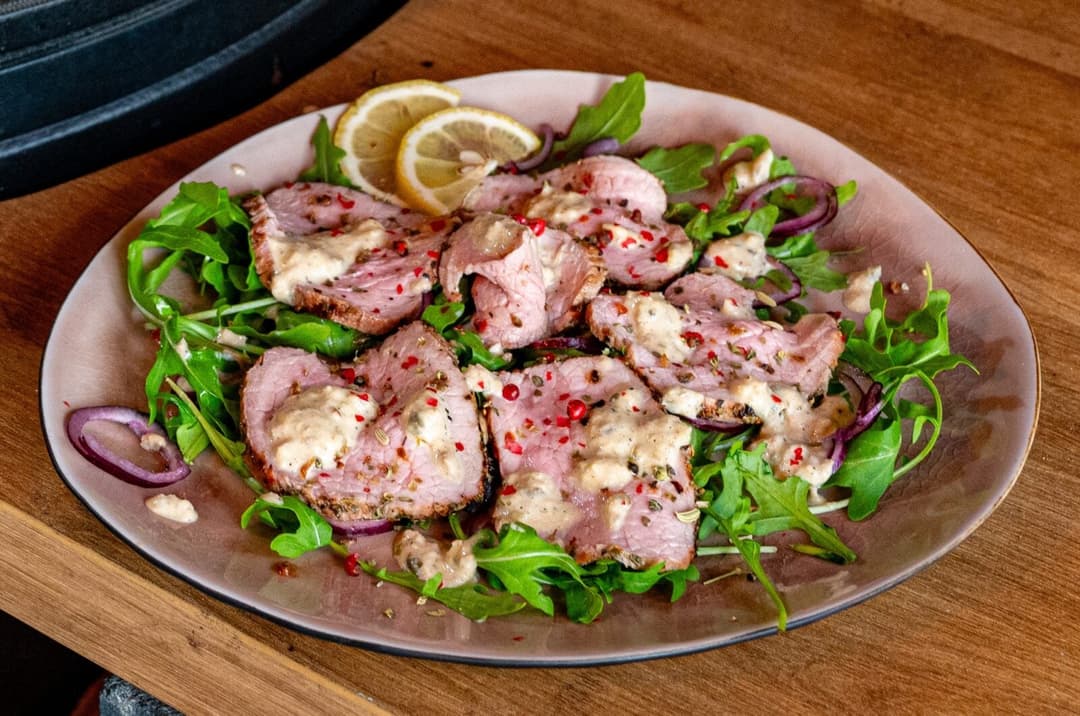
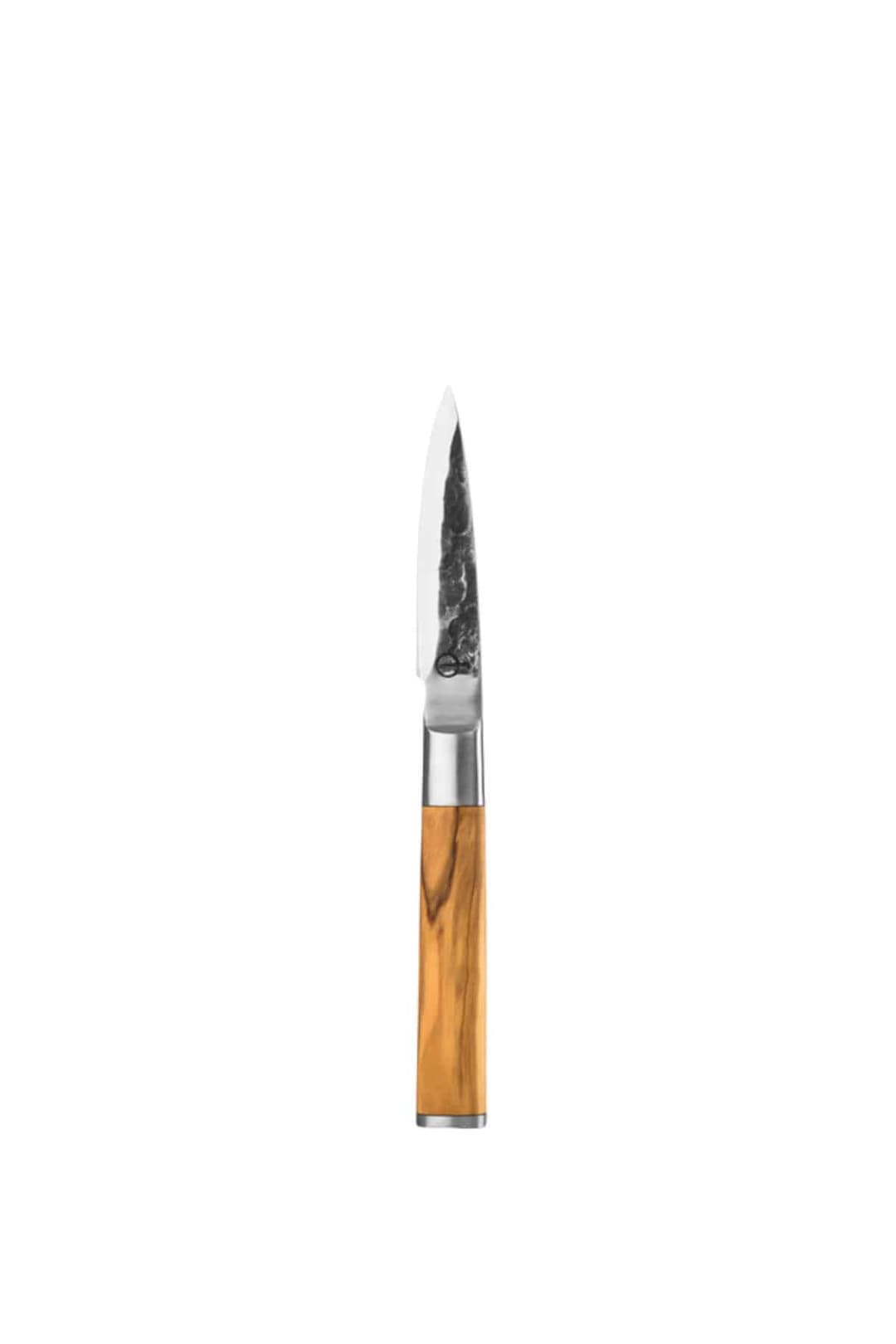
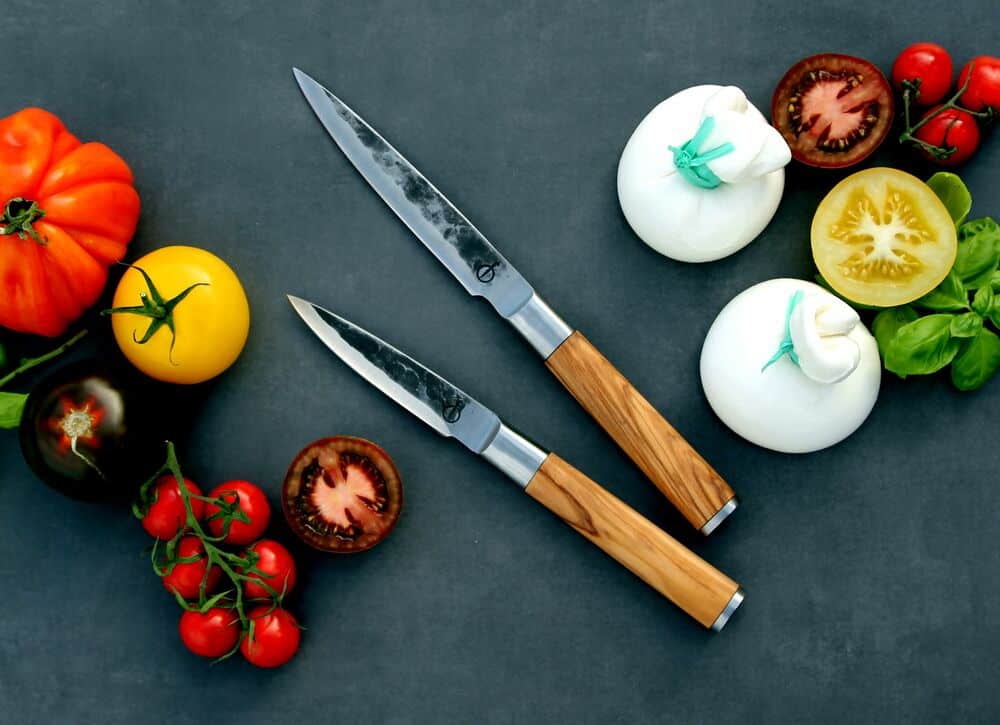
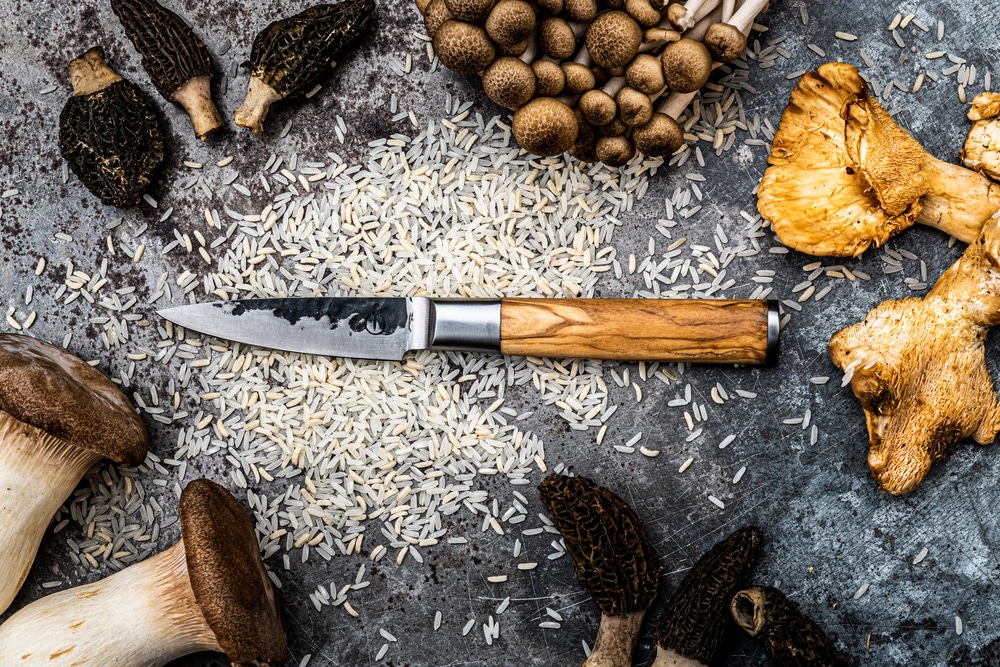
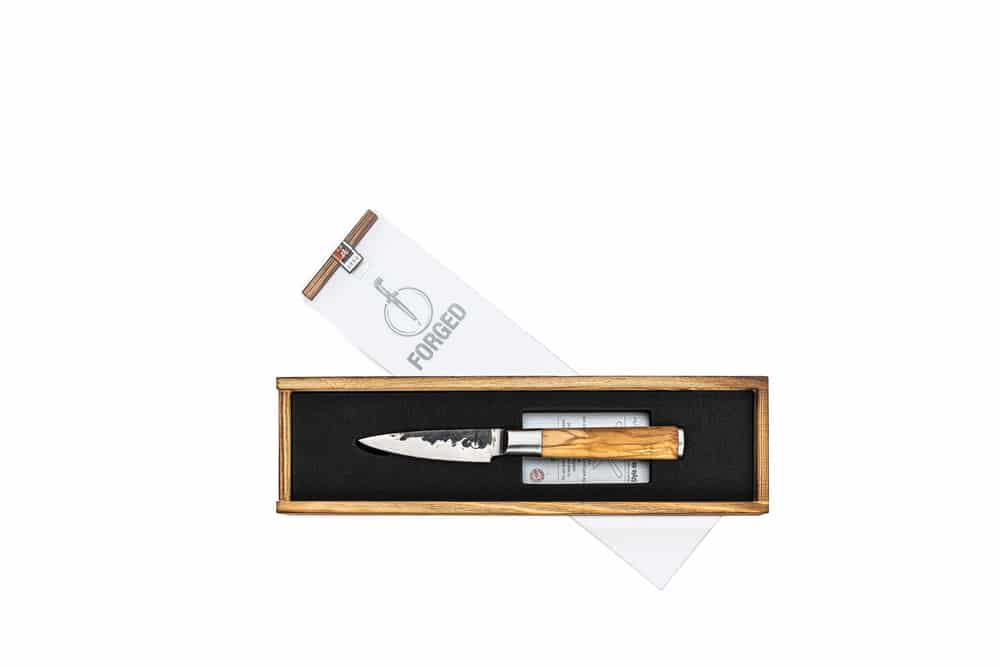
A forged paring knife is the tool for work that comes down to millimetres. The short blade sits close to your fingers, so you steer the tip exactly where you want it: under the peel of an apple, along the sinew of a piece of meat, or around the core of a pepper.
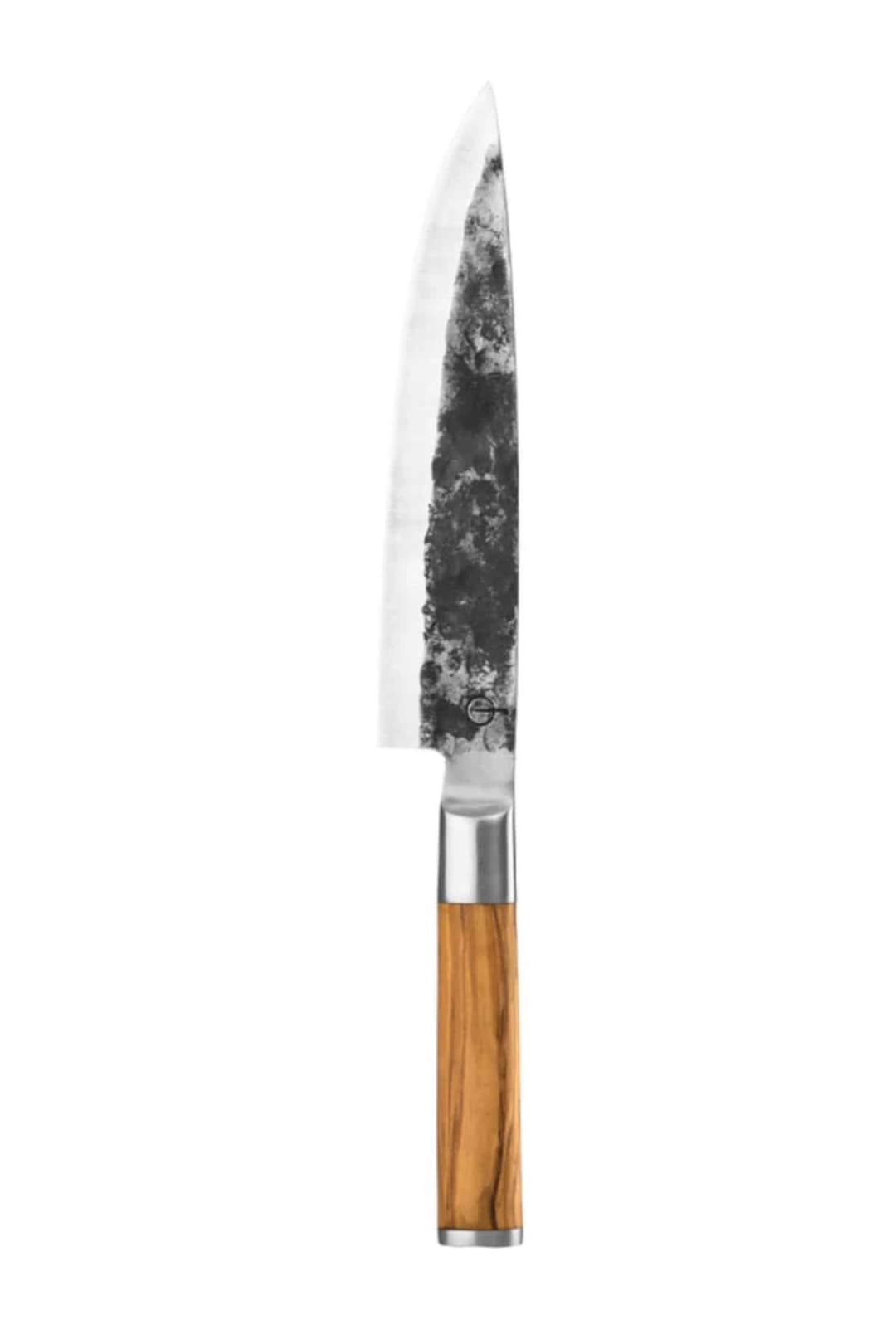
The blade is forged from a single piece of steel and runs all the way into the handle. That gives the knife its sturdiness and keeps the balance from hanging in the tip. The olive wood handle fills the hand without you having to grip hard.
- Short blade: you cut with the tip, not the whole edge
- Continuous steel into the handle, no play
- Light enough to peel a kilo of vegetables without your hand cramping
- Cuts close along core, peel and sinew, so less waste
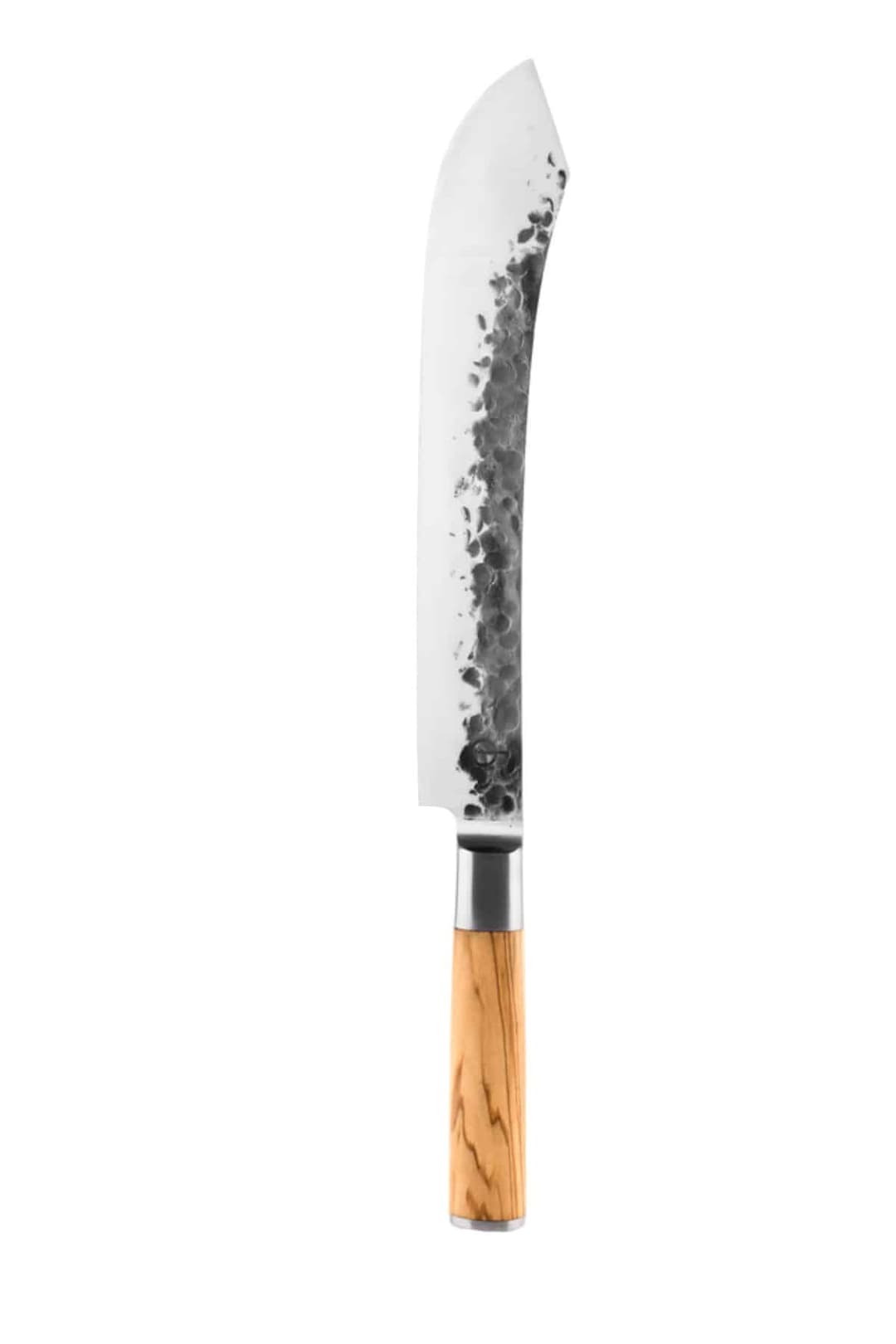
- Matches the other knives in the Olive Forged series
What you use a forged paring knife for
Peeling apples and pears, coring potatoes, skinning tomatoes, peeling garlic, stripping herbs from the stem, and trimming sinew from meat. Cutting larger quantities of vegetables? Reach for a chef's knife or santoku instead: they do that faster and with fewer repeated movements.
Maintenance
Rinse under warm water and dry immediately. Not in the dishwasher: that dries out the olive wood and dulls the edge faster. Give the knife an occasional pass on a honing steel and the edge stays true.
Bill's tipWorking with meat? Keep one paring knife set aside for vegetables. Otherwise, fat residue in the wooden handle transfers flavour into delicate work like fruit.
Browse the rest of the knife collection, cut on a wooden chopping board, or keep the edge sharp with one of the Horl knife sharpeners.