Grill Bill
In this category

€100 off

Sign up for the newsletter
What is convection heat in a kamado and why does it matter so much?

What is convection heat in a kamado and why does it matter so much?

Grill Bill
By Grill Bill
Published
21 December 2025

What is convection heat in a kamado?

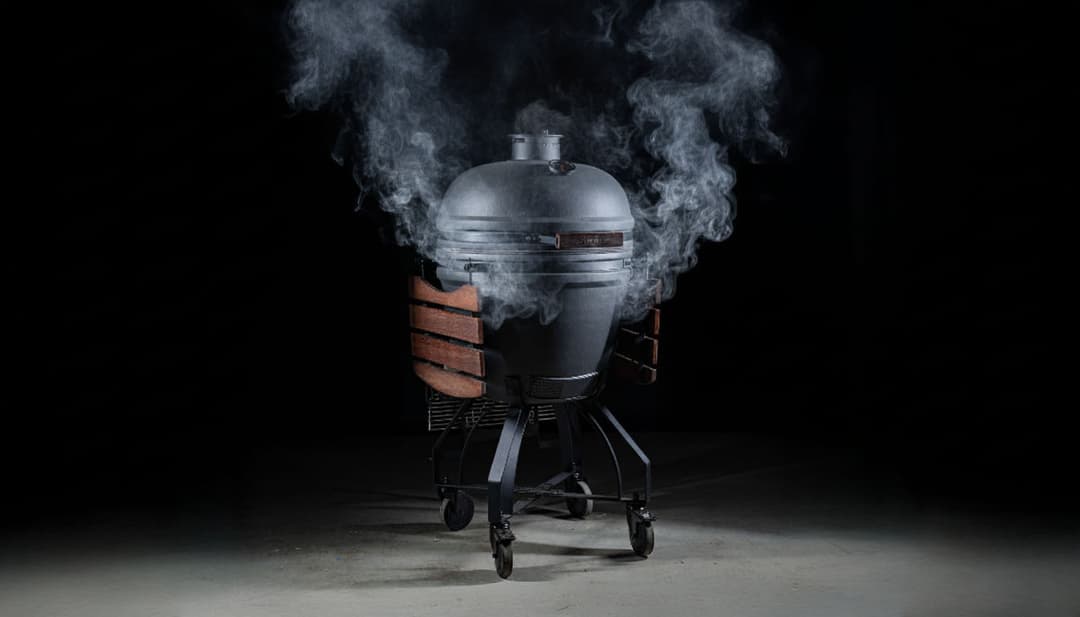
Convection heat is circulating heat: air enters through the bottom vent, rises past the fire and leaves the kamado through the top vent. The ceramic stores that heat and releases it gently, so your food cooks from every side instead of only from below. This is the foundation under indirect cooking, low & slow and reverse sear.

  • Air in through the bottom vent, out through the top vent
  • Ceramic stores the heat and releases it evenly
  • Food cooks from below, from the sides and from above
  • It works like a fan oven, but on charcoal
  • Keep the lid closed: opening it breaks the circulation

Still, a lot of people do not know exactly what it is and why it has such an effect on flavour, cooking and temperature control. Once you understand convection heat, you really start getting everything out of your kamado.

In this article we explain what convection heat is, how it develops inside a kamado and why it makes cooking more even, calmer and more predictable. This knowledge is the basis for techniques such as indirect cooking, low & slow and reverse sear.

What does convection heat mean?

Convection heat is heat that circulates. Instead of radiating up from below only, warm air moves through the whole kamado. This circulating heat surrounds your food from every side, much like a fan oven, but running on charcoal.
In a kamado, convection heat is created because air flows in through the bottom vent, moves up past the fire and escapes again through the top vent. This constant airflow keeps the temperature stable and evenly spread.

Why does convection heat work so well in a kamado?

The secret is in the ceramic. The thick ceramic wall of a kamado stores heat and releases it slowly and evenly. That means you do not get aggressive radiant heat but a calm, controlled heat that keeps circulating.

So your food does not only cook from below, but from the sides and the top as well. That is why food dries out less quickly and you get a more even result than on an open grill.

Read more about the basics of this in What makes ceramic cooking different?

Convection heat versus direct heat

With direct grilling the heat comes mainly from below, straight off the charcoal. That is perfect for steaks and quick cooks, but less suited to large or thick cuts of meat. Convection heat, by contrast, gives you even cooking without burning.

That is why kamados excel at indirect cooking. With a heat deflector you create a buffer between the fire and the food, so convection heat does the work. Read more about this in Direct and indirect cooking on the kamado.

Why convection heat brings calm to your kamado

An important advantage of convection heat is that the system stabilises itself. Once the kamado is up to temperature, very little needs to happen. Small adjustments to the air intake have an effect, but no immediate extreme consequences.

That is why a kamado is more forgiving than many other barbecues. As long as you understand the airflow and keep the lid closed, the temperature stays calm and predictable. Opening it too often disturbs this system and lets precious heat escape.

If you want to go deeper into this, read How do you control the temperature in a kamado?

Convection heat and low & slow cooking

Low & slow cooking depends entirely on convection heat. Because the heat circulates gently and the ceramic holds the temperature, you can cook for hours without adjusting anything. Large cuts of meat cook evenly and stay juicy.

It is also the reason why you do not have to keep topping up or correcting on a kamado. Once the system is running, it works for you instead of against you.

Common misconceptions about convection heat

  • Thinking a higher temperature is always faster and better
  • Adjusting the bottom vent and top vent too much
  • Opening the lid too often to take a look
  • Expecting the kamado to respond instantly to every adjustment

Convection heat asks for patience. Small adjustments, a moment of waiting and trust in the system deliver better results than constant intervention. You will find more mistakes and solutions in Common kamado mistakes.

Why convection heat is at the core of every kamado technique

Whether you cook indirectly, go low & slow, smoke or work with reverse sear, it all comes down to convection heat. Understand this principle and cooking on a kamado becomes logical and relaxed.

That makes convection heat not just a technical detail but the basis of every successful kamado session.

FAQ

What is convection heat in a kamado?
Convection heat is circulating heat that moves evenly through the kamado thanks to airflow and ceramic, so food cooks gently and evenly.
Why is convection heat better than direct heat?
Convection heat prevents burning, gives even cooking and keeps more moisture in, especially with larger cuts of meat.
Does every kamado have convection heat?
Yes, every ceramic kamado works with convection heat, but how effective it is depends on the ceramic mass, the airflow control and how you use it.
Why should I keep the lid closed as much as possible?
Because opening it disturbs the convection flow and lets heat escape, which costs you temperature and stability.
Does convection heat only matter for low & slow?
No, it plays a crucial role in baking, indirect grilling and reverse sear as well.
Fire up

Eens per maand,
een real brief.

Recipes, drops and long essays about smoke. No noise, never resold.