Grill Bill
In this category

€100 off

Sign up for the newsletter
Indirect cooking on a kamado: how controlled heat works
Grill Bill
By Grill Bill
Published
22 December 2025

What is indirect cooking on a kamado?

With indirect cooking you place a heat deflector between the coals and the grate. Direct radiant heat is blocked and the food cooks on circulating convection heat, usually between 110 and 180 degrees. That turns the kamado into an outdoor oven: ideal for whole chicken, ribs, pulled pork, bread and pizza.

  • A heat deflector between coals and grate blocks the direct heat
  • Working temperature usually between 110 and 180 degrees
  • For whole chicken, ribs, pulled pork, pizza, bread and low & slow
  • Keep the lid shut: opening it disturbs the convection flow
  • With a multilevel system you can create several temperature zones

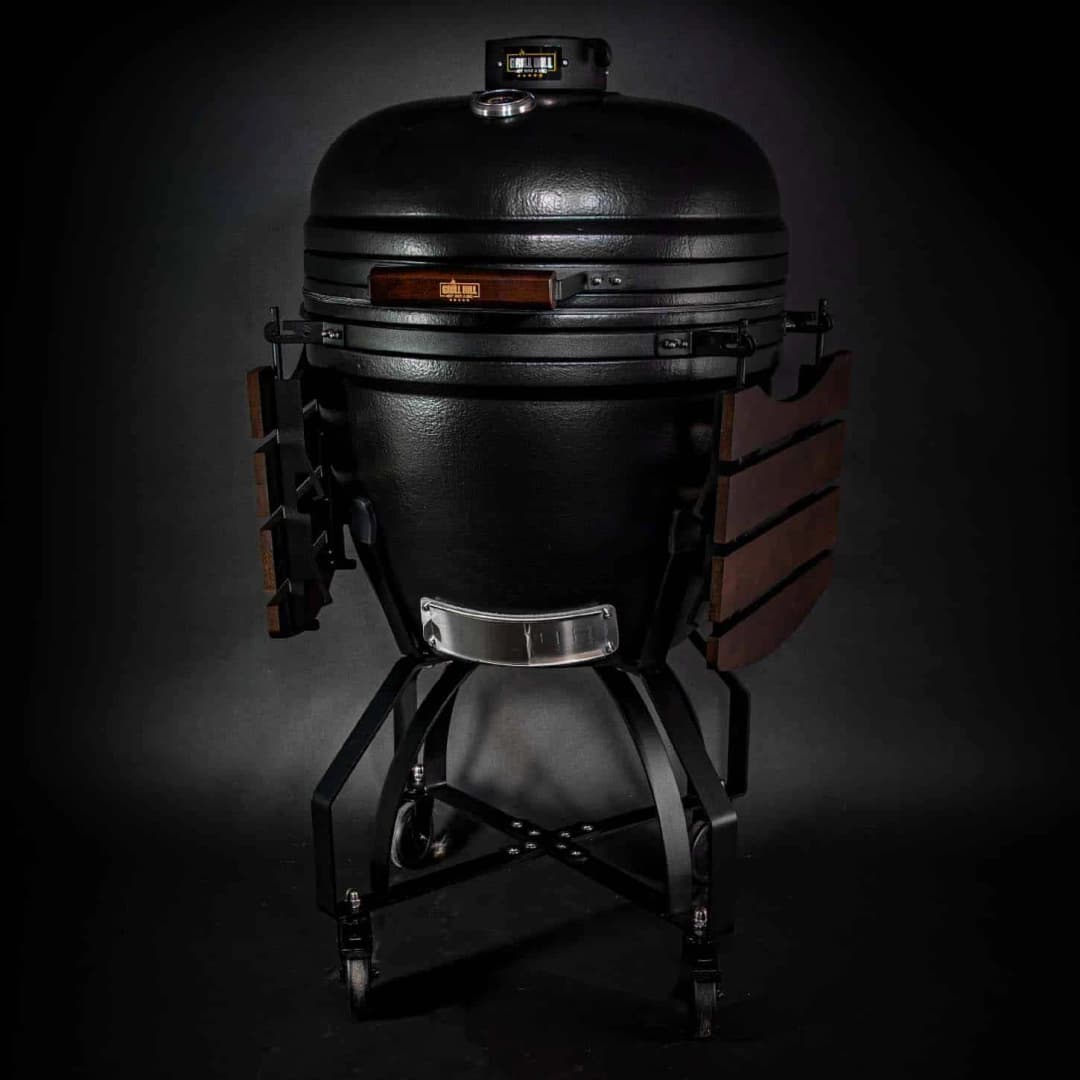
Thanks to ceramic, convection heat and a heat deflector, a kamado can work as an outdoor oven, perfect for larger cuts of meat and longer sessions.

In this article we explain exactly what indirect cooking on a kamado is, how to do it properly and why the technique is so reliable. Understand indirect cooking and you understand the heart of kamado cooking.

Did you know that all our Pro kamado BBQs come with a Smart Qooking multilevel system, so you can cook directly and indirectly at the same time?

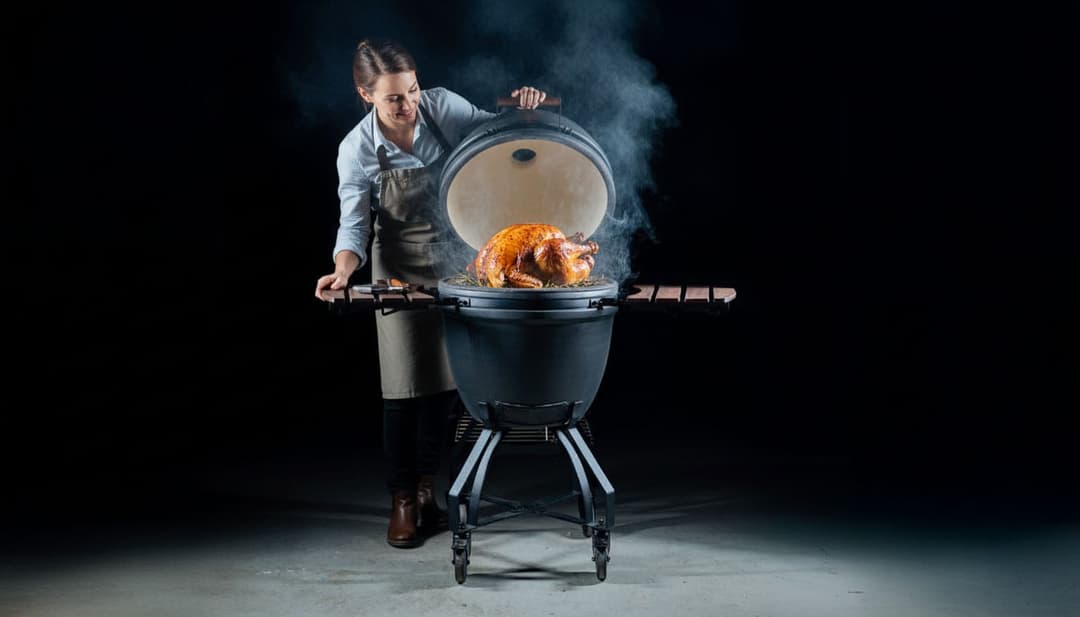
What is indirect cooking on a kamado?
With indirect cooking your food doesn't sit directly above the fire. You place a heat deflector between the coals and the grate. That blocks the direct radiant heat and your food cooks on circulating convection heat.

The heat moves through the whole kamado and surrounds the food from every side, which gives you even cooking without scorching. This is closely tied to convection heat; read more about it in What is convection heat in a kamado.

Why indirect cooking works so well in a kamado

The ceramic of a kamado stores heat and releases it slowly. Combined with a steady airflow, that gives you a calm and predictable heat source. It makes indirect cooking particularly well suited to larger or thicker items.

Unlike an oven, a kamado still runs on charcoal, which adds flavour without the smoke taking over. The closed construction also retains moisture better, so meat stays juicier.

The role of the heat deflector

The heat deflector is essential for indirect cooking. This ceramic or stone plate blocks direct heat and forces the warmth to circulate up the sides and over the top. That turns your kamado from a grill into an oven.

Combined with a multilevel system you can even create several temperature zones. That makes indirect cooking not just controlled, but flexible too.

Temperature and airflow in indirect cooking

Airflow stays in charge with indirect cooking as well. You want a calm, stable burn. The bottom vent decides how much oxygen the fire gets; the top vent stabilises the flow of hot air leaving the dome.

Because a kamado reacts slowly, patience is crucial. Small adjustments followed by waiting deliver better results than big corrections. Read more in Airflow in a kamado explained.

When do you choose indirect cooking?

Use indirect cooking for anything that needs time to cook evenly without burning. Think of:

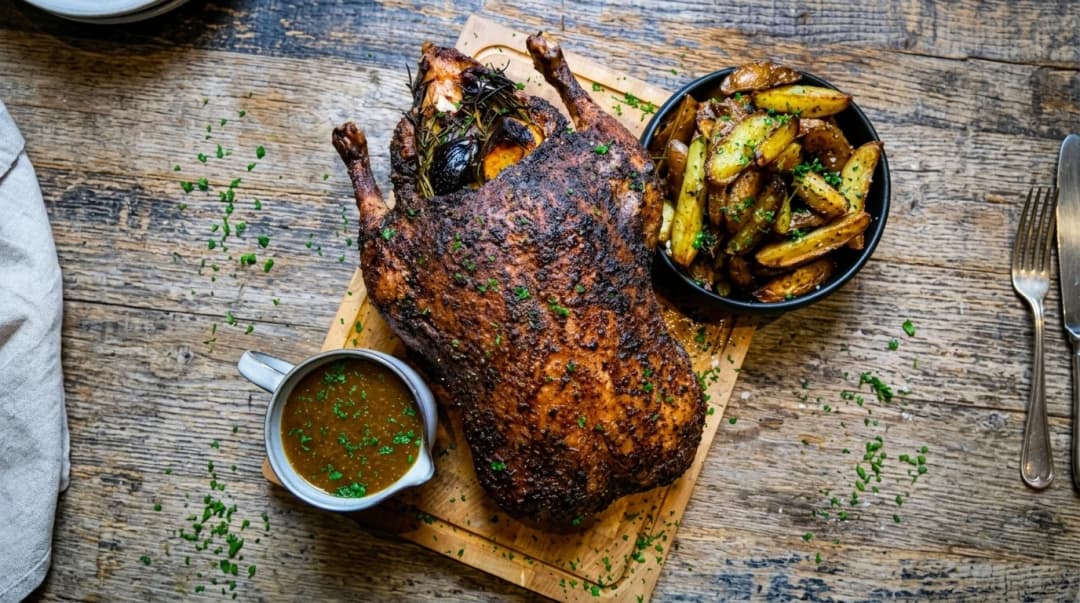
  • Whole chicken or large poultry
  • Ribs and pulled pork
  • Roasting and baking
  • Pizza and bread
  • Low & slow cooks

For quick items, direct cooking is usually better. In practice you'll regularly combine the two, for instance in a reverse sear. Read more in Direct cooking on a kamado.

Common mistakes with indirect cooking

  • Setting the temperature too high
  • Not being patient while it stabilises
  • Opening the lid during the cook
  • Fiddling too much with the bottom vent
  • Expecting indirect cooking to be fast

These mistakes lead to dry results or an unsettled kamado. There's more on this in common kamado mistakes.

Why indirect cooking is so relaxing

Indirect cooking is the technique where you really let the kamado do the work. Once temperature and airflow are stable, you barely have to intervene. That makes cooking relaxed and predictable.

Master this technique and you'll find cooking becomes less about exerting control and more about trusting the system. That's the essence of kamado cooking.

FAQ

What is indirect cooking on a kamado?
Indirect cooking means cooking without direct heat from the coals, with a heat deflector providing even convection heat.
When do you use indirect cooking?
For larger or thicker items such as chicken, ribs, pulled pork, pizza and low & slow cooks.
What temperature do you use for indirect cooking?
Usually between 110 and 180 degrees, depending on the dish and how you want it cooked.
Why does the lid have to stay shut during indirect cooking?
Because opening it disturbs the convection flow and lets heat escape, which affects the cook.
Can I combine direct and indirect cooking?
Yes, that's common in techniques such as reverse sear, where you cook indirectly first and finish over direct heat.
Fire up

Eens per maand,
een real brief.

Recipes, drops and long essays about smoke. No noise, never resold.