Grill Bill
In this category

€100 off

Sign up for the newsletter
Airflow in a kamado explained: steering the fire without the stress

Airflow in a kamado explained: steering the fire without the stress

Grill Bill
By Grill Bill
Published
21 December 2025
Reading time
5 min

How does airflow work in a kamado?

A kamado runs on oxygen, not on heat. The bottom vent decides how much air the fire gets and is your control for temperature; the top vent handles the exhaust and the fine stabilisation. Work in small steps of a few millimetres and give every change time, because the ceramic reacts slowly.

  • Bottom vent = temperature, top vent = exhaust and stability
  • A few millimetres can be worth tens of degrees
  • Wait after every adjustment, or you get overshoot
  • Do not make big changes top and bottom at once
  • Keep the lid closed while it stabilises

A lot of frustration with a kamado comes from people intervening too hard without understanding what is going on under the lid. Once you understand airflow, the stress disappears and cooking becomes predictable.

In this article we explain how airflow in a kamado works, what the bottom and top vents actually do and why small adjustments have such a big effect. This knowledge is the foundation for techniques like indirect cooking, low & slow and stable long sessions.

Why air matters more than temperature

A kamado does not run on heat, it runs on oxygen. No oxygen, no combustion; no combustion, no heat. The temperature you read off your thermometer is simply the result of how much air is moving through the kamado.

That is why steering the temperature is always indirect. You never control the temperature itself, you control the air that feeds the fire. Once that clicks, you stop chasing degrees and start cooking on feel and stability.

How air flows through a kamado

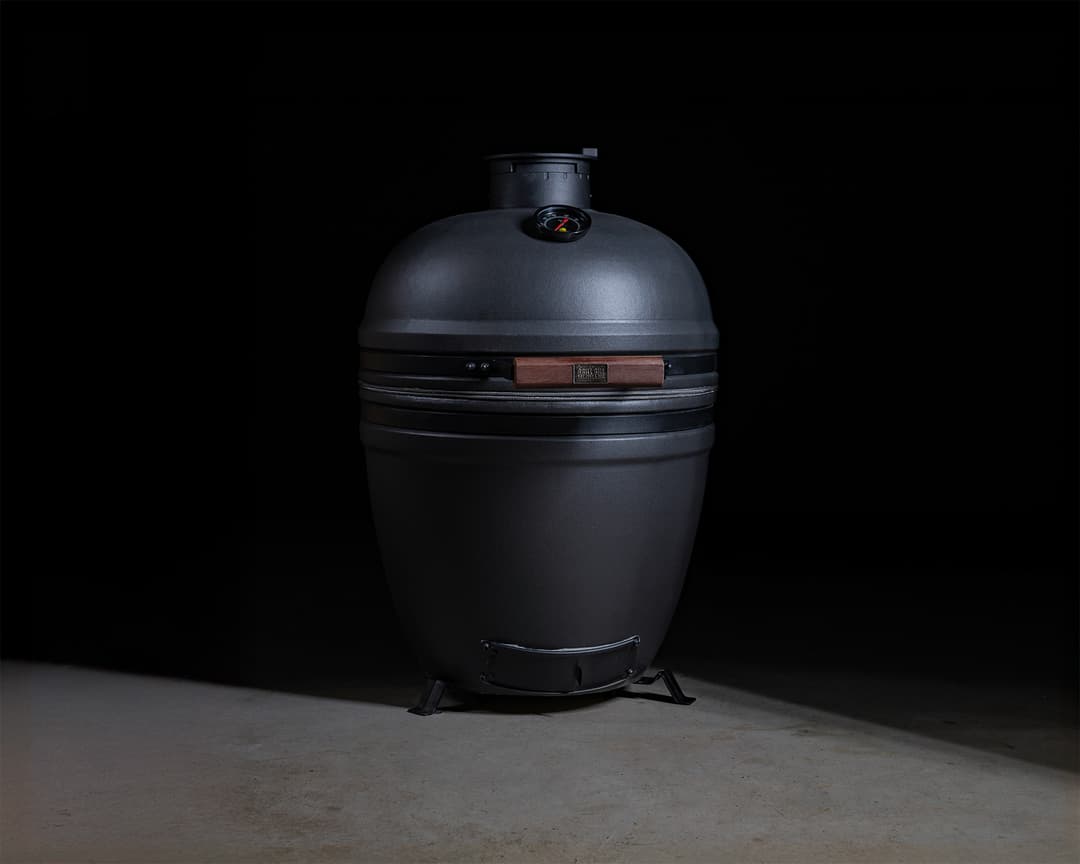
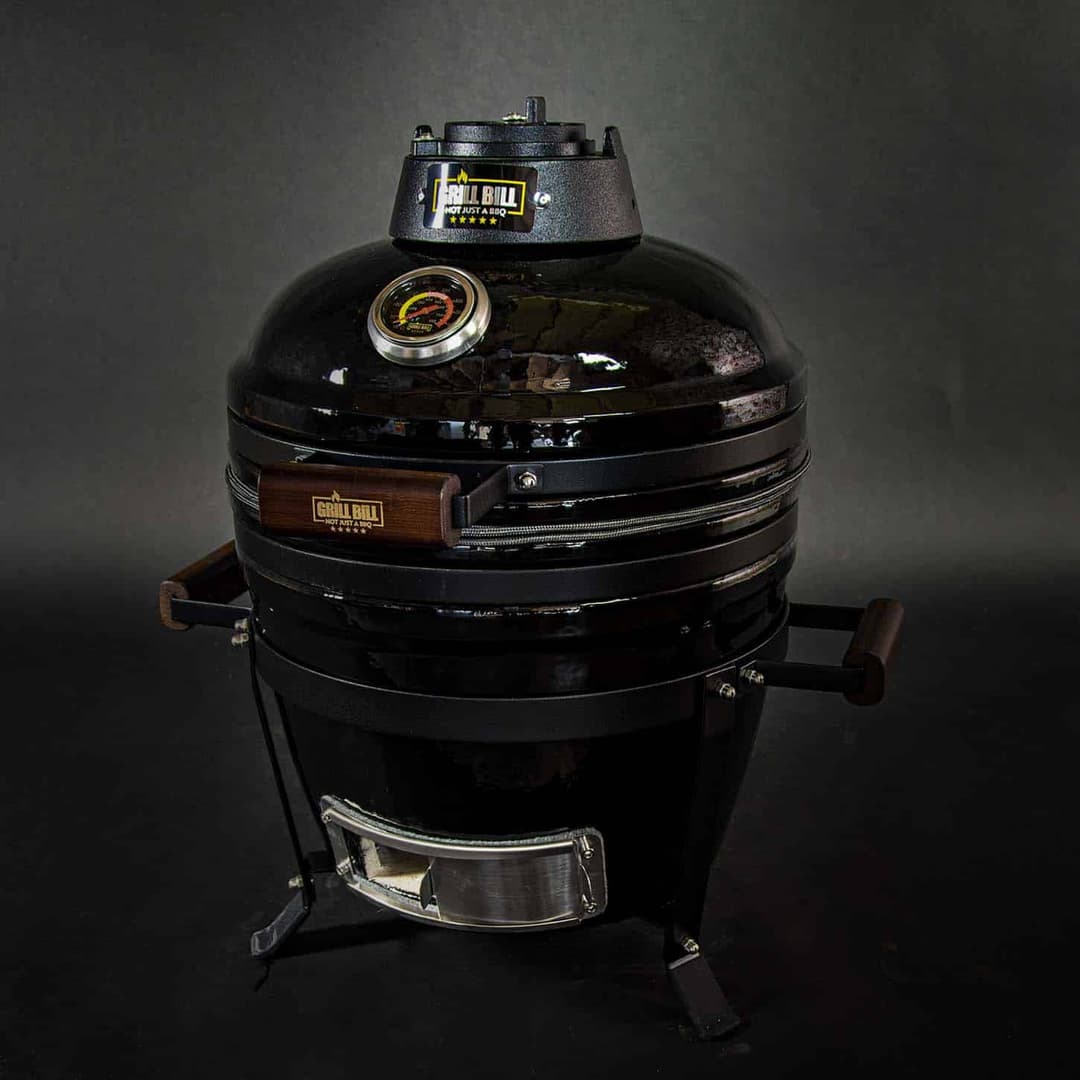
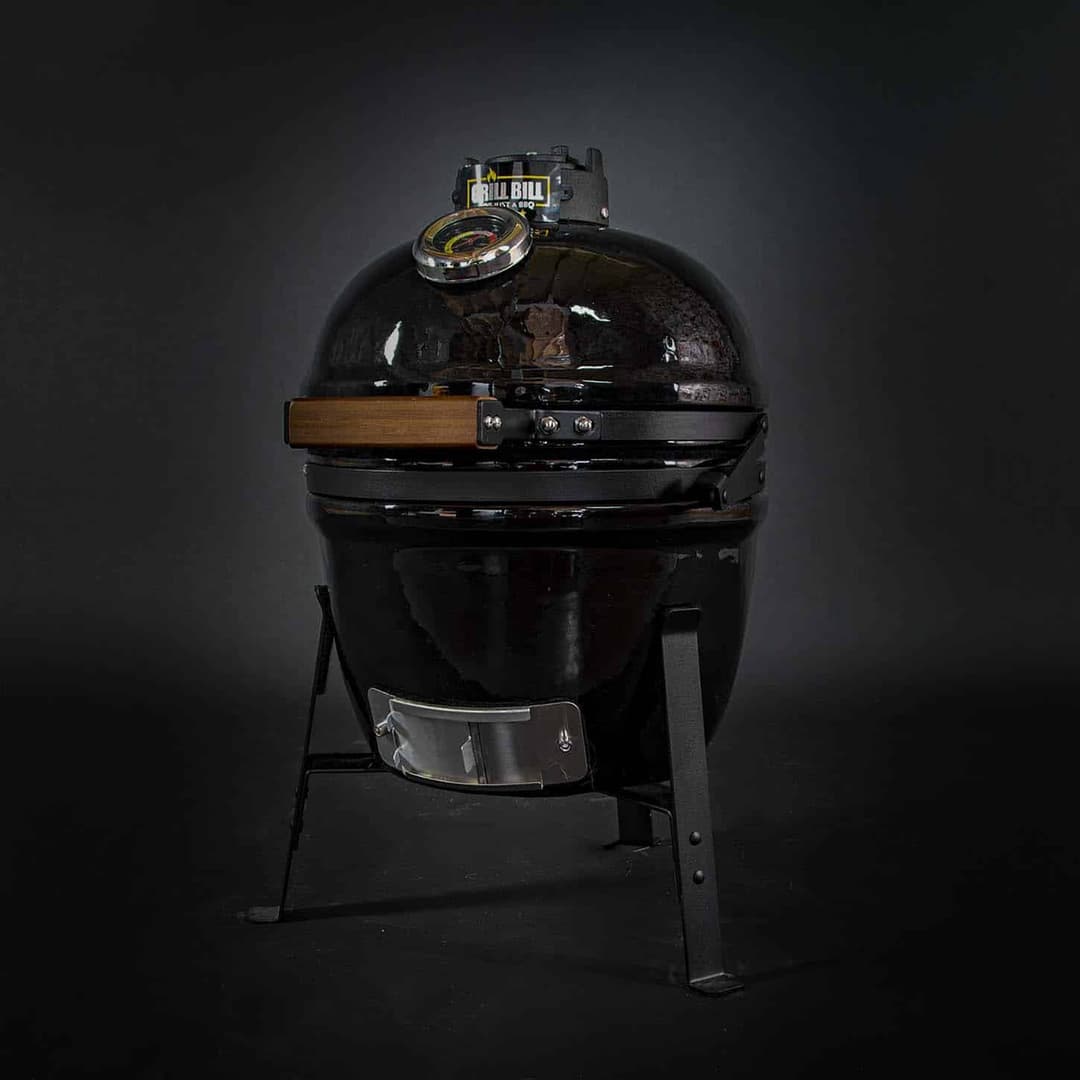
Airflow in a kamado is simple, but powerful. Fresh air enters through the bottom air intake, feeds the fire, and the warm air rises. That warm air leaves the kamado through the top vent. This creates a constant circulation.
That circulation is the basis of convection heat. Heat moves, surrounds your food and cooks it evenly. Read more in What is convection heat in a kamado.

The bottom vent: fuel control

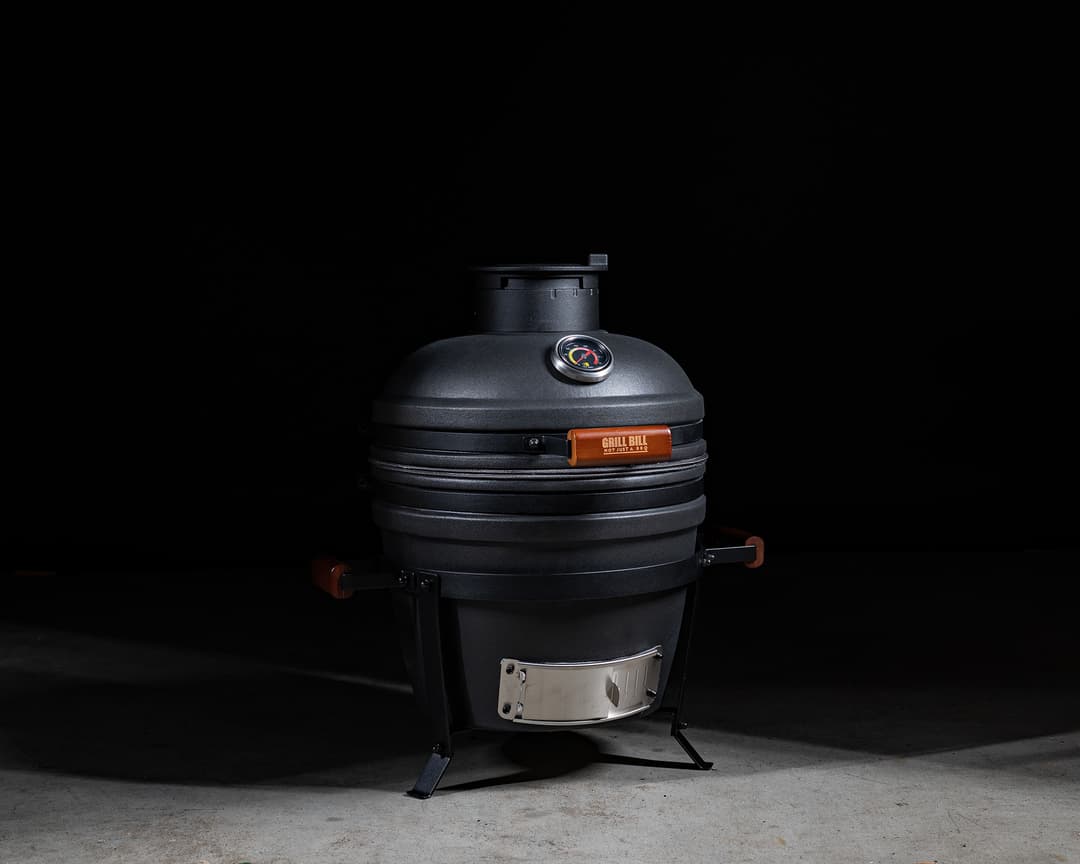
The bottom vent decides how much oxygen the fire gets. More air means a livelier fire and a higher temperature. Less air chokes the fire and brings the temperature down. This is your primary control.

The important detail is that small adjustments have a big effect. A few millimetres can be worth tens of degrees. That is exactly why you work calmly.

The top vent: stability and exhaust

The top vent does not control how much oxygen the fire gets, but how quickly warm air and smoke leave the kamado. That affects stability, smoke behaviour and how evenly the heat circulates.

Open the top vent too far and the airflow gets restless. Close it too far and you trap smoke and heat in a way that smothers the fire. The top vent works together with the bottom vent, not against it.

Why adjusting top and bottom at the same time often goes wrong

A common mistake is turning the bottom vent and the top vent at the same time. You lose the overview and you have no idea which change caused which effect. That is how you get temperature spikes and frustration.

The rule of thumb is simple: use the bottom vent for temperature changes and the top vent for fine stabilisation. Give every adjustment time to do its work.

Why patience matters so much with airflow

A kamado reacts slowly. That is not a drawback, it is a strength. The ceramic stores heat and damps out swings. It also means you should always wait after an adjustment before touching anything again.

Correcting too soon causes overshoot. The temperature runs away, you compensate, and the problem only gets bigger. Calm is control.

There is more on this in How do you control the temperature in a kamado.

Airflow for indirect cooking and low & slow

With indirect cooking and low & slow it is all about a stable, gentle airflow. You do not want an aggressive fire, but a smouldering burn that stays constant for hours. Thanks to the ceramic and the controlled air intake, a kamado is made for this.

It is also why you rarely need to top up the charcoal on a kamado. Get the airflow right and the system keeps itself in balance.

Have a look at Direct and indirect cooking on the kamado as well.

Common airflow mistakes

  • Making one big adjustment at a time
  • Adjusting again too soon
  • Opening the lid while it is still stabilising
  • Adjusting top and bottom at the same time
  • Chasing temperature instead of understanding behaviour

You will find these mistakes again in common kamado mistakes, where we dig into why they happen.

Why understanding airflow makes cooking relaxing

Once you understand that airflow steers the fire and not the other way around, cooking on a kamado changes completely. You no longer fight the temperature. You guide the system.

That is why experienced kamado cooks work calmly, intervene rarely and still get consistent results. Control is not about speed, it is about trust.

FAQ

How does airflow work in a kamado?
Air enters through the bottom vent, feeds the fire and leaves the kamado through the top vent. That circulation creates convection heat and a stable temperature.
Which vent do I use to control the temperature?
Use the bottom vent for temperature changes. Use the top vent for fine stabilisation and exhaust.
Why should I make small adjustments?
Because a kamado reacts slowly. Small adjustments prevent overshoot and keep the temperature stable.
Can I adjust top and bottom at the same time?
Yes, but keep the adjustments small. The air going in at the bottom has to be able to get out at the top.
Why does my temperature keep swinging?
Usually because you adjust too soon, open the lid, or make airflow changes that are too big. Or because the kamado is not set up properly; also read how to light a kamado.
Fire up

Eens per maand,
een real brief.

Recipes, drops and long essays about smoke. No noise, never resold.