Your cart is still empty.Continue shoppingWe couldn't load your cart.Try againGo to cartDiscount code %s is ready — add products to use it.Save to wishlistAdd to wishlistRemove from wishlistSavedSaveincl. VATRemoveDecrease quantityIncrease quantityincl. %s accessoryincl. %s accessories%s is now on your wishlist.Your whole cart is now on your wishlist. Your cart is empty; everything is ready to put back in one go later.%s products moved to your wishlistUndoView wishlistSaving failed, please try againPut back in your cartAdd all to cartEverything is in your cartGo to checkoutAdd to cartIn cart ✓%s in your cart%s products added to your cartAdding failed, please try againShareShare your wishlistAnyone with the link can see your list and add products to their own cart. Your list stays yours.CopyCopiedEmailShare via…My wishlist at Grill BillHave a look at my wishlist at Grill Bill: %sSharing failed, please try againYour wishlist is still empty.Link copied, paste it in Messenger.%s shared this wishlist with you. Add whatever you like to your own cart; the list itself won't change.Someone shared this wishlist with you. Add whatever you like to your own cart; the list itself won't change.This share link is no longer valid.This wishlist is empty (for now).%s item%s itemsRemove from wishlistAdd selection to cart (%s)incl. %s bundle discountTick at least one product%s was already in your cartTake to cartClear listSure? Yes, remove everythingYour wishlist is emptyClearing failed, please try againBundle dealyou save %s%s more accessory with bundle savings%s more accessories with bundle savings−%s% as long as the main product is in your basket+ AddAdded with bundle discountAdding failed, please try againBundle discount removed%s has been removed from your basket. The accessories are still there, at the regular price.Put it back and restore the discountClosePut back, bundle discount restored
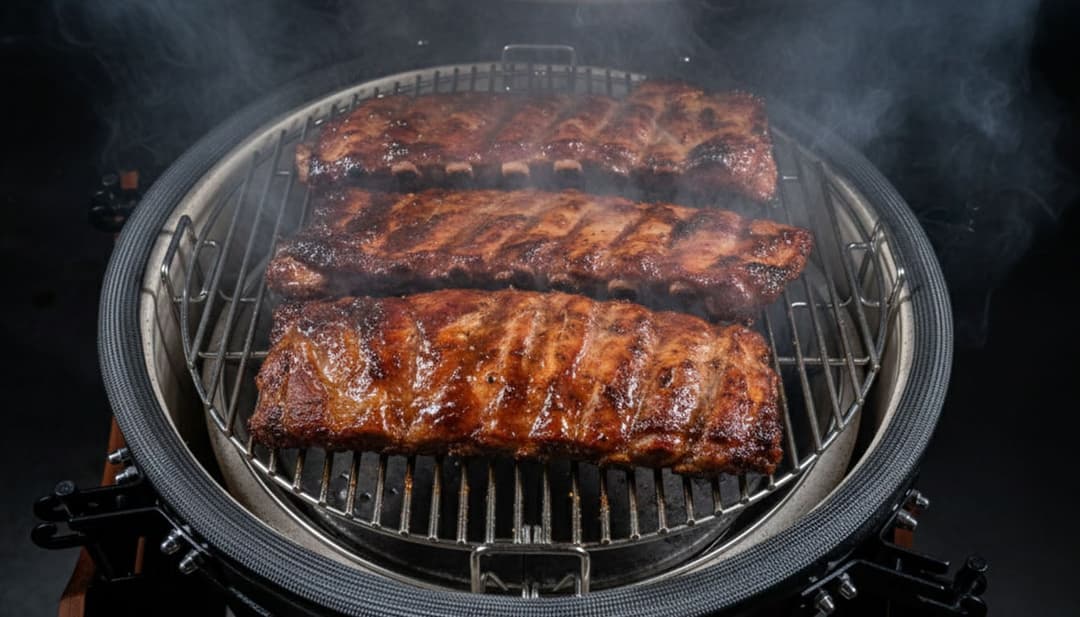
Low & slow is long cooking between 100 and 130 degrees, always indirect with a heat deflector, so connective tissue breaks down and the meat stays juicy. The ceramic of a kamado works as a heat buffer and holds that temperature for hours. Open the bottom vent just a fraction, stabilise with the top vent, and then intervene as little as possible.
Working temperature usually between 100 and 130 degrees
Always indirect: the heat deflector blocks the direct heat
Ceramic damps out swings in the fire and the airflow
Bottom vent barely open, top vent for fine stabilisation
The basis for reverse sear, smoking and long roasting sessions
Low & slow isn't about recipes or exact timings. It's about technique, control and trusting the system. Once you understand the technique, you can handle any recipe.
In this article we explain how low & slow cooking on a kamado works technically, why it stays so stable and which principles matter more than degrees or minutes.
What does low & slow on a kamado mean?
Low & slow means cooking for a long time at a low temperature, usually between 100 and 130 degrees. The goal isn't speed but controlled cooking, in which connective tissue slowly breaks down and the meat stays juicy.
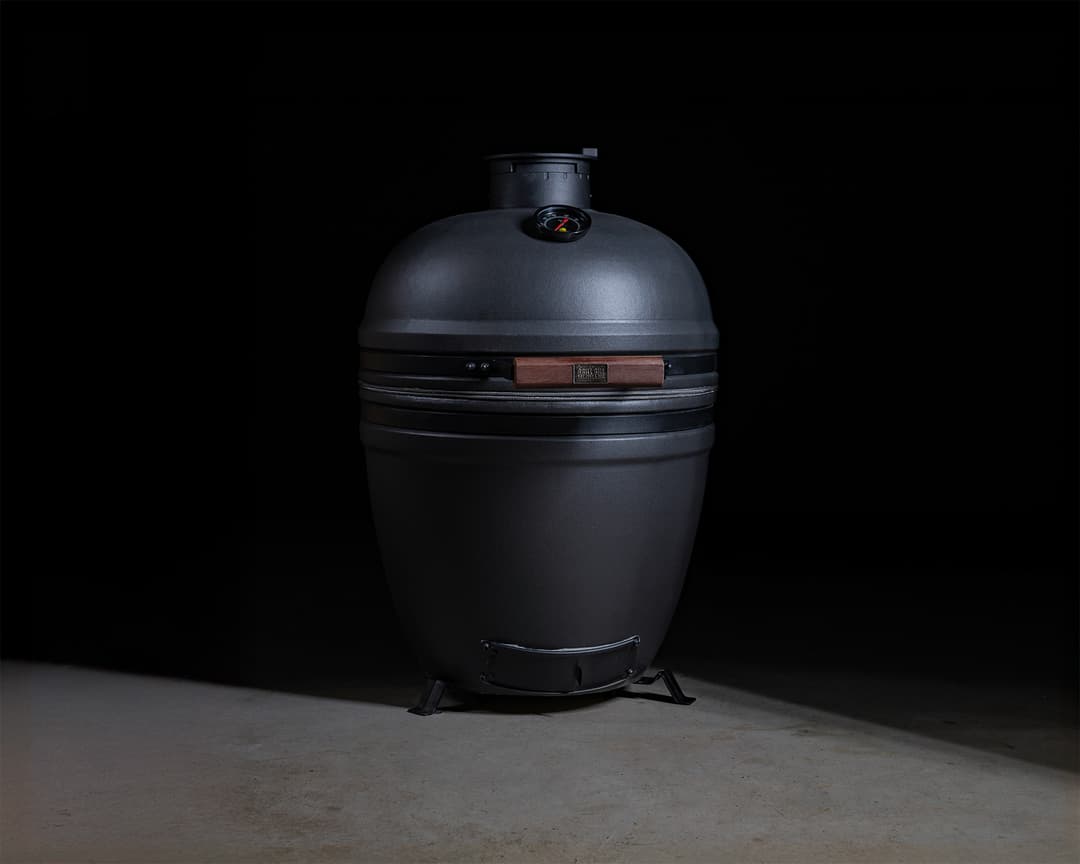
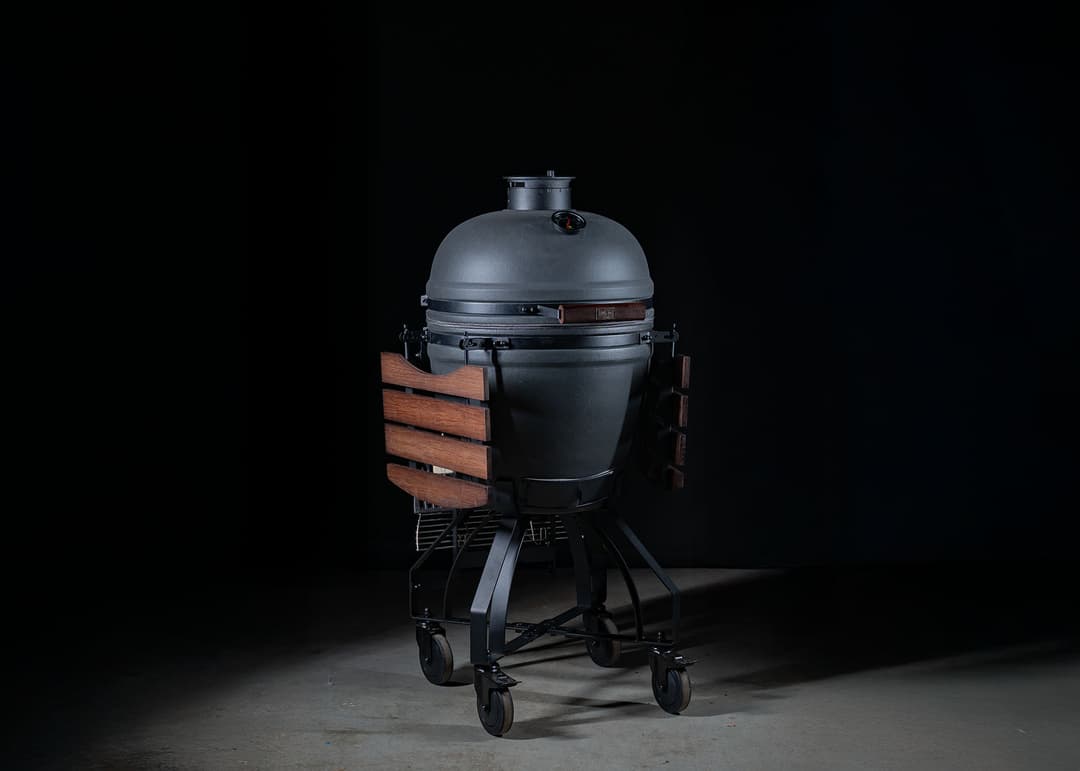
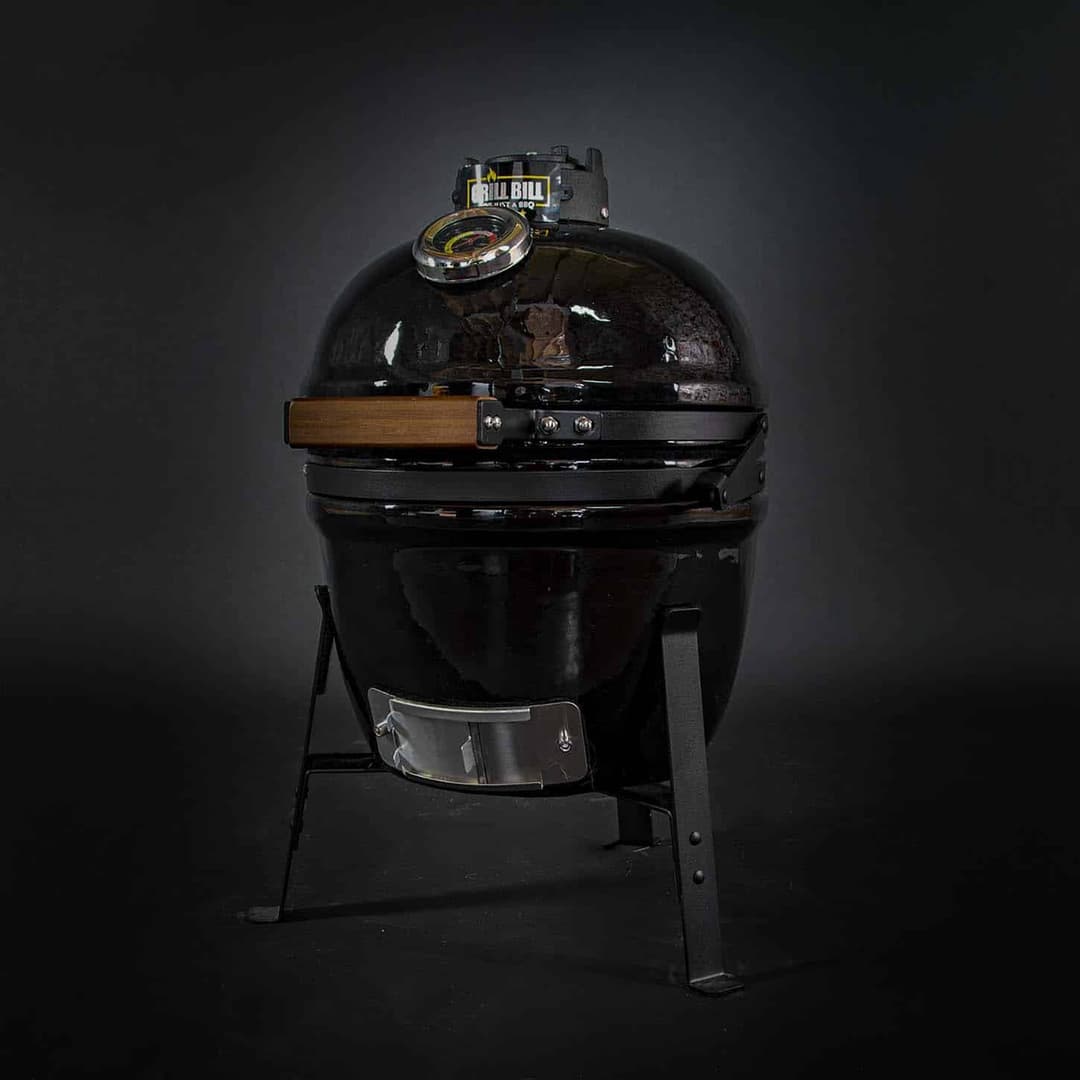
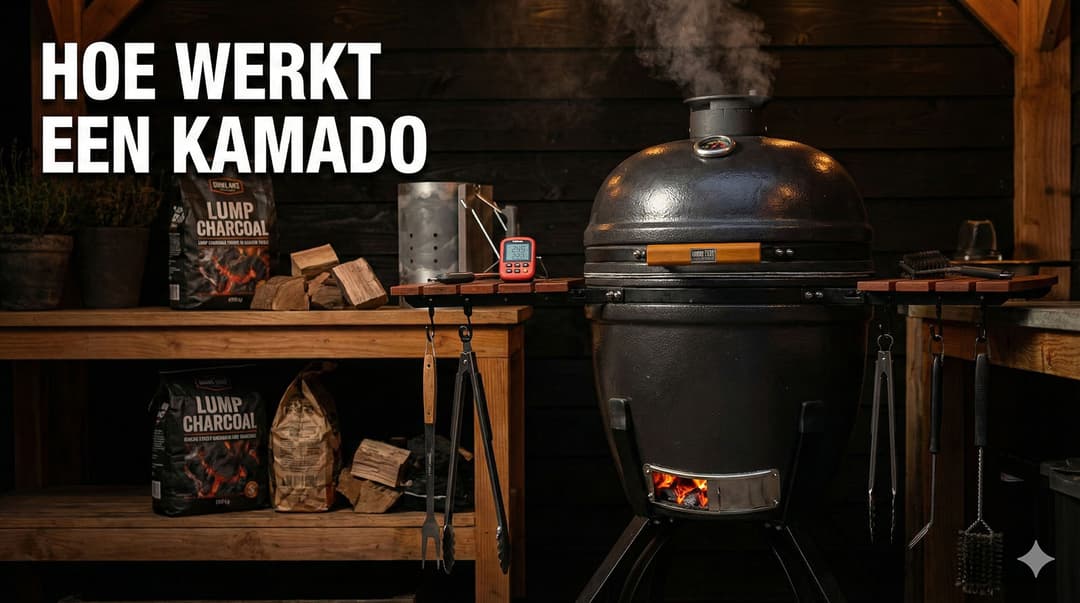
A kamado is ideally suited to this because the ceramic stores heat and the airflow can be adjusted precisely. That keeps the temperature stable for hours without constant fiddling.
Why low & slow is about technique, not a recipe
Plenty of people go looking for exact times and temperatures. In practice that rarely works. Every cut of meat is different, and so is the outside temperature, the charcoal and the humidity.
Low & slow works when you understand how airflow, convection heat and ceramic mass work together. Once that system is stable, the result follows on its own.
With low & slow you want a calm, constant burn. You get there by opening the bottom vent only a fraction and using the top vent for fine stabilisation.
More oxygen means a faster burn and a rising temperature. Less oxygen slows the process down. Small adjustments are crucial; big corrections only unsettle the fire.
Why a kamado stays stable for hours
The ceramic of a kamado acts as a heat buffer. Once the kamado is up to temperature, the ceramic releases that heat slowly, which damps out swings in the fire and the airflow.
That means you don't have to keep checking or correcting. Get the basics right and the system keeps itself in balance.
Indirect cooking as the foundation of low & slow
Low & slow is always indirect cooking. The heat deflector blocks direct heat, so only convection heat reaches the food. That prevents scorching and gives you even cooking.
Correcting too quickly at the smallest fluctuation
Focusing on the clock instead of on behaviour
These mistakes create unrest and make low & slow harder than it needs to be. There's more background in common kamado mistakes.
Why patience beats control
Low & slow asks for trust. Once the kamado is running steadily, the best thing you can do is nothing at all. Every intervention disturbs the system.
Experienced kamado owners intervene very little, and that is exactly why they get consistent results. Patience isn't passivity, it's technique.
Low & slow as the basis for other techniques
Many other kamado techniques build on low & slow: reverse sear, smoking and long roasting sessions. Master low & slow and you have a solid technical foundation.
The next step is learning how to combine low & slow with direct heat. We cover that in Reverse sear on a kamado.
FAQ
What is low & slow cooking on a kamado?+
Low & slow is cooking for a long time at a low temperature, where convection heat and steady airflow deliver even results.
What temperature do you use for low & slow?+
Usually between 100 and 130 degrees, depending on the dish and the texture you're after.
Why does a kamado stay so stable during low & slow?+
Because the ceramic stores heat and damps out swings in airflow and fire.
Do I need to adjust often during low & slow?+
No. Once the kamado is stable, adjusting is usually unnecessary.
Why is low & slow more technique than recipe?+
Because every cut of meat and every situation is different. Understanding airflow and heat matters more than exact timings.
More from the techniques
This article is part of kamado techniques, chapter 4 of the kamado BBQ guide: direct and indirect, low and slow, smoking and baking.
These don't go into the kamado at 180 degrees. They're small text files that remember what's in your cart, so you don't have to search again.
With your OK we also measure how the site is used and show you ads elsewhere that fit you. For that we share data with 2 parties: Meta and Google. That way you won't see ads for gear you already own.
Rather not? Fine, everything keeps working. You can change your choice later via Cookies, at the bottom of every page.