Your cart is still empty.Continue shoppingWe couldn't load your cart.Try againGo to cartDiscount code %s is ready — add products to use it.Save to wishlistAdd to wishlistRemove from wishlistSavedSaveincl. VATRemoveDecrease quantityIncrease quantityincl. %s accessoryincl. %s accessories%s is now on your wishlist.Your whole cart is now on your wishlist. Your cart is empty; everything is ready to put back in one go later.%s products moved to your wishlistUndoView wishlistSaving failed, please try againPut back in your cartAdd all to cartEverything is in your cartGo to checkoutAdd to cartIn cart ✓%s in your cart%s products added to your cartAdding failed, please try againShareShare your wishlistAnyone with the link can see your list and add products to their own cart. Your list stays yours.CopyCopiedEmailShare via…My wishlist at Grill BillHave a look at my wishlist at Grill Bill: %sSharing failed, please try againYour wishlist is still empty.Link copied, paste it in Messenger.%s shared this wishlist with you. Add whatever you like to your own cart; the list itself won't change.Someone shared this wishlist with you. Add whatever you like to your own cart; the list itself won't change.This share link is no longer valid.This wishlist is empty (for now).%s item%s itemsRemove from wishlistAdd selection to cart (%s)incl. %s bundle discountTick at least one product%s was already in your cartTake to cartClear listSure? Yes, remove everythingYour wishlist is emptyClearing failed, please try againBundle dealyou save %s%s more accessory with bundle savings%s more accessories with bundle savings−%s% as long as the main product is in your basket+ AddAdded with bundle discountAdding failed, please try againBundle discount removed%s has been removed from your basket. The accessories are still there, at the regular price.Put it back and restore the discountClosePut back, bundle discount restored
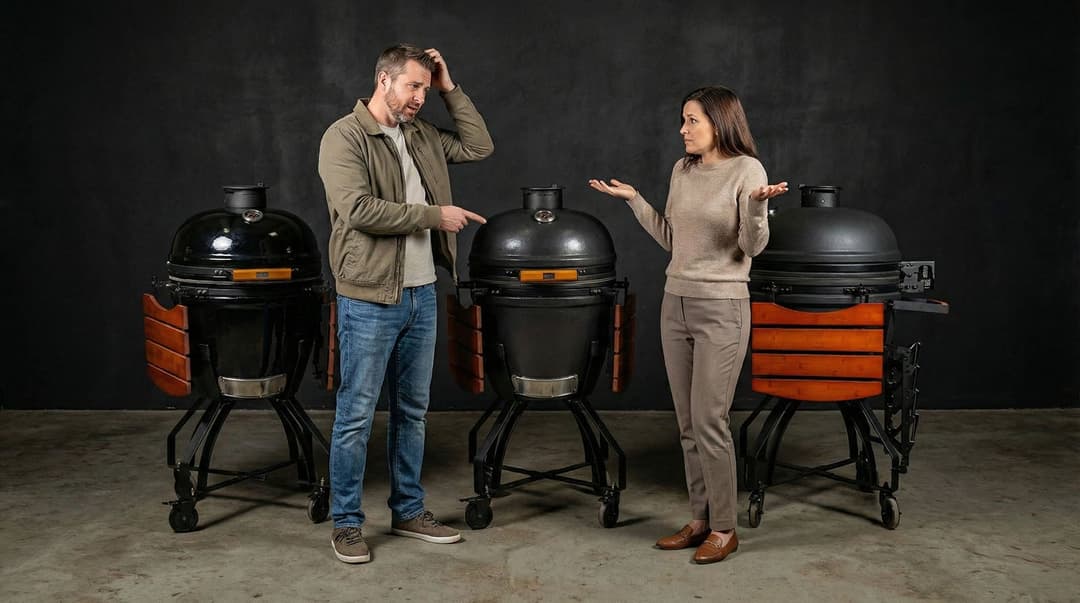
The difference between cheap and expensive kamados?
What is the difference between cheap and expensive kamados?
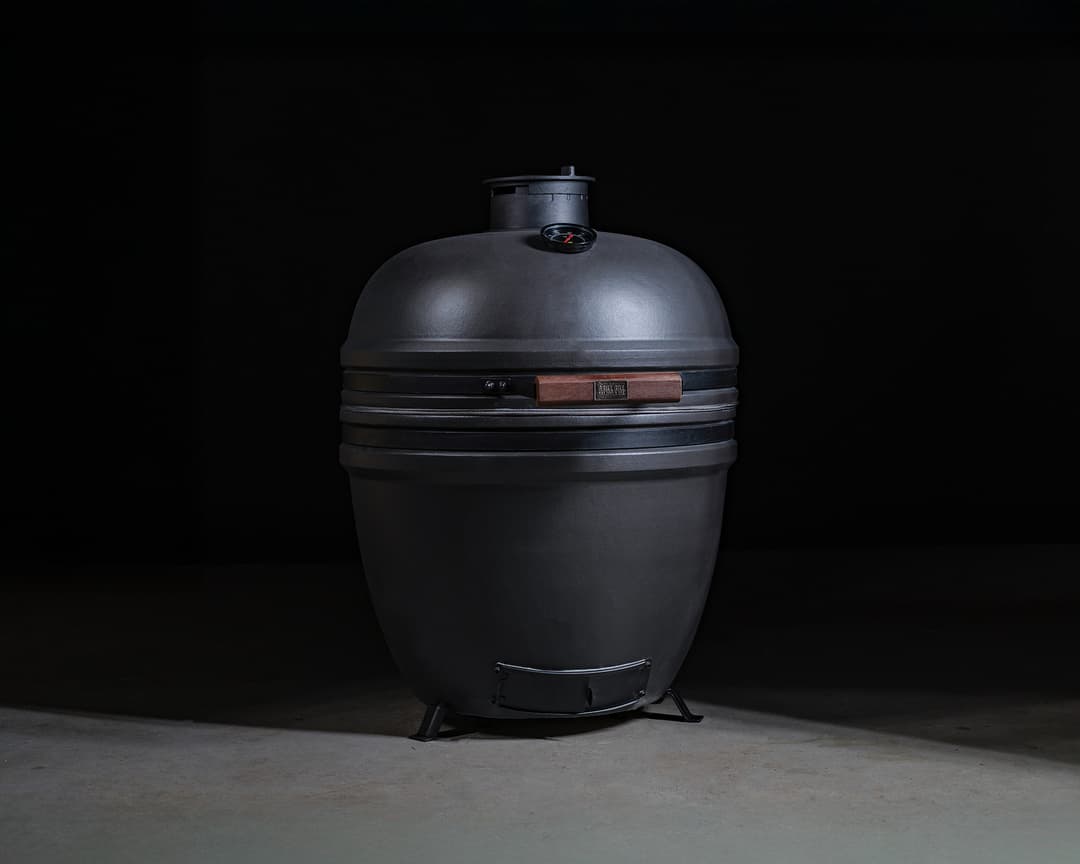
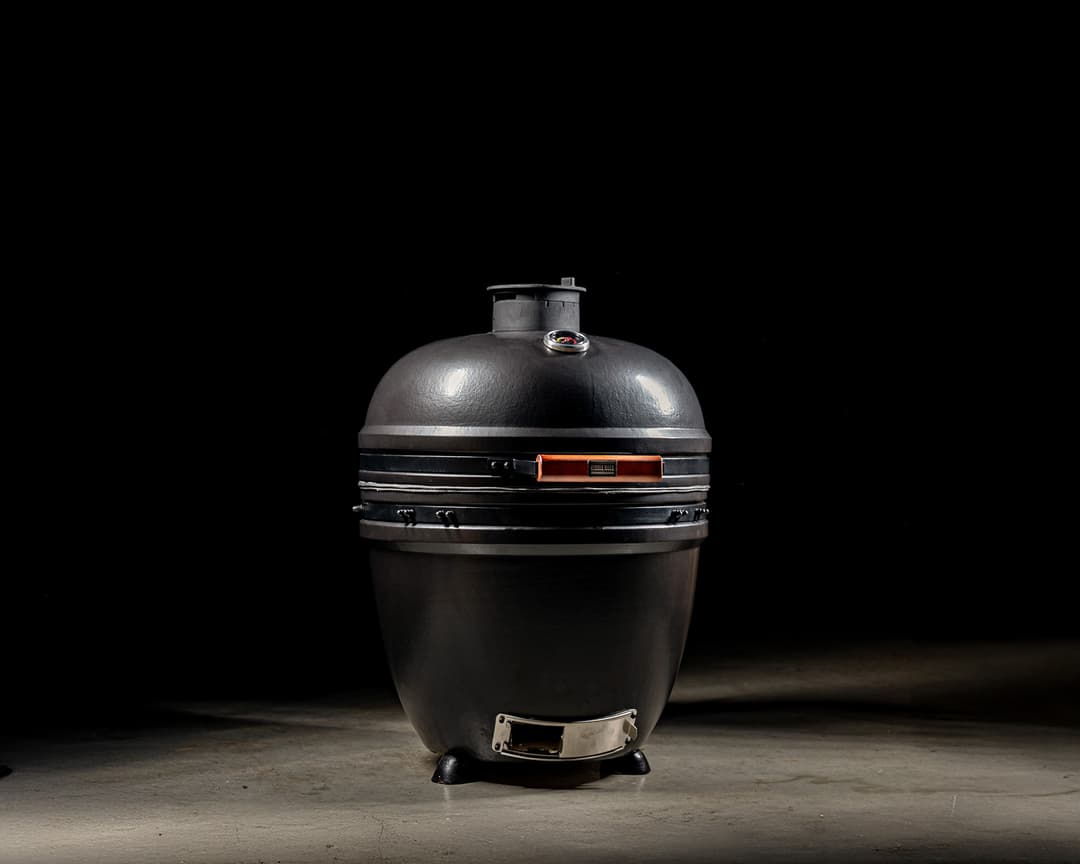
Above €1000 the ceramic is virtually identical between brands. The real difference lies in finish, glaze, accessories and ease of use, not in cooking performance. A more expensive kamado does not cook better, but it does cook more pleasantly.
Classic, Pro II and Pro III share the same ceramic
Felt gasket versus fibreglass: the biggest difference in wear
Matt and ultra-matt glaze cost more to produce than gloss
Buying accessories separately soon costs more than going straight for the Pro II
Brand premium and distribution links are in the price, not in the quality
This is a question about kamado BBQs we get regularly at Grill Bill: “Is a more expensive kamado really better?” The honest answer: in cooking results, hardly. In day-to-day convenience: absolutely. And that difference is exactly where the extra money goes.
Want to see Grill Bill's models and sizes side by side? It is all under buying a kamado BBQ.
Where does the price difference between kamados really sit?
Most people expect a more expensive kamado to have better ceramic. That is not the case. Above €1000 virtually every brand — including our Classic, Pro II and Pro III — uses ceramic compositions that in practice perform identically in terms of convection heat, insulation and temperature stability.
The real price difference comes down to five things:
What determines the price?
2 of 2 models
Compare2 models
Cheap
More expensive
Glaze finish
Gloss (cheaper to produce)
Matt or ultra-matt (more complex process, more exclusive)
Gaskets
Felt (wears out faster)
Fibreglass (lasts far longer)
Standard accessories
Basic grate + heat deflector
Charcoal basket, cast iron, organizer, ash drawer
Hardware
Standard finish, cheaper materials
Heavy-duty trolley, large wheels, all-black finish
Brand & distribution
Direct or via an importer such as ourselves
Via shops: more links in the chain = higher price (not always better quality)
Swipe
Note: that last point matters. Well-known brands such as Big Green Egg, Kamado Joe and The Bastard charge a hefty brand premium. You pay for the name, the marketing budget and the distribution chain — not necessarily for better ceramic. At Grill Bill we produce directly and deliver without middlemen, so you get premium quality at a fairer price.
Cheaper kamados: a solid base, but less finish
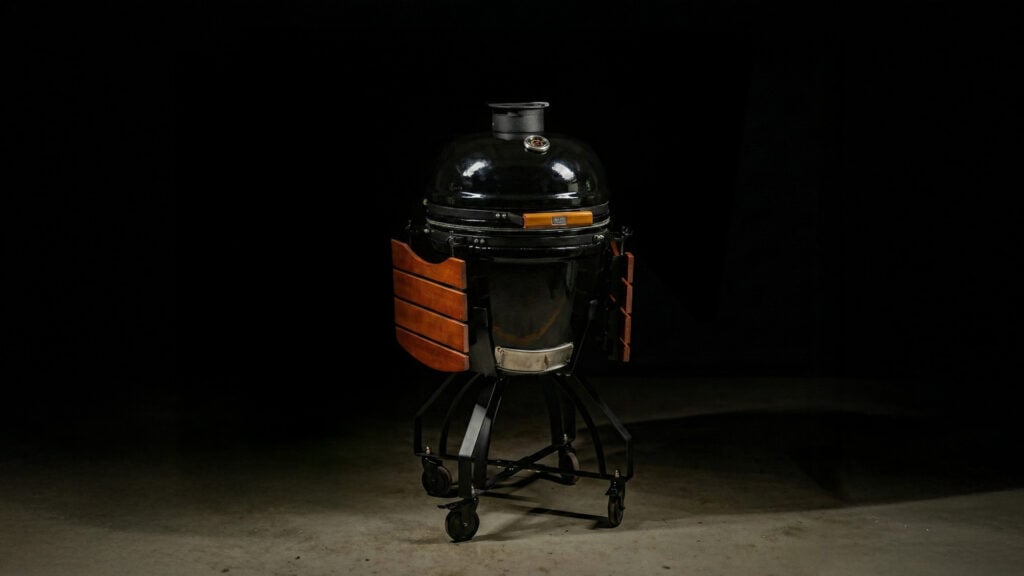
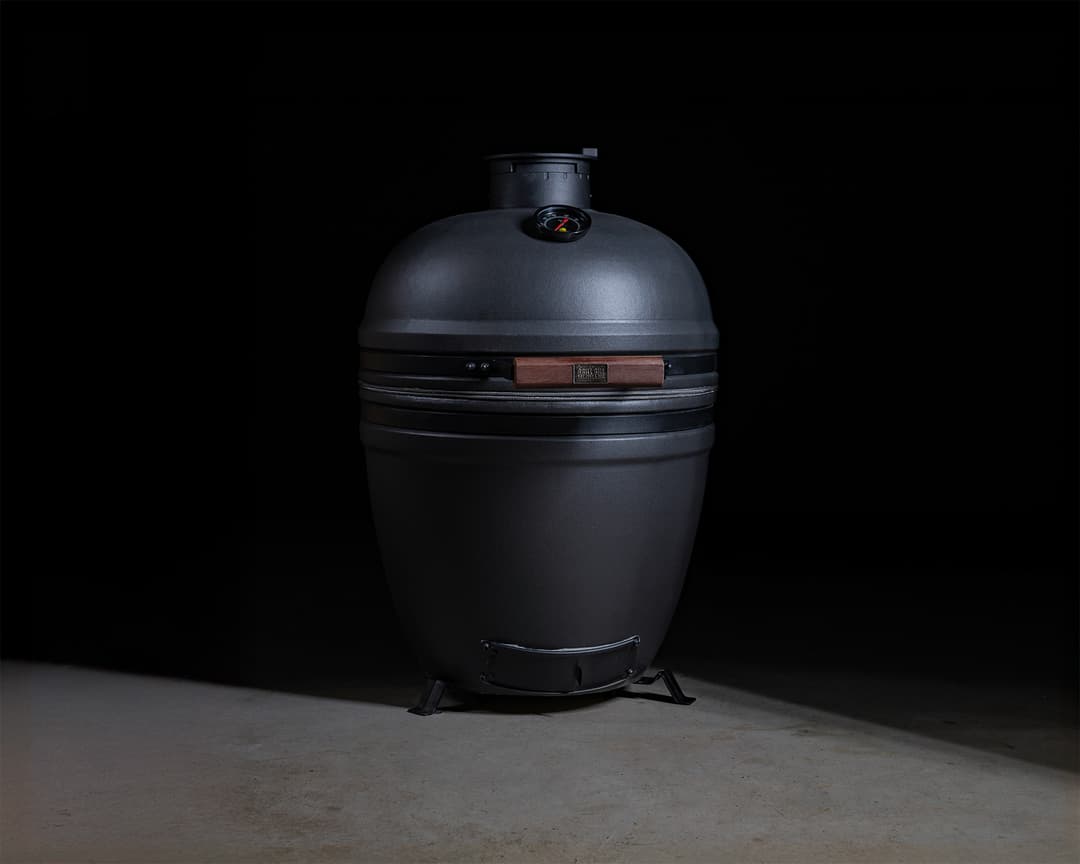
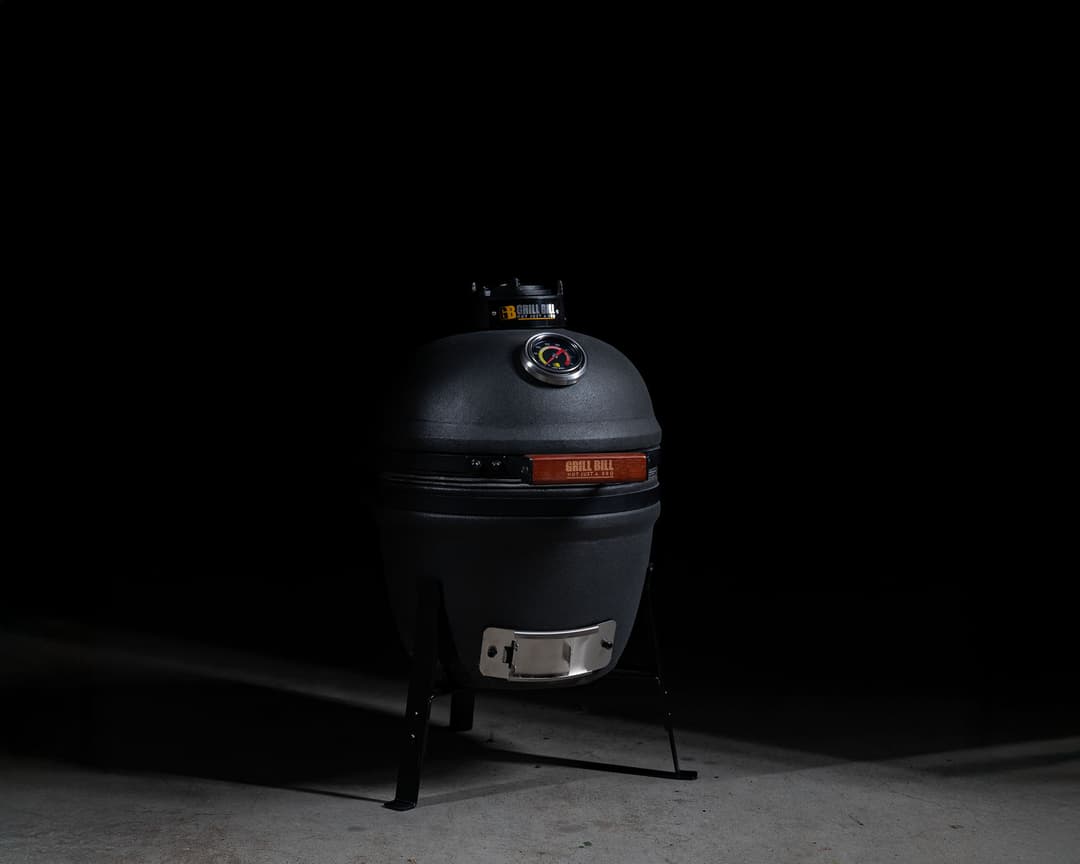
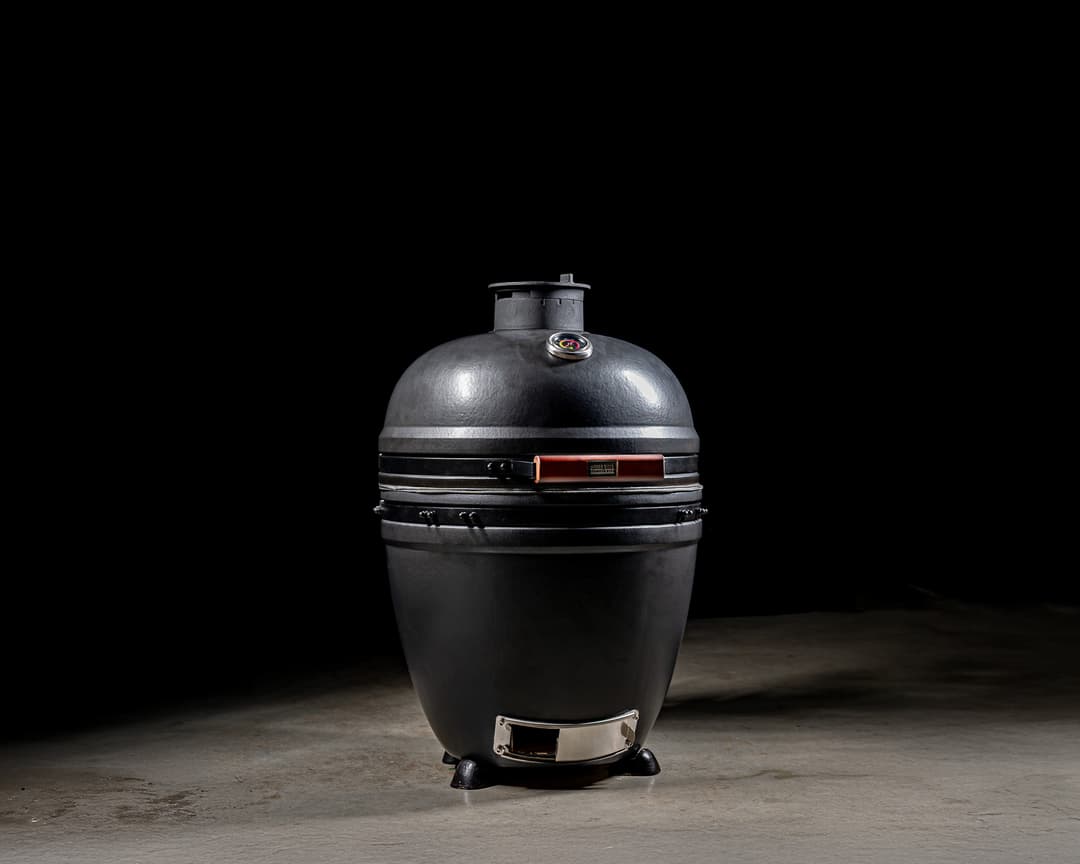
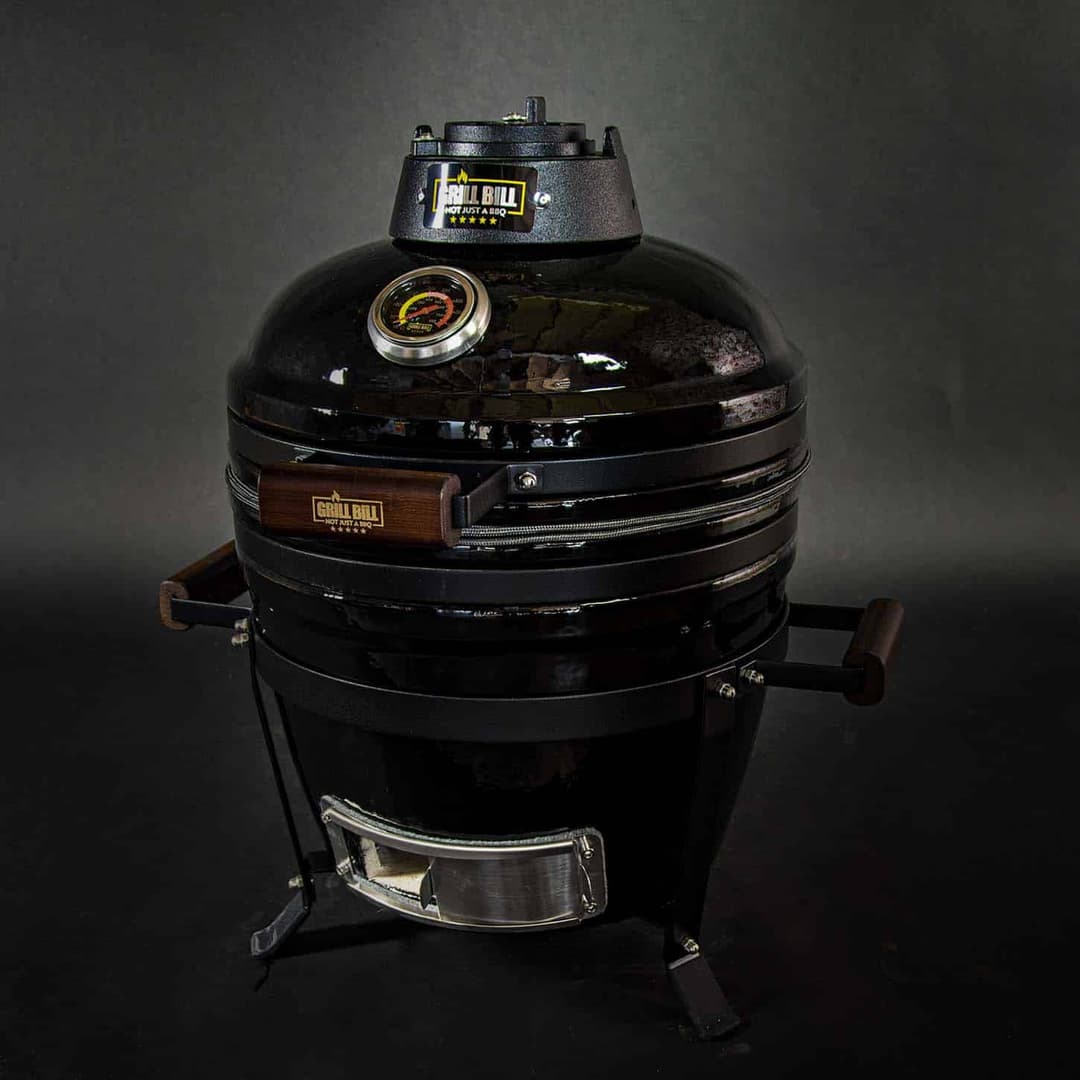
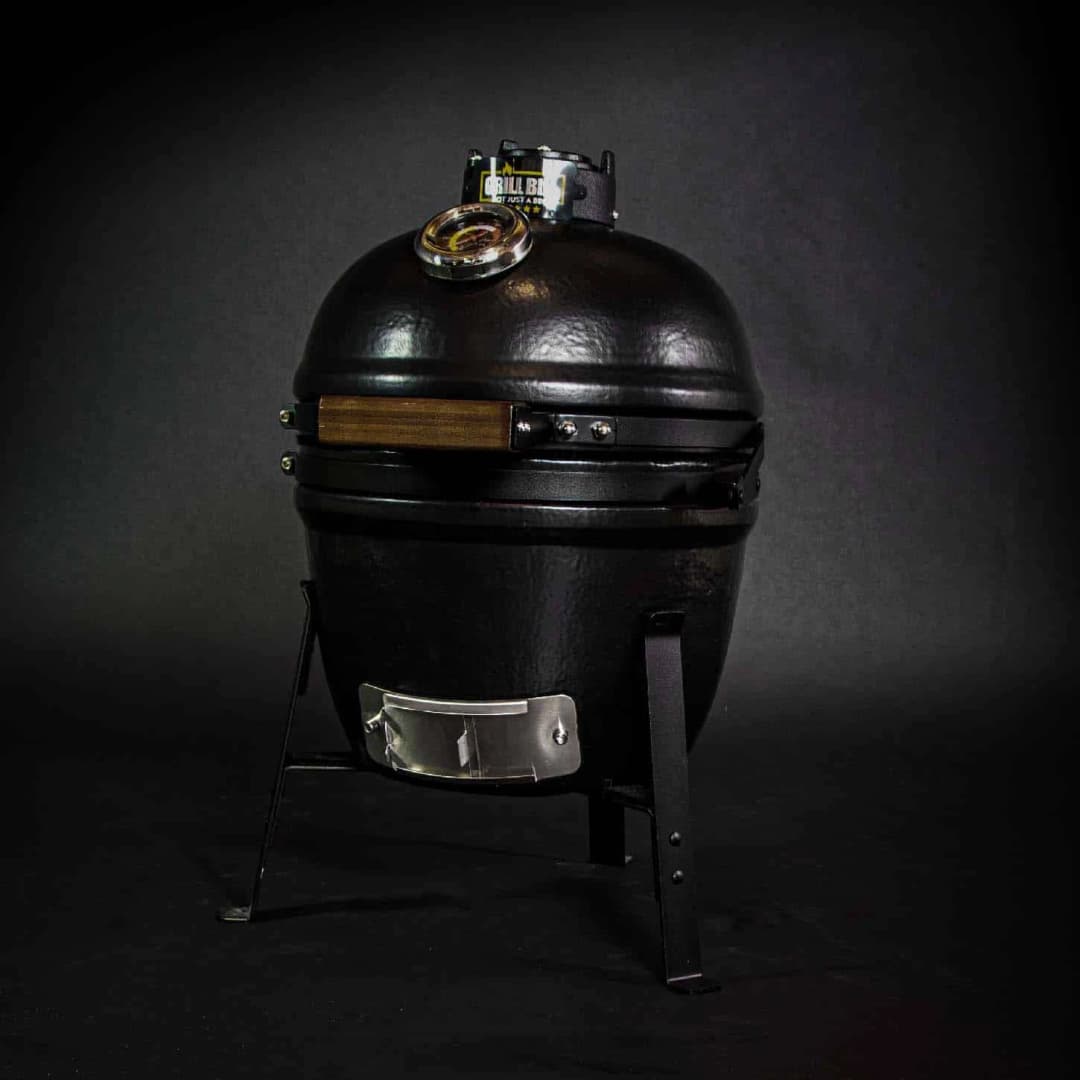
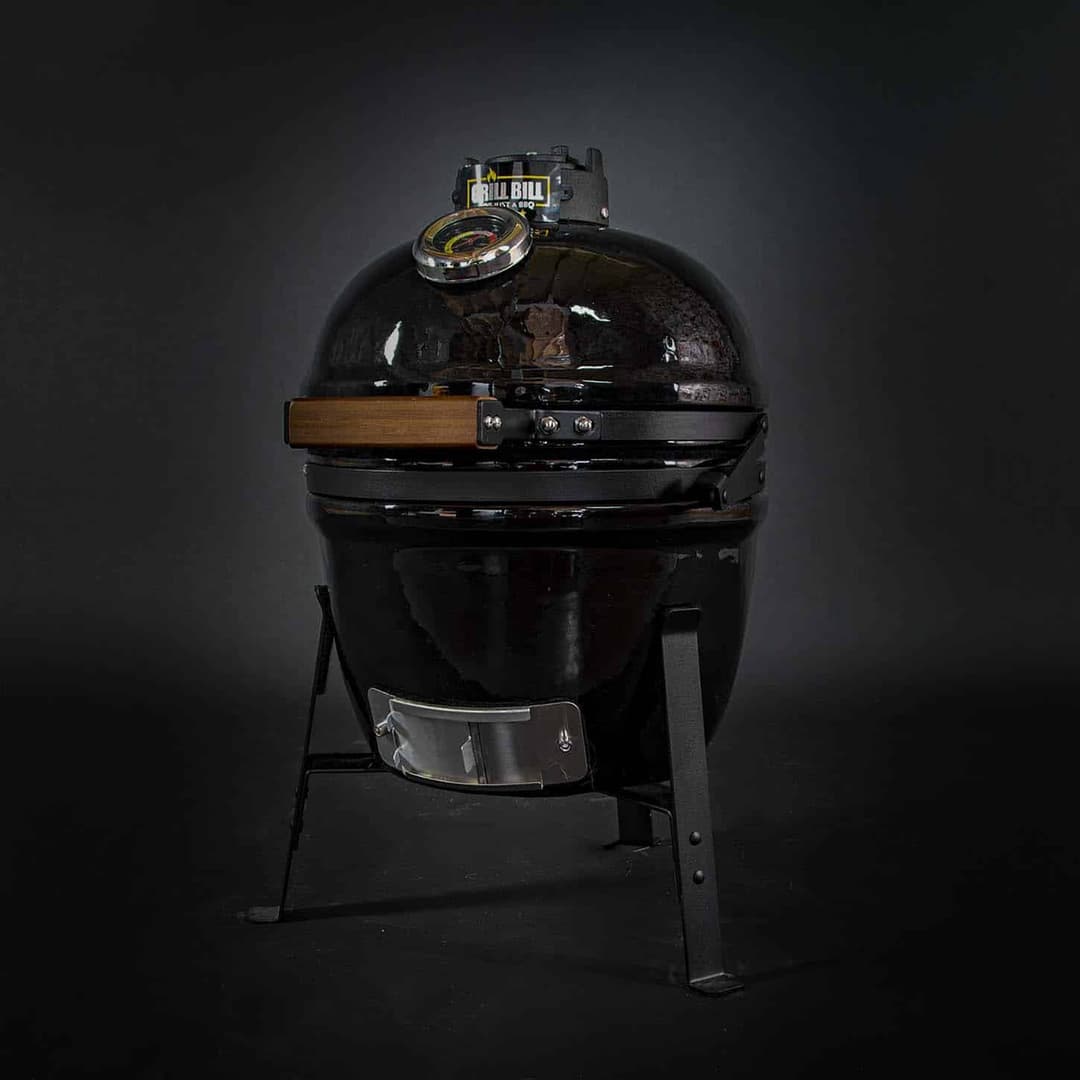
Cheaper kamados — such as the Grill Bill Classic — use ceramic that in practice performs virtually identically to more expensive models. For anyone learning to grill who wants to cook low & slow now and then, this is an excellent choice. Every essential function is there.
What you get:
Gloss glaze — good-looking, cheaper to produce than matt
Felt gasket — seals well, but wears faster than fibreglass gaskets
Stainless steel grate + heat deflector — included as standard, enough for every basic technique
Solid hinge — at Grill Bill this is the same across every model; no compromise on safety
What you do not get: a charcoal basket, ash drawer, cast iron grate, Grate Organizer or the Smart Qooking System. You can always add those later, once you know what you are missing.
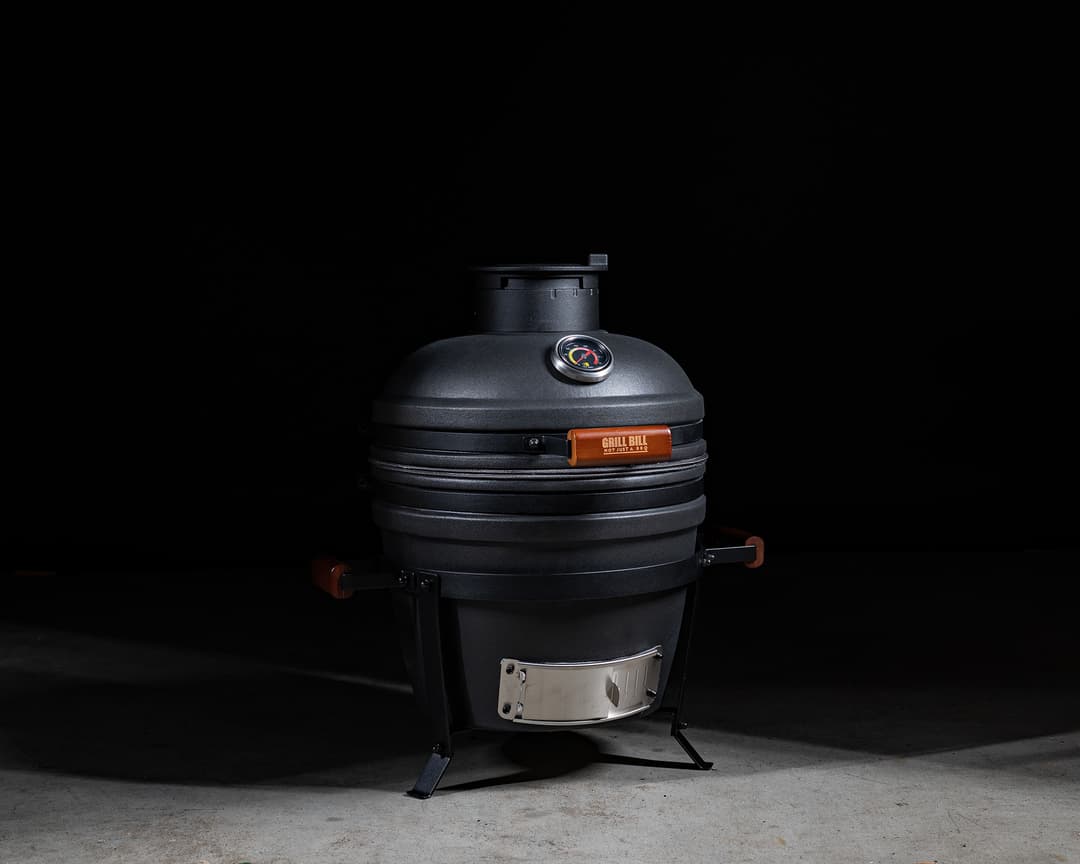
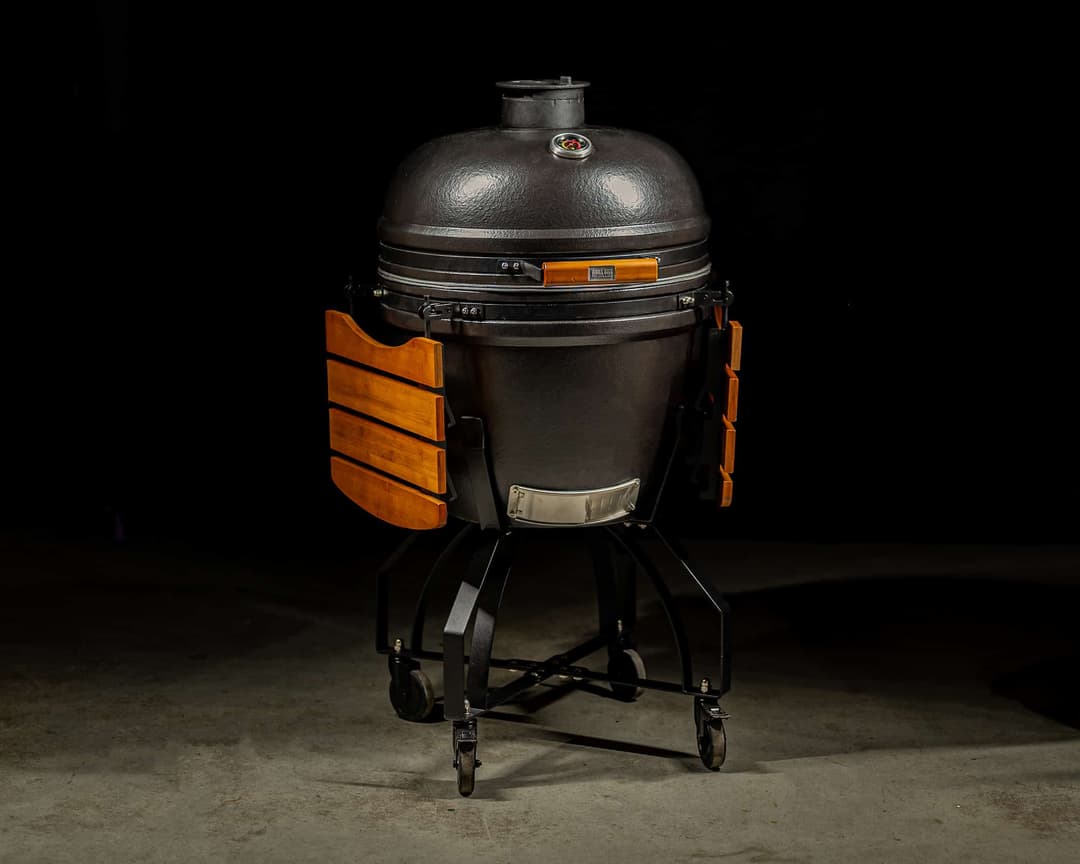
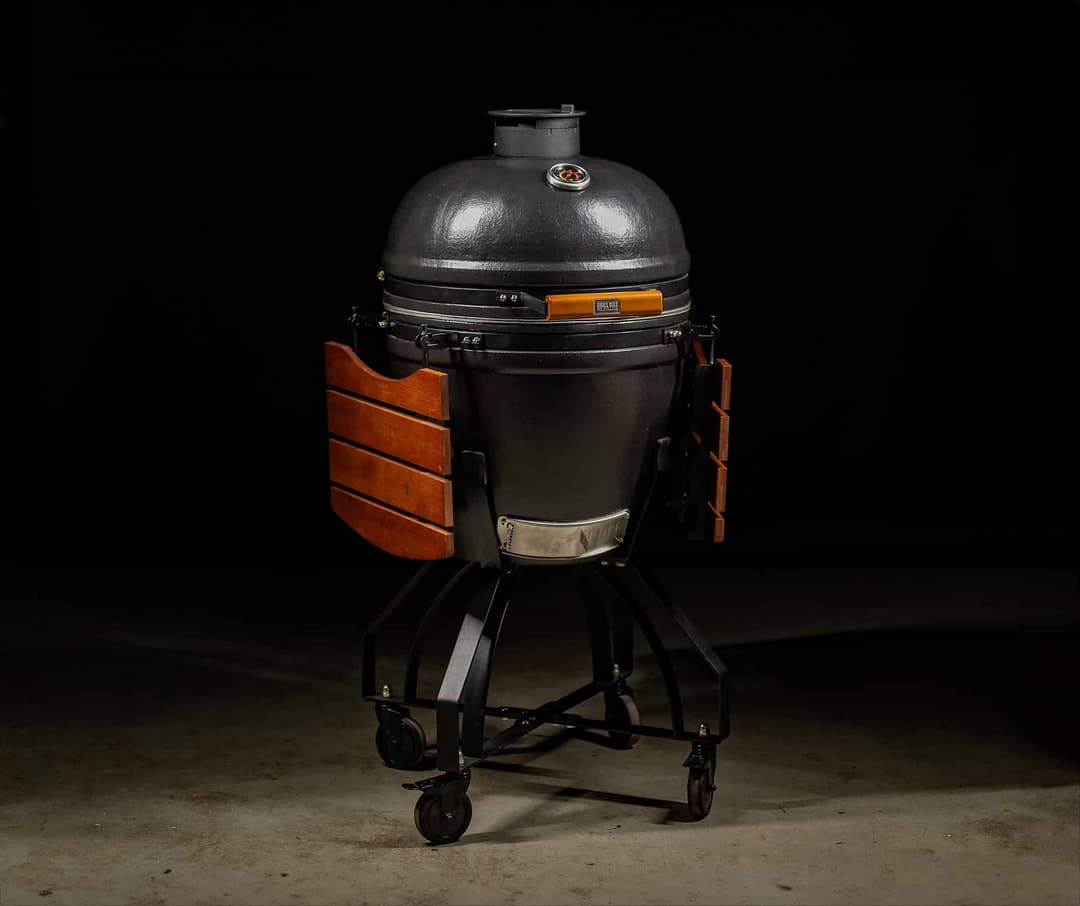
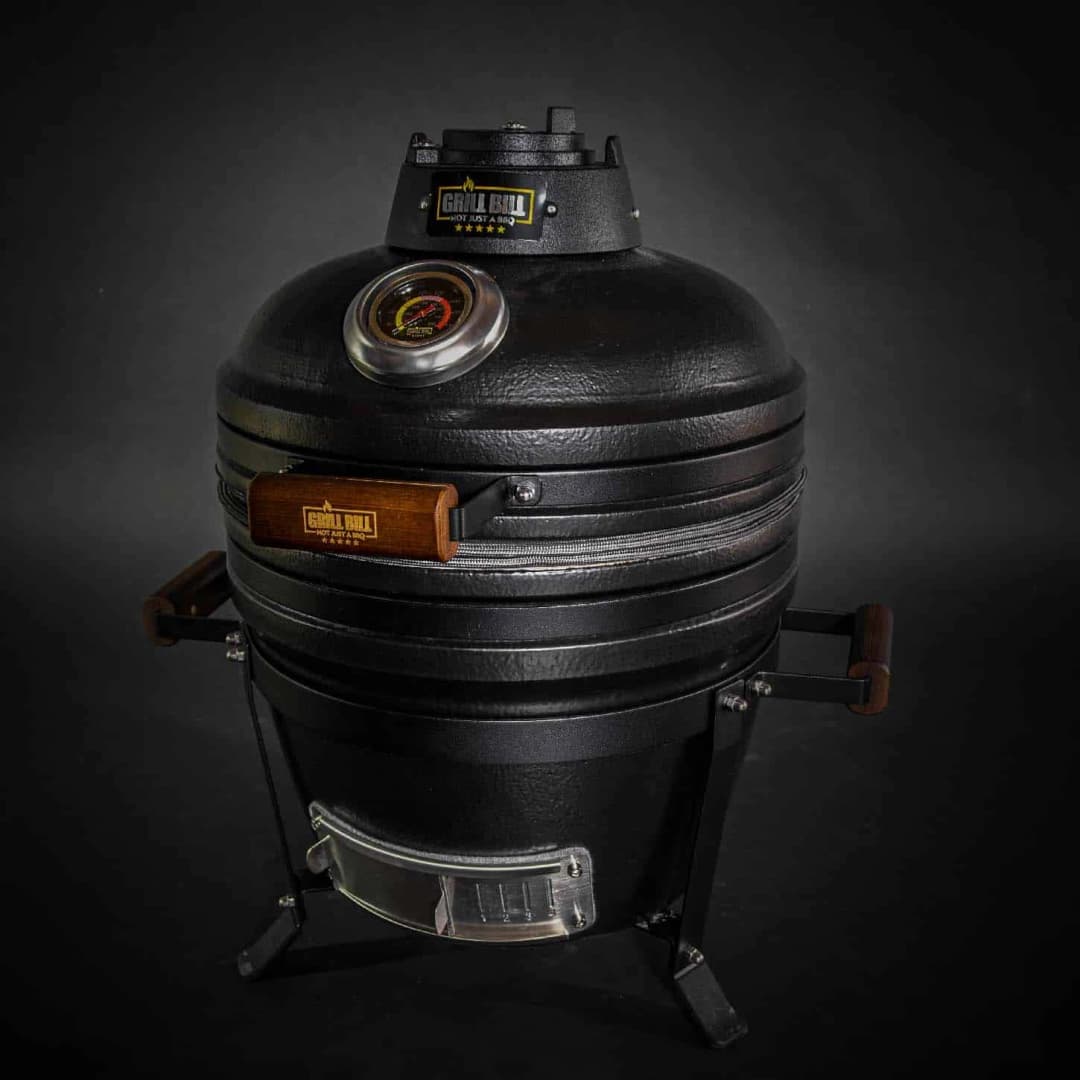
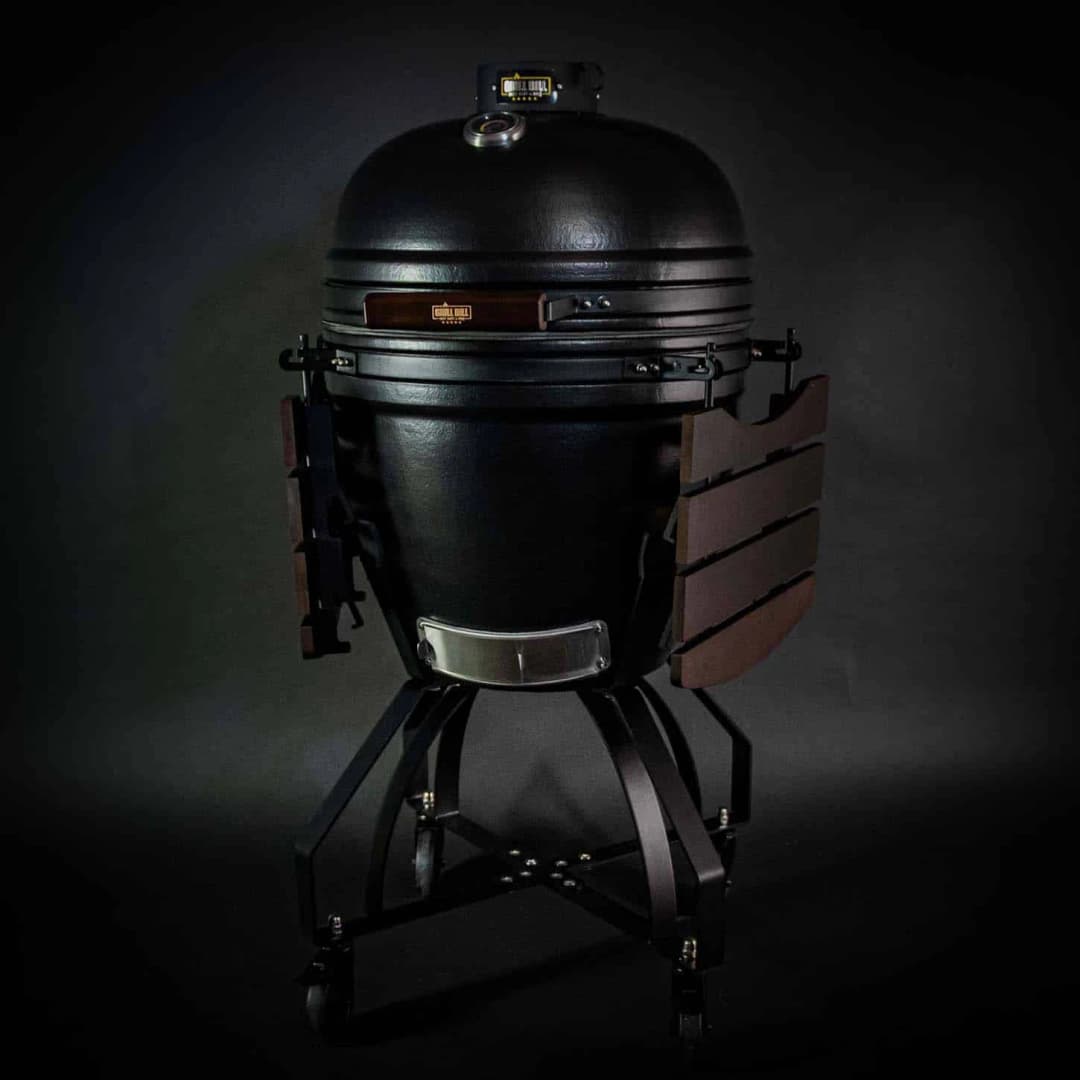
The Pro II is Grill Bill’s best-selling kamado — and that is no accident. You get a more complete set straight away, plus a premium matt glaze that costs more to produce and gives a more exclusive look. Independently tested: read the review of the Grill Bill Pro II XL.
What you get on top of the Classic:
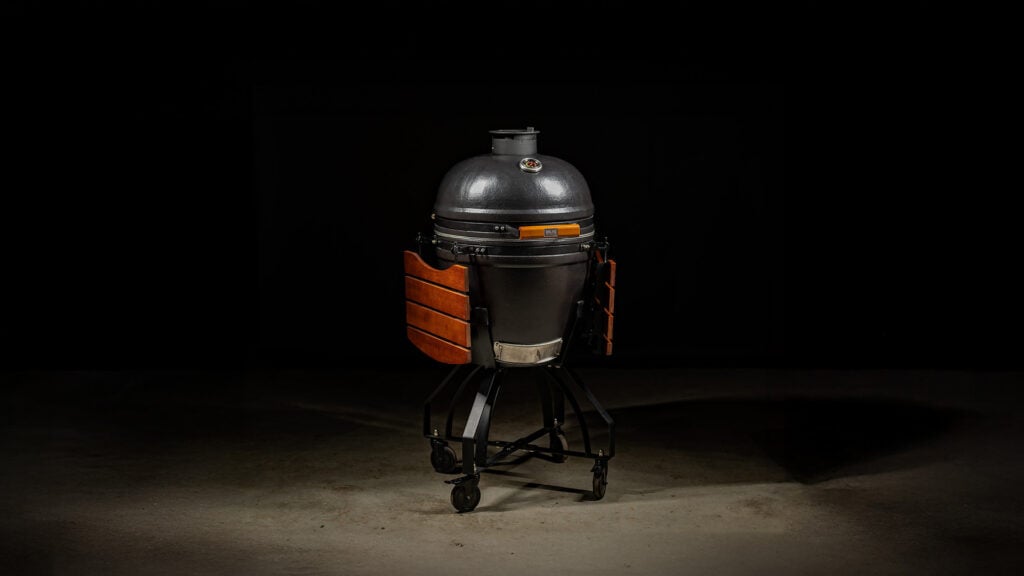
Matt black glaze — more expensive and more exclusive than gloss; dust shows less and the look is far classier
Fibreglass gasket — lasts far longer than felt, better sealing during long sessions
Charcoal basket — improves airflow and makes cleaning easier
Smart Qooking multilevel system — cook direct and indirect at the same time, on multiple levels
Ash drawer — quicker cleaning, less hassle after a long low & slow session
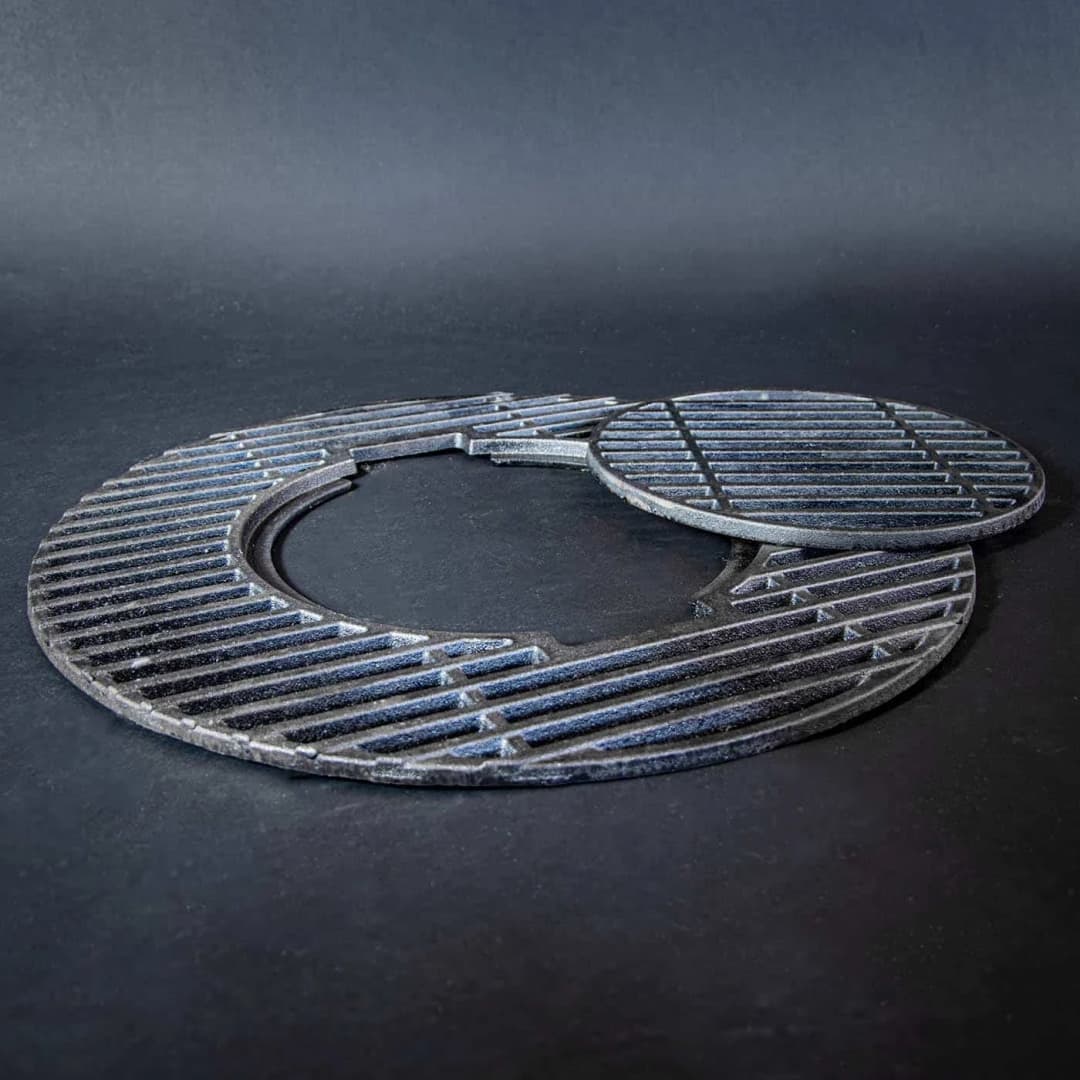
Cast iron and stainless steel grates — grilling and low & slow the way they are meant to be done
The Pro II offers more convenience, stability and flexibility. Not because the ceramic is better, but because the finish and accessories are smarter and more complete. Did you know our kamados are used daily in one of the best BBQ restaurants in the Netherlands? Read the interview with chef Sandy of The Roast Club in Eindhoven.
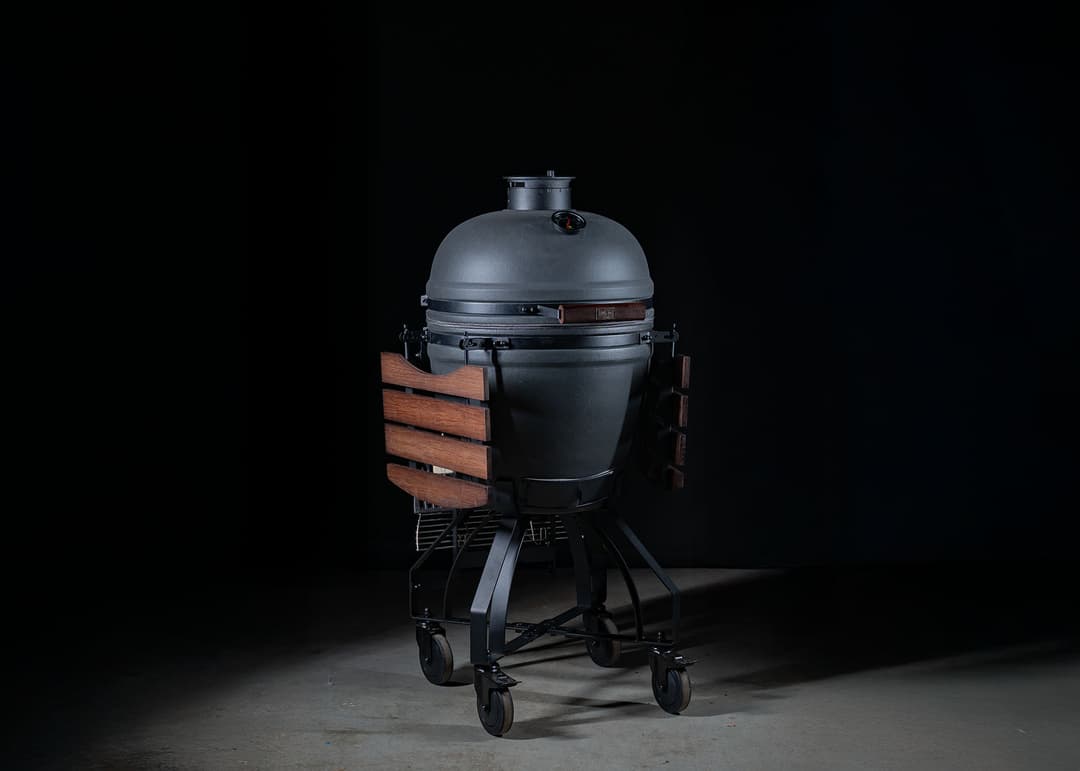
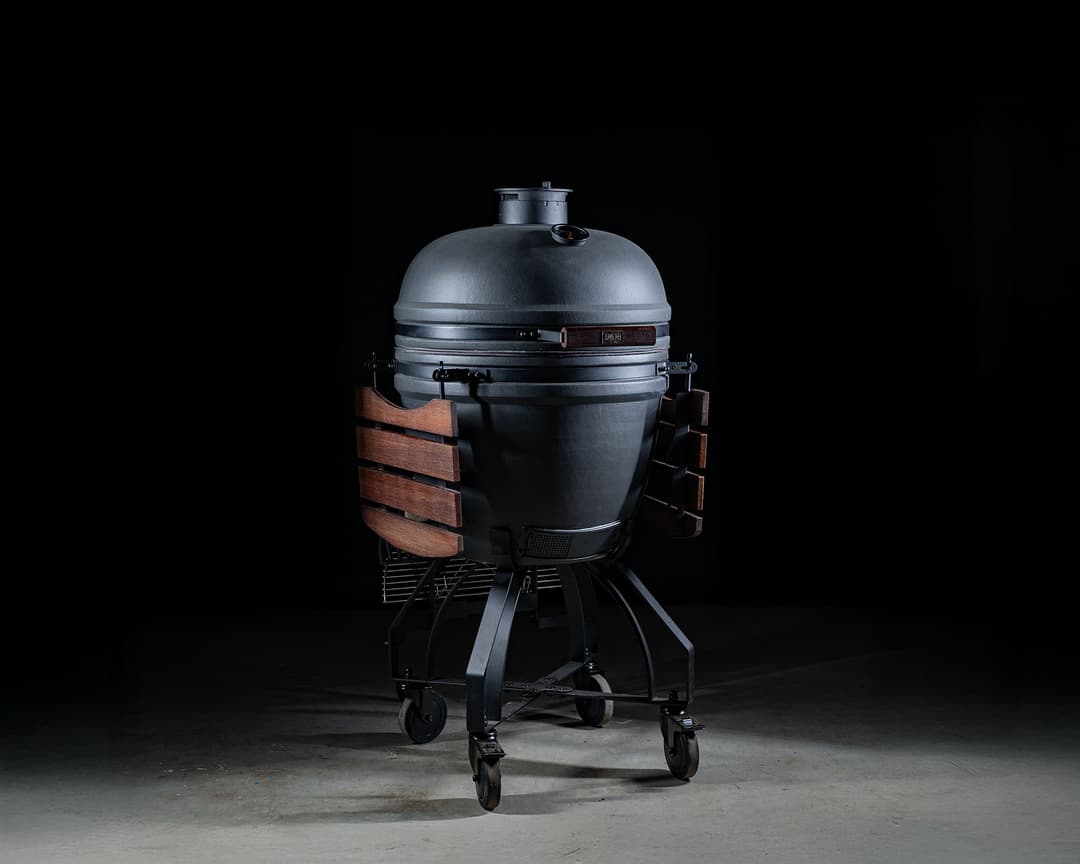
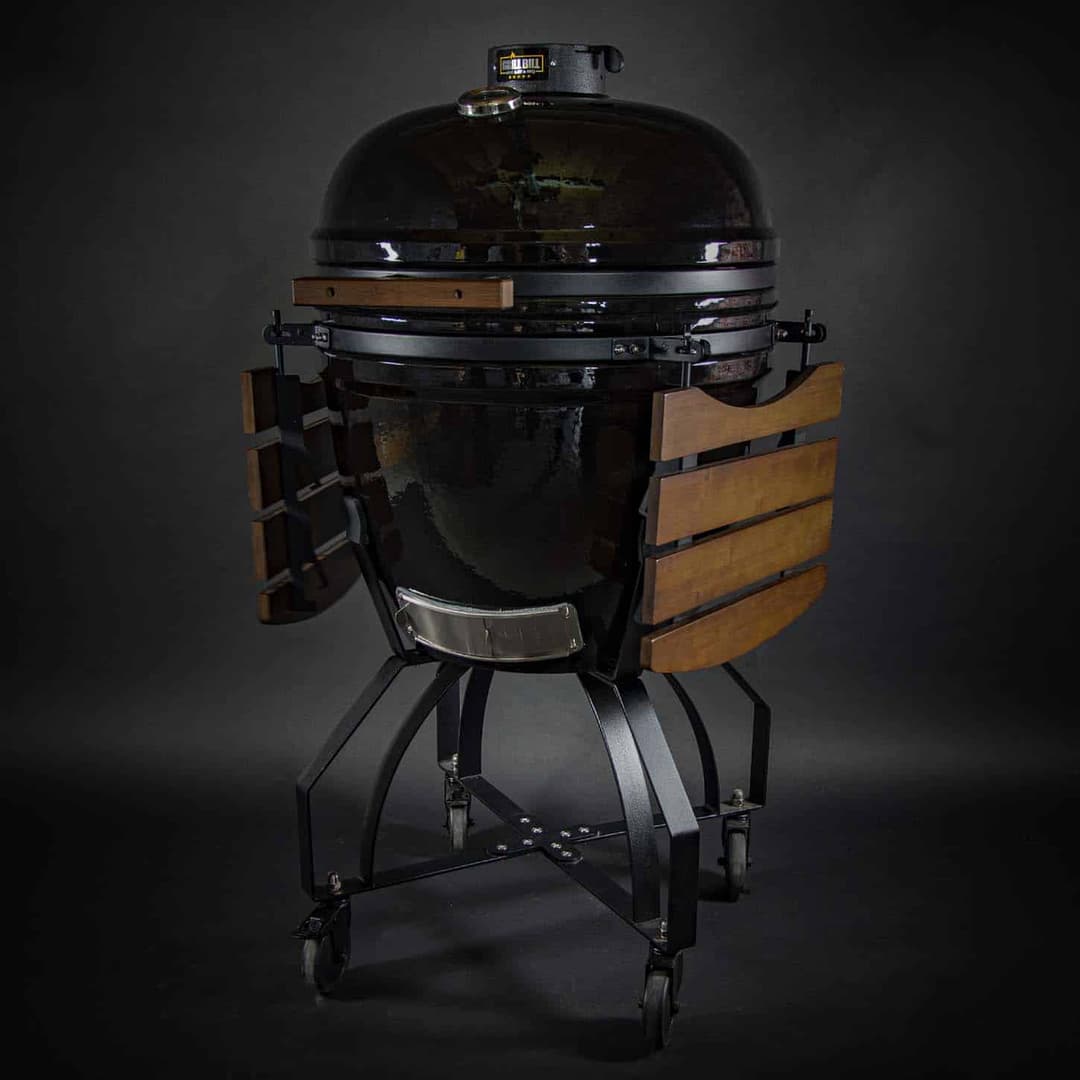
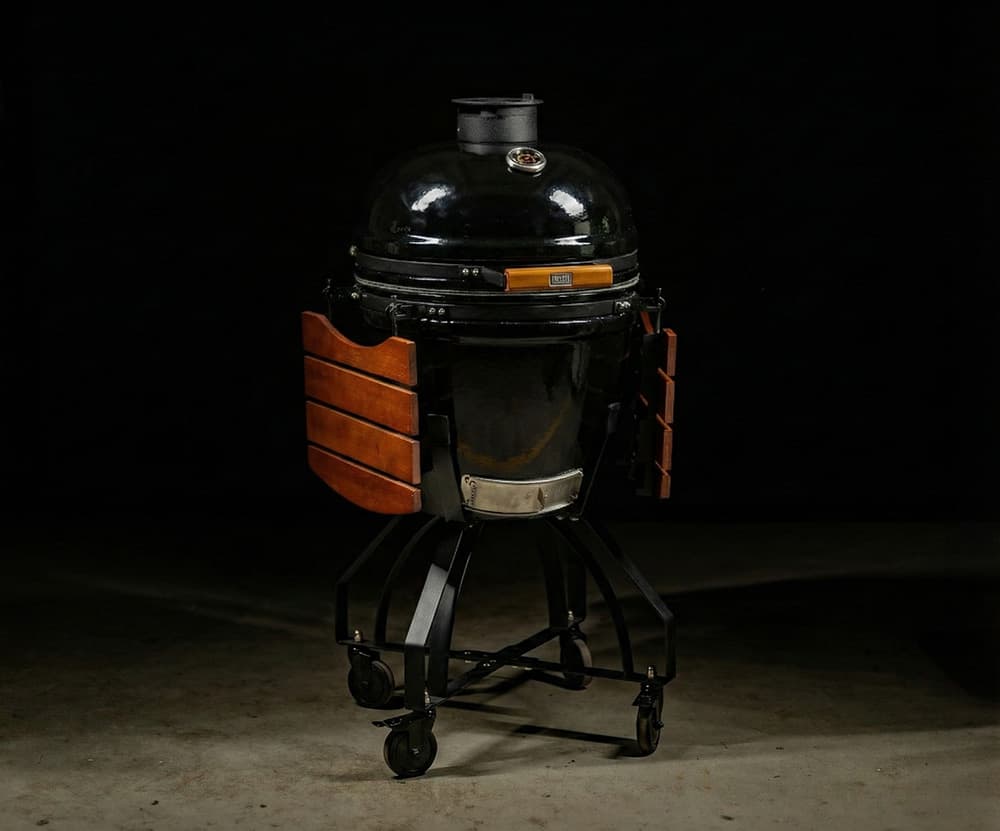
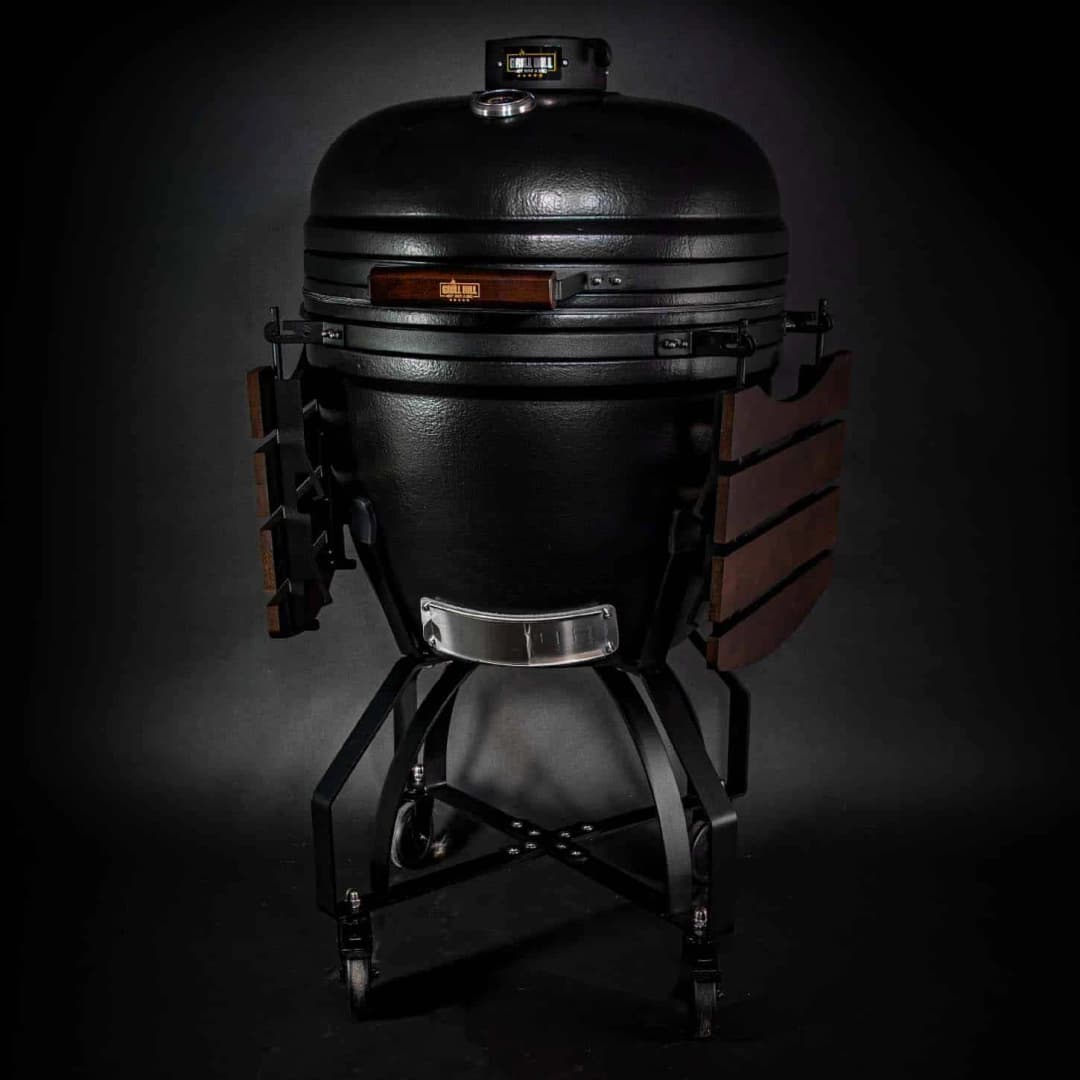
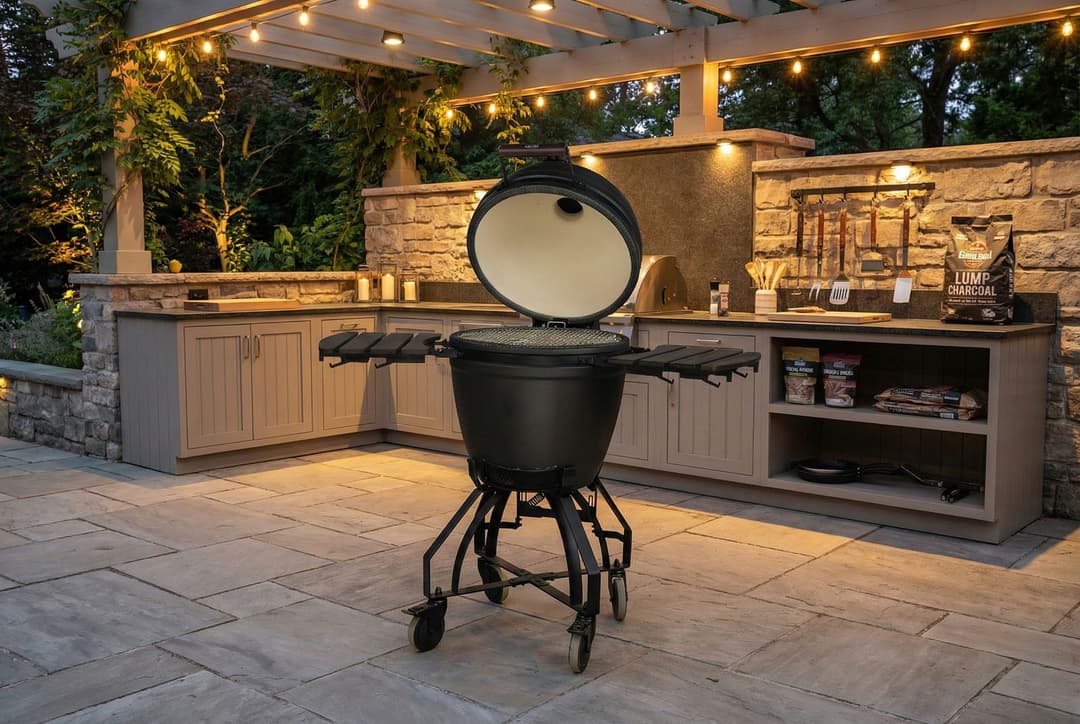
The Pro III is the high-end model for the dedicated griller who wants the best design and the best functionality. The differences sit in the details — but those details make a real difference in daily use. See all the new features: Grill Bill Pro III — the ultimate upgrade.
What you get on top of the Pro II:
Ultra-matt ceramic — even more exclusive and more scratch-resistant than the Pro II’s matt
All-black execution — stainless steel bolts, nuts and the bottom vent slider: everything deep black, the sleekest design on the market
Large heavy-duty wheels (12 cm) — far more stable and easier to move across paving or grass
Grate Organizer — store cast iron grates and heat deflectors safely and tidily; no more parts lying around
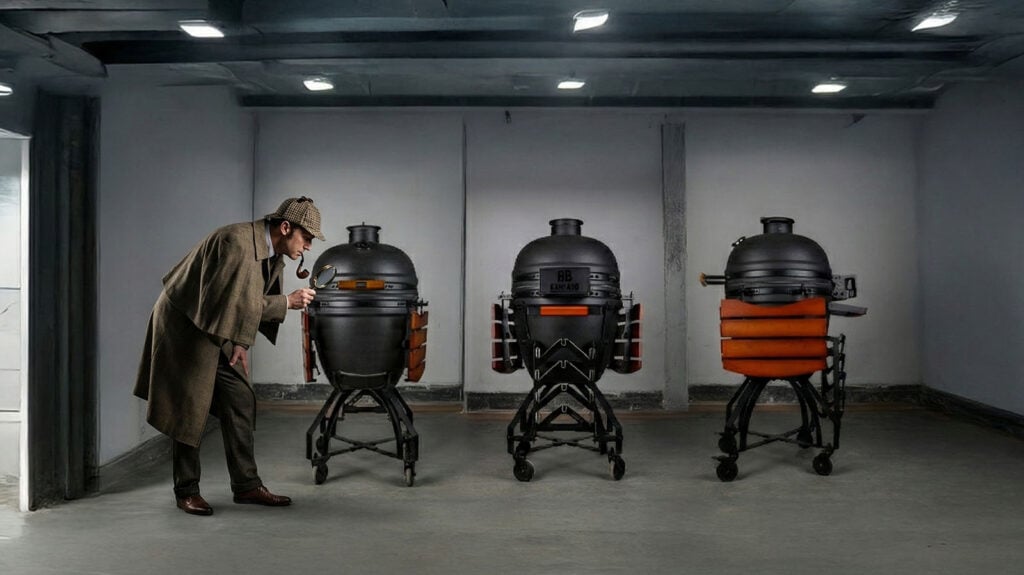
All three models cook technically identically — the ceramic is the same. The difference lies purely in finish, included accessories and ease of use:
Features side by side
Show
3 of 3 models
Compare3 models
Classic
Pro II
Pro III
Ceramic quality
Yes — Identical
Yes — Identical
Yes — Identical
Glaze
Gloss black
Matt black
Ultra-matt black
Gasket
Felt
Fibreglass
Fibreglass (improved)
Heat deflector
Yes — Standard
Yes — Standard
Yes — Thicker (premium)
Charcoal basket
No
Yes
Yes
Ash drawer
No
Yes
Yes
Smart Qooking System
Basic
Yes — Full
Yes — Extended
Cast iron grate
No
Yes
Yes
Grate Organizer
No
No
Yes
Wheels
Standard
Standard
Heavy-duty 12 cm
All-black hardware
No
No
Yes
Hardwood side tables
No
No
Yes
Best for
Getting started & learning
Comfort + value
Everything sorted from day one
Swipe
A common mistake when choosing
The most common mistake: comparing on price alone without looking at what is included as standard. A cheaper kamado looks attractive, but if you then buy a charcoal basket (€79), cast iron grate (€60), ash drawer (€59) and fibreglass gasket (€49) anyway, you end up paying more than if you had gone straight for the Pro II.
Is an expensive kamado really better than a cheap one?+
In cooking results, hardly. Above €1000 the ceramic is comparable across all brands. The real difference sits in accessories, glaze, gaskets and ease of use — not in cooking performance. A more expensive kamado does not cook better, but it does cook more pleasantly.
Why is matt glaze more expensive than gloss?+
Matt glaze requires more expensive raw materials and a more complex production process than gloss glaze. That is why you only see matt on more expensive models such as the Grill Bill Pro II and the ultra-matt Pro III. An added benefit: dust and fingerprints are less noticeable.
What extras do you get with a Grill Bill Pro II compared to the Classic?+
The Pro II comes as standard with: matt black glaze, a fibreglass gasket (lasts longer than felt), charcoal basket, ash drawer, Smart Qooking multilevel system, cast iron and stainless steel grates and a wok ring. The cooking performance is identical — the ease of use is significantly higher.
What makes the Grill Bill Pro III premium?+
The Pro III has everything the Pro II has, plus: ultra-matt ceramic, full all-black hardware (bolts, nuts, vent slider), a Grate Organizer for grates and deflectors, heavy-duty 12 cm wheels, hardwood side tables and handles, and a handlebar on the base. Everything for anyone who wants the best without compromise.
Is there a quality difference in ceramic between cheap and expensive kamados?+
Above €1000, hardly. The ceramic composition is comparable across virtually every brand in terms of temperature performance, insulation and durability. The price difference sits in design, finish, accessories and brand premium — not in the ceramic itself.
What is the difference with brands like Big Green Egg, The Bastard and Kamado Joe?+
In ceramic quality there is hardly any difference. There are differences in the accessories included as standard, in design and in brand premium. Big Green Egg and Kamado Joe have large marketing budgets and distribution networks — those costs are in the price. At Grill Bill we produce directly, without middlemen, so you get premium quality at a fairer price. Our advice: choose something you find beautiful. You will be looking at it for years. Do you go for a smooth matt glaze not everyone has, or for the familiar one you can buy on any street corner?
What is the point of a smooth design compared to a dimpled one?+
Purely aesthetic. A smooth ceramic surface is easier to clean, but performs identically in every other respect. It does not heat up faster and it does not cool down faster either. It only changes the look — and that is exactly reason enough to choose it.
What else determines the price difference between kamados?+
Besides ceramic and accessories: brand recognition, marketing budget and the number of links between factory and customer. The better known the brand and the more middlemen involved, the higher the price — regardless of the actual quality. That is also why a lifetime warranty always costs something: that warranty is built into the price somewhere, or offered explicitly as an option.
More from the buying guide
This article is part of buying a kamado, chapter 1 of the kamado BBQ guide: size, model and the nine criteria.
These don't go into the kamado at 180 degrees. They're small text files that remember what's in your cart, so you don't have to search again.
With your OK we also measure how the site is used and show you ads elsewhere that fit you. For that we share data with 2 parties: Meta and Google. That way you won't see ads for gear you already own.
Rather not? Fine, everything keeps working. You can change your choice later via Cookies, at the bottom of every page.