Your cart is still empty.Continue shoppingWe couldn't load your cart.Try againGo to cartDiscount code %s is ready — add products to use it.Save to wishlistAdd to wishlistRemove from wishlistSavedSaveincl. VATRemoveDecrease quantityIncrease quantityincl. %s accessoryincl. %s accessories%s is now on your wishlist.Your whole cart is now on your wishlist. Your cart is empty; everything is ready to put back in one go later.%s products moved to your wishlistUndoView wishlistSaving failed, please try againPut back in your cartAdd all to cartEverything is in your cartGo to checkoutAdd to cartIn cart ✓%s in your cart%s products added to your cartAdding failed, please try againShareShare your wishlistAnyone with the link can see your list and add products to their own cart. Your list stays yours.CopyCopiedEmailShare via…My wishlist at Grill BillHave a look at my wishlist at Grill Bill: %sSharing failed, please try againYour wishlist is still empty.Link copied, paste it in Messenger.%s shared this wishlist with you. Add whatever you like to your own cart; the list itself won't change.Someone shared this wishlist with you. Add whatever you like to your own cart; the list itself won't change.This share link is no longer valid.This wishlist is empty (for now).%s item%s itemsRemove from wishlistAdd selection to cart (%s)incl. %s bundle discountTick at least one product%s was already in your cartTake to cartClear listSure? Yes, remove everythingYour wishlist is emptyClearing failed, please try againBundle dealyou save %s%s more accessory with bundle savings%s more accessories with bundle savings−%s% as long as the main product is in your basket+ AddAdded with bundle discountAdding failed, please try againBundle discount removed%s has been removed from your basket. The accessories are still there, at the regular price.Put it back and restore the discountClosePut back, bundle discount restored
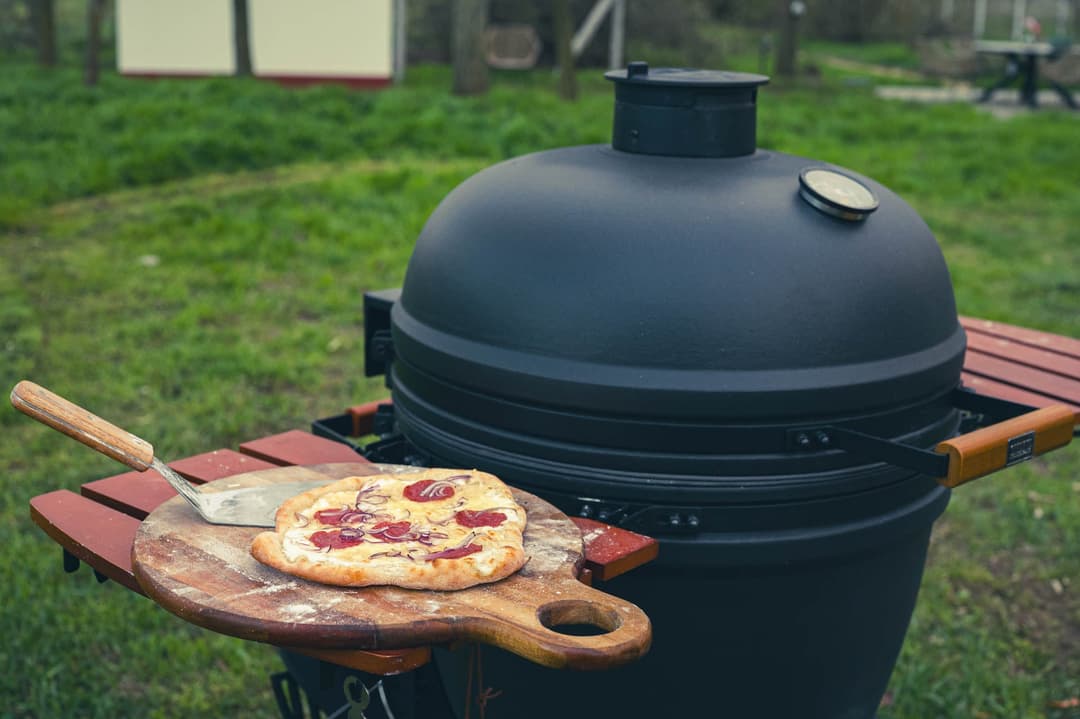
Baking (and pizza) on a kamado: using your kamado as an oven
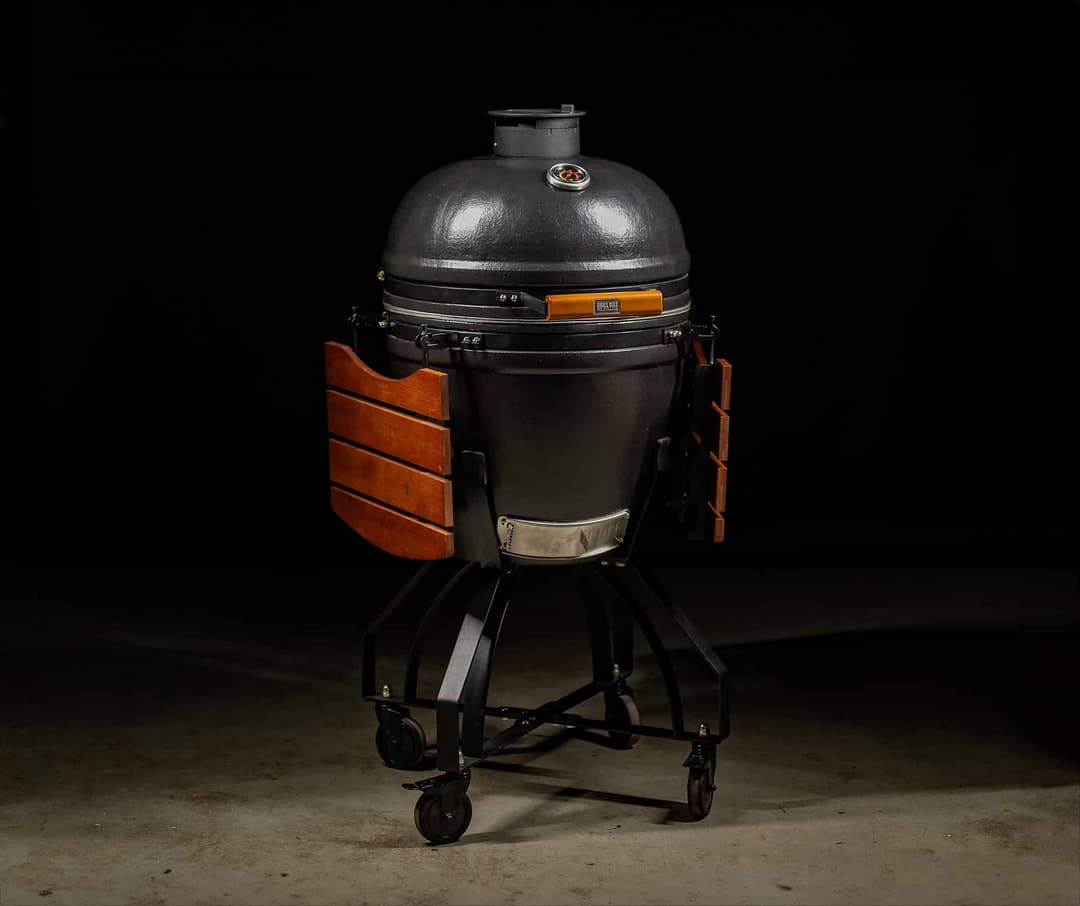
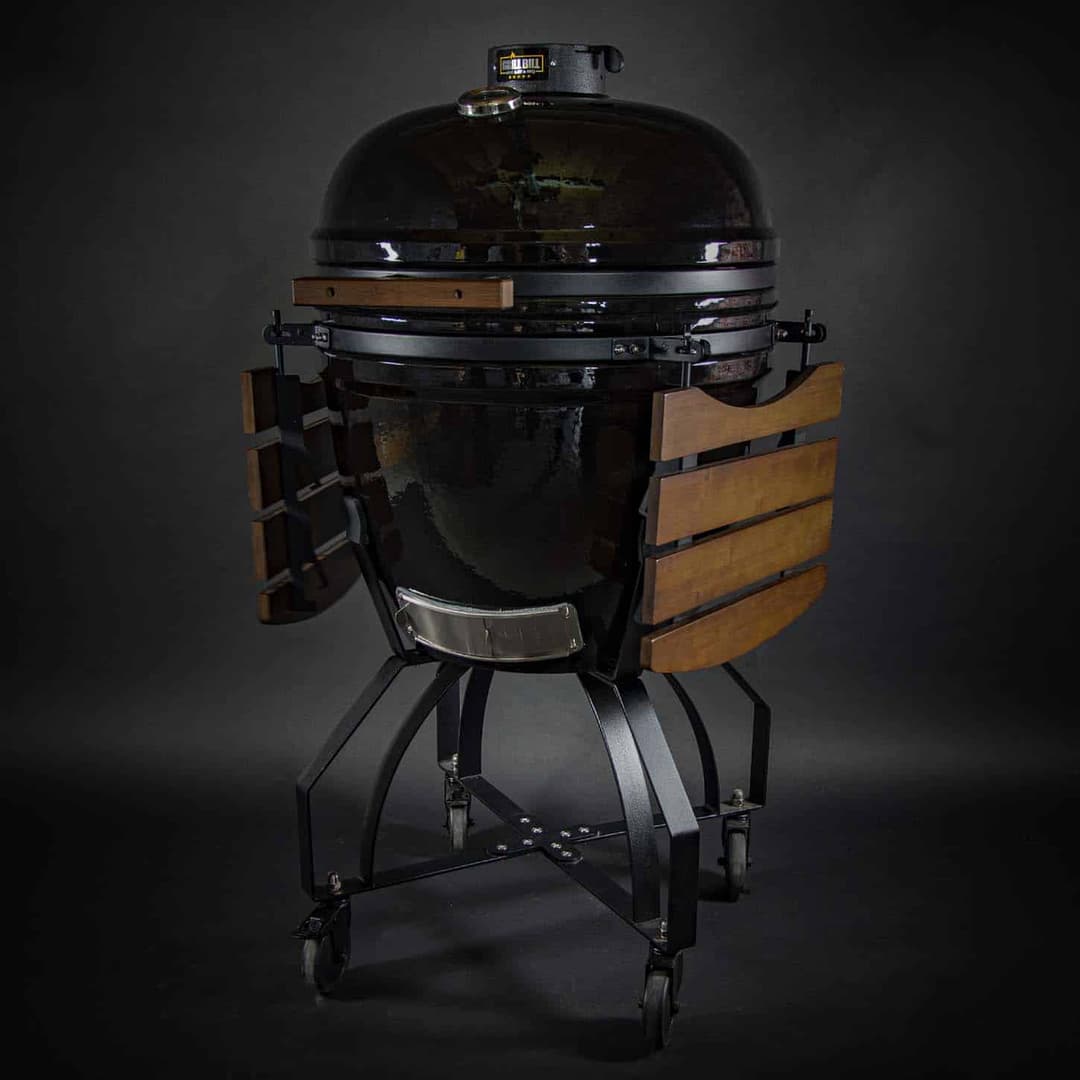
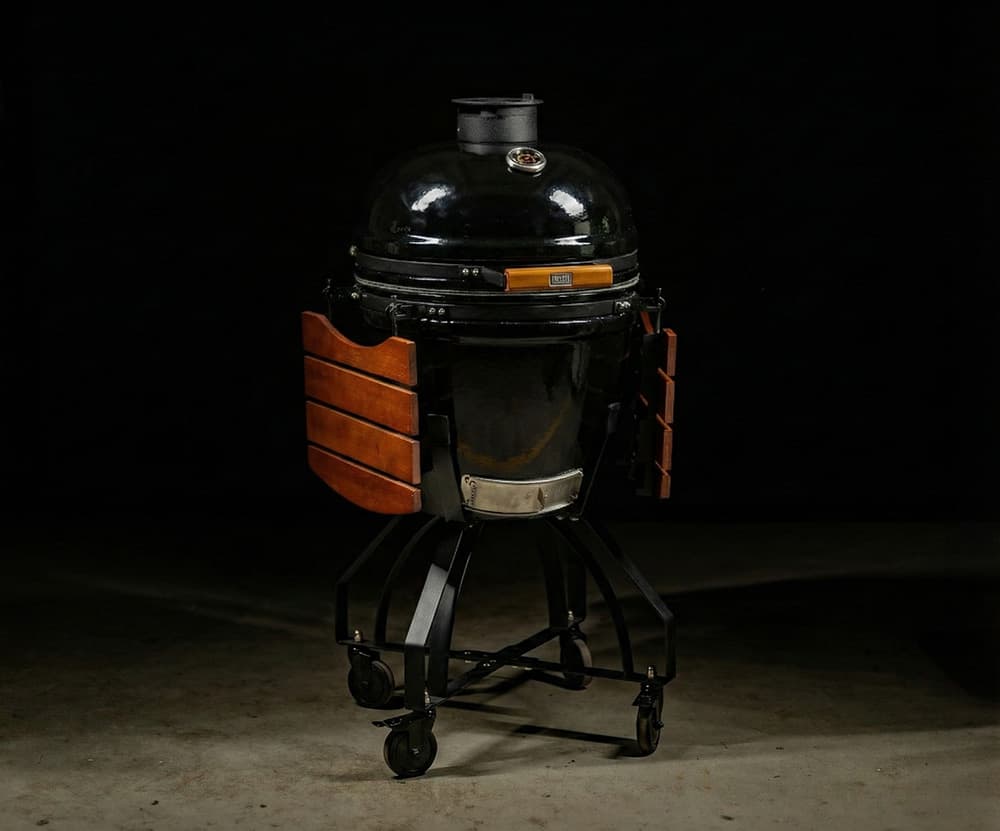
Baking on a kamado is always indirect: a heat deflector keeps the direct heat of the coals away, so convection heat cooks the food all round. The ceramic damps out temperature swings and keeps the air dry, which gives you a better crust than a normal oven. Work on a raised grate and change nothing once the temperature is steady.
Always with a heat deflector: without one the underside burns
Convection heat rises, circulates along the dome and drops back down
A raised grate or multilevel system gives more even cooking
The bottom vent keeps the fire active, the top vent is for fine tuning
For bread, pizza, oven dishes and desserts
Thanks to convection heat, ceramic and controlled airflow you can bake extremely steadily and evenly.
In this article we explain how baking on a kamado works technically, how it differs from grilling and why a kamado lends itself so well to controlled oven use.
What does baking on a kamado mean?
Baking means cooking with even, surrounding heat and no direct heat from below. Think bread, pizza, oven dishes and desserts. The heat has to be stable and circulate all round the food.
A kamado manages this thanks to convection heat. The heat rises, circulates along the dome and drops back down towards the food in a controlled way.
Because of the ceramic, a kamado holds heat better than a standard oven. Temperature swings are damped out and the air inside the kamado stays drier, which gives you a better crust.
A kamado also reacts more slowly than an oven. That sounds like a drawback, but it is exactly what gives you calm and stability while baking.
Indirect cooking is the basis for baking
Baking on a kamado is always indirect. The heat deflector blocks direct heat from the coals and makes sure the food is only exposed to circulating heat.
Without a deflector you get uneven heat and burning on the underside.
When baking, distance is crucial. The further the food sits from the heat source, the more evenly it cooks. That's why baking often works better on a raised grate or a multilevel system.
This stops the underside from burning and gives the food time to bake all the way through.
Common mistakes when baking on a kamado
Starting too hot
Not using a heat deflector
Giving too much air
Opening the lid too often
Combining baking with smoke
These mistakes lead to uneven results and frustration. There's more on this in common kamado mistakes.
Baking asks for calm, not speed
Baking on a kamado is all about stability. Once the temperature is right, the best thing you can do is change nothing. Every intervention upsets the balance.
Learn to wait and to trust the kamado, and you'll get oven results that are hard to match.
Baking as the technique that ties it together
Baking brings together every core principle of kamado cooking: convection heat, indirect cooking, airflow and temperature zones. Master baking and you understand the kamado as a system.
These don't go into the kamado at 180 degrees. They're small text files that remember what's in your cart, so you don't have to search again.
With your OK we also measure how the site is used and show you ads elsewhere that fit you. For that we share data with 2 parties: Meta and Google. That way you won't see ads for gear you already own.
Rather not? Fine, everything keeps working. You can change your choice later via Cookies, at the bottom of every page.